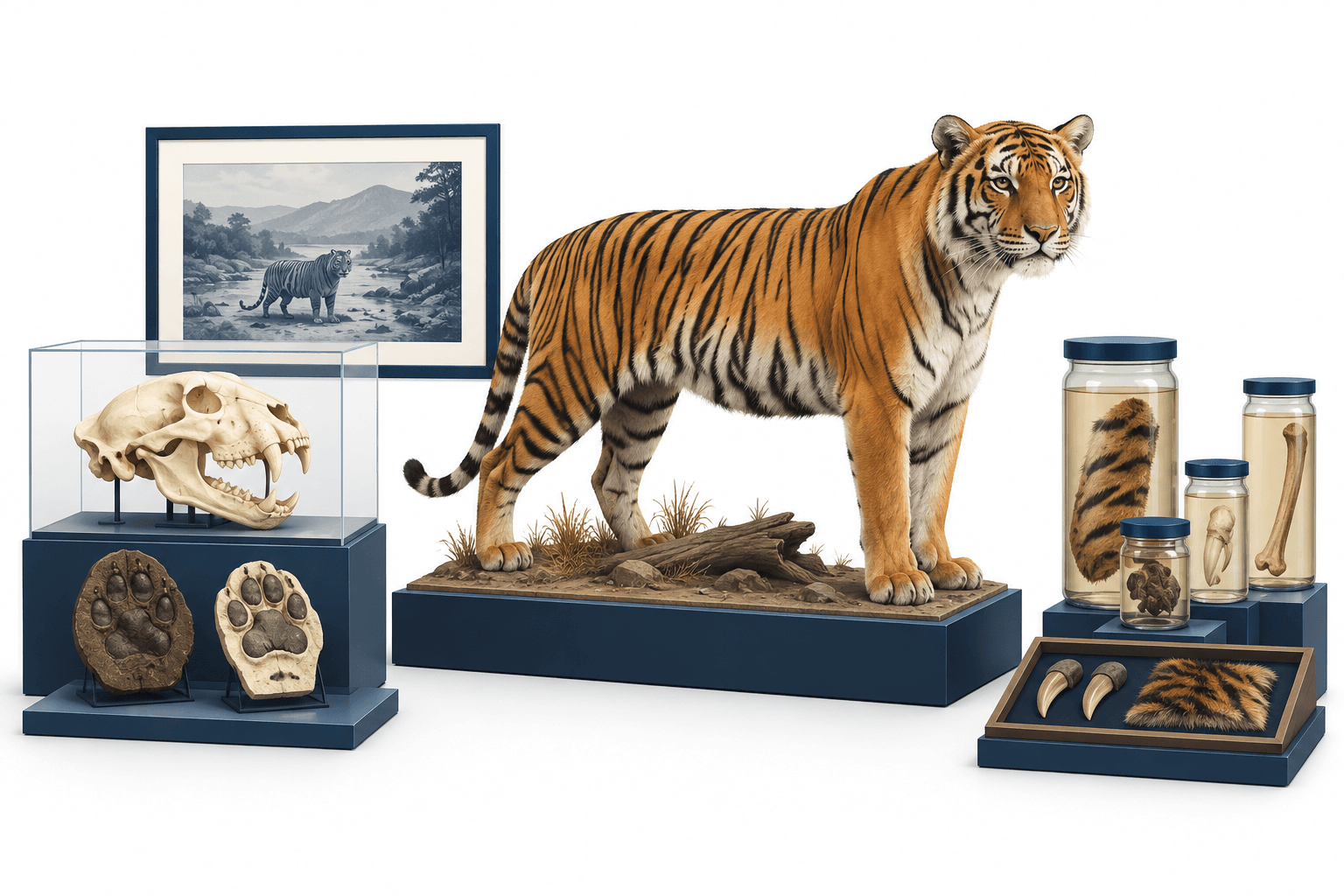
The Corbett wildlife museum in Ramnagar, India, displays life-size preserved animals and biological specimens that tell stories of the region’s wildlife, including encounters between big cats and people.
Key Takeaways
- The oldest exhibit is a tiger that died after a fight with an elephant in 1977.
- Other displays include two leopards declared man-eaters and preserved animal specimens.
Inside the Corbett wildlife museum
Located at the Dhangarhi gate of Jim Corbett Park, the museum displays taxidermied animals, skulls and bones alongside preserved specimens. Its life-size animal displays use the skins of animals that died naturally or during conflicts.
The oldest exhibit is a tiger that died on March 7, 1977, at Gairal after a fight with an elephant, forester Dharampal Negi said. A tigress found dead on December 28, 1982, at Sajgarhi Sot is displayed with a taxidermied cub; an autopsy found that she died of pneumonia.
Displays of conflict and preservation
Two female leopards on display were declared man-eaters and shot. Museum details say one, killed in Almora in 1983, had killed six children. The other, shot in Ranikhet in 1986, had killed two people and about 20 cattle.
Specimens in glass tanks include a stillborn leopard foetus found in 1985 and a tiger foetus found in 1982. Negi said the exhibits are checked regularly and that the museum aims to help visitors, particularly children, understand coexistence and respect wildlife.
Read More News
Disclaimer
This FinanceVelix article provides general information, not personalized financial, investment, legal, or tax advice. Market prices, interest rates and economic conditions can change; investments carry a risk of loss. Facts reflect the material available when published and may change. Check important information independently and consult a qualified professional when needed. Mentioning an asset, company, or service is not an endorsement.




Comments
Be respectful. No spam, impersonation or private credentials. Ordinary posts and comments appear immediately; suspicious links are held for review.
Please wait…