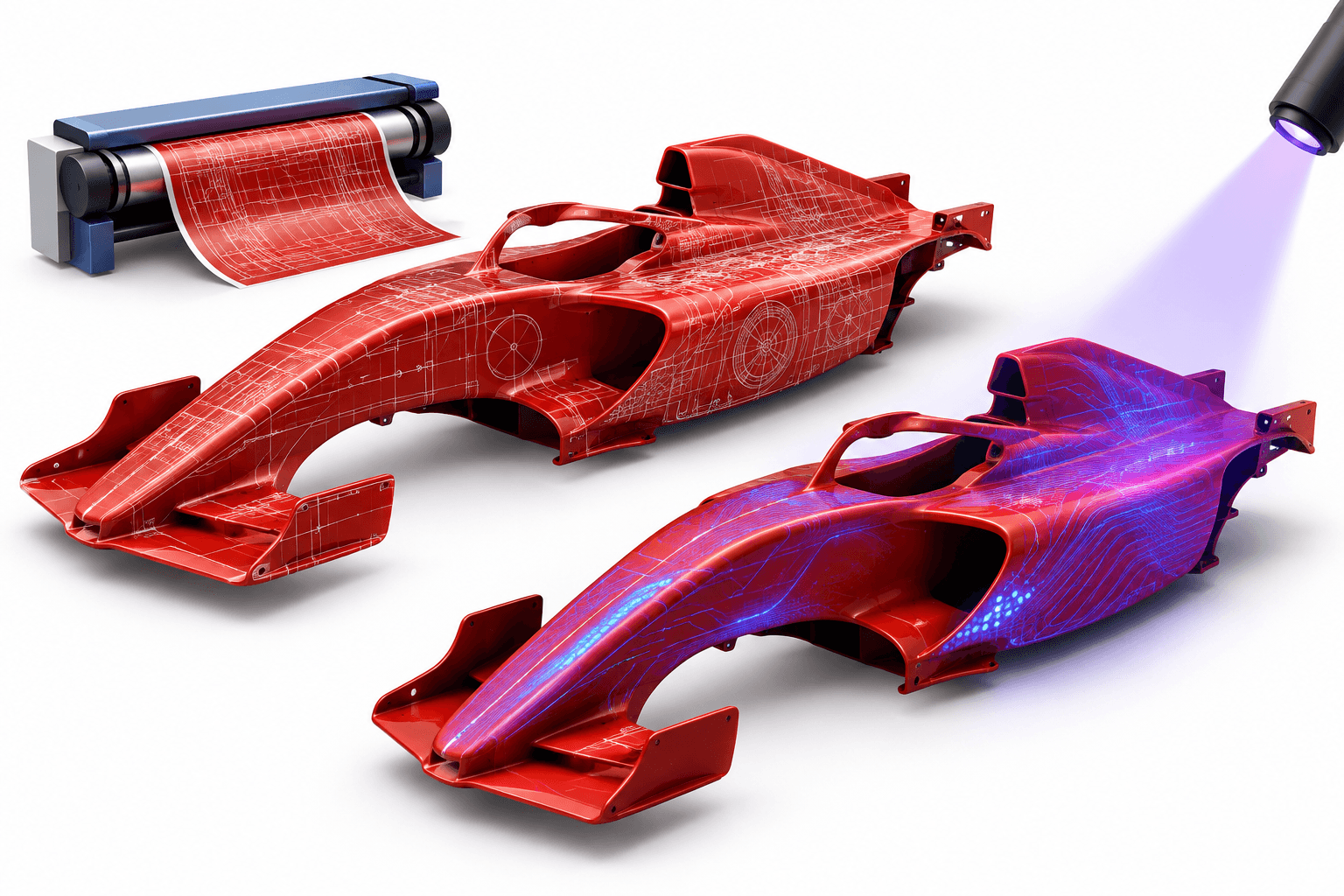
The Ferrari Austin livery brings HP’s printing technology onto Formula 1 bodywork in two different forms: graphics for cars competing in the United States Grand Prix and a separate display car with hidden ultraviolet-reactive details. HP outlined the collaboration on October 21, 2026, saying the development work could also inform future packaging and commercial-print applications.
Key Takeaways
- Ferrari designed the livery, while HP supplied printing, materials expertise and digital workflow support.
- The race cars use HP Latex printing; the display car features hidden graphics that fluoresce blue under ultraviolet light.
- HP sees potential uses for the development work in labels and flexible packaging, rather than announcing a commercial rollout.
Table of Contents
- Ferrari Austin livery takes two distinct forms
- From digital design to printed bodywork
- Potential packaging uses remain exploratory
- Conclusion
Ferrari Austin livery takes two distinct forms
Ferrari’s design exposes the sketches, technical drawings and engineering details that normally sit behind a finished racing car. HP’s October 21 announcement describes how its engineers helped translate that concept into physical graphics across the car’s curved bodywork.
The distinction between the two versions matters: the blueprint-style race livery was prepared for the cars competing in Austin, while the ultraviolet effect belongs to a dedicated display car. The announcement does not describe the UV-reactive graphics as part of the race-car treatment.
Ferrari teams in Maranello and HP engineers in Barcelona worked through multiple rounds of testing and refinement, adapting materials and application techniques to the design.
| Item | Details |
|---|---|
| Creative design | Ferrari conceived the graphics around sketches and engineering work behind the car. |
| Technical collaboration | Ferrari teams in Maranello worked with HP engineers in Barcelona. |
| Development process | Multiple testing rounds refined materials and application techniques. |
From digital design to printed bodywork
For the race cars, HP used Latex printing technology and large-format vehicle-wrapping expertise to reproduce Ferrari’s intricate graphics. The application had to accommodate complex surfaces and the heat, handling and maintenance expected during a Formula 1 weekend.
The display version required a different process. HP engineers adapted an existing invisible blue ink for the HP Indigo 200K Digital Press, then refined its application across the car’s curves so that hidden details would fluoresce under ultraviolet light.
Before physical production, HP Z Workstations supported design and engineering workflows that mapped Ferrari’s artwork onto the bodywork geometry.
Potential packaging uses remain exploratory
HP identified brand-protection features in labels and flexible packaging as possible applications of the invisible-ink work. Testing combinations of primers, inks and wrapping materials could also inform future customer projects.
Those possibilities are development opportunities, not announced product launches or customer contracts. The business relevance is the potential to transfer printing and materials knowledge from a demanding motorsport project into other commercial uses.
Conclusion
The next scheduled setting for the race-ready graphics is the United States Grand Prix weekend in Austin. Any broader packaging applications remain prospective; HP has described areas for exploration rather than a commercial launch timetable.
Read More News
Disclaimer
This FinanceVelix article provides general information, not personalized financial, investment, legal, or tax advice. Market prices, interest rates and economic conditions can change; investments carry a risk of loss. Facts reflect the material available when published and may change. Check important information independently and consult a qualified professional when needed. Mentioning an asset, company, or service is not an endorsement.