Claude protein design produced 17 experimentally confirmed binders against scorpion neurotoxins in research described by Anthropic on October 20, 2026. The collaboration with investment research firm Citrini Research demonstrates AI-assisted protein discovery, but the molecules have not been shown to neutralize venom or work as an antivenom.
Key Takeaways
- Claude selected 180 candidates during a 64-hour campaign; researchers added 31 more for laboratory testing.
- Seventeen designs met the researchers’ binding criteria, with the strongest two showing single-digit nanomolar affinity.
- The results establish toxin binding, not treatment effectiveness, safety or commercial viability.
Table of Contents
- Claude protein design moves from computation to laboratory tests
- Laboratory results show binding, with limits
- Drug development remains the larger hurdle
- Conclusion
Claude protein design moves from computation to laboratory tests
Anthropic and Citrini set out to test whether motivated nonexperts could use AI to help address a human-health problem. Their target was small proteins that attach to scorpion neurotoxins, potentially providing a starting point for antivenom research.
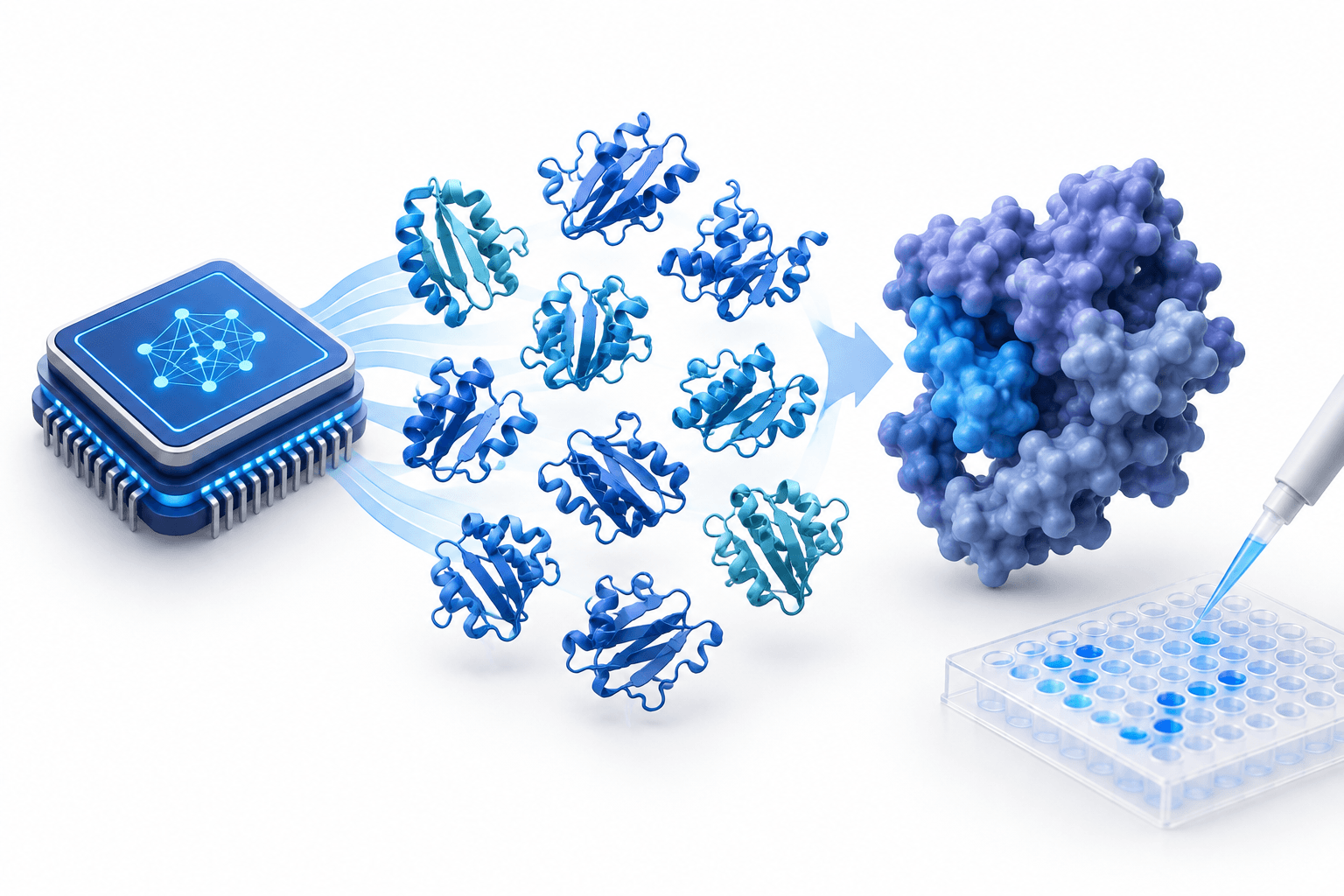
Anthropic’s scorpion-toxin research findings describe an internal research model operating within Claude Science. It worked mainly autonomously from an initial prompt and four follow-ups, generating 318,484 protein designs before selecting 180 for testing.
The distinction between generated designs and selected candidates matters: the 64-hour campaign covered computational design and selection, not the completion of a drug-development program. Anthropic said the campaign used approximately 10,000 GPU hours.
| Item | Details |
|---|---|
| Cn2 | Seven designs met the binding criteria. |
| AaH II | Four designs met the binding criteria. |
| AaH I | Four designs met the binding criteria. |
| LqhIII | Two designs met the binding criteria; assessed only by Adaptyv Bio. |
Laboratory results show binding, with limits
Adaptyv Bio and Twist Bioscience tested the candidates, including 31 additional designs added by Anthropic’s team with Claude’s help. The successful binders each targeted one of four toxins; none of the designs intended to bind multiple toxins met the criteria against more than one.
The two strongest candidates, Cn2-B1 and Cn2-B2, bound tightly to Cn2, a toxin from the Mexican scorpion Centruroides noxius. Competition experiments suggested they attach on or near the binding site of an antibody previously reported to neutralize Cn2 in mice.
That overlap is a reason for further testing, not evidence that the new binders themselves protect animals. The study used recombinant toxins grown in laboratories rather than toxins purified from venom.
Drug development remains the larger hurdle
The work illustrates how AI could assist early discovery for neglected conditions with limited commercial incentives. Anthropic noted that scorpion-sting treatments are expensive to develop and unlikely to recover their development costs.
However, binding is only an initial step. Researchers would need to establish that a candidate binds venom-derived toxin, prevents its effects on cells and protects living animals. Any eventual treatment would also need to be safe, stable, affordable and accessible.
Anthropic is releasing all 211 designs and their binding data so other researchers can build on the work. The announcement does not establish revenue, a market-ready therapy or an investment-return implication.
Conclusion
The next scientific tests are whether the strongest candidates bind toxins purified from venom and block their effects in cells, followed by animal testing. Until those steps are completed, the result remains an early discovery milestone rather than a demonstrated treatment.
Read More News
Disclaimer
This FinanceVelix article provides general information, not personalized financial, investment, legal, or tax advice. Market prices, interest rates and economic conditions can change; investments carry a risk of loss. Facts reflect the material available when published and may change. Check important information independently and consult a qualified professional when needed. Mentioning an asset, company, or service is not an endorsement.