The ABBV-466 trial reported higher endoscopic remission rates than either of its component therapies alone in patients with moderate to severe Crohn’s disease, AbbVie announced on October 19, 2026. The Phase 2a TARGET-CD results showed a wider treatment gap at 24 weeks than at 12 weeks, but the dual-targeting treatment remains investigational.
Key Takeaways
- ABBV-466 achieved higher endoscopic remission rates than both monotherapies at Weeks 12 and 24.
- The 300-patient study included a heavily pretreated population: 75% had failed at least one advanced therapy.
- Serious adverse event rates were similar across groups, but regulatory authorities have not established ABBV-466’s safety or efficacy.
Table of Contents
- ABBV-466 trial shows a widening remission gap
- Study design and prior treatment matter
- Dual targeting adds a second pathway, with safety still under study
- Conclusion
ABBV-466 trial shows a widening remission gap
AbbVie’s TARGET-CD Phase 2a results announcement reported that ABBV-466 achieved the primary endpoint of endoscopic remission more often than risankizumab or trosunilimab alone at Week 12. The difference increased at Week 24.
By Week 24, ABBV-466’s remission rate exceeded risankizumab’s by 18.1 percentage points and trosunilimab’s by 20.5 percentage points. These are observed differences in an early-stage study, not an established regulatory finding of superiority.
The endpoint measured bowel inflammation and damage using the Simple Endoscopic Score for Crohn’s Disease. Remission required a score of four or less, with no individual variable scoring above one, rather than relying only on symptom improvement.
| Item | Details |
|---|---|
| ABBV-466 | 106 patients; endoscopic remission: 30.2% at Week 12 and 40.5% at Week 24. |
| Risankizumab alone | 94 patients; endoscopic remission: 21.3% at Week 12 and 22.4% at Week 24. |
| Trosunilimab alone | 100 patients; endoscopic remission: 18.0% at Week 12 and 20.0% at Week 24. |
Study design and prior treatment matter
TARGET-CD is an ongoing, open-label, treat-through Phase 2a platform study. Patients were randomized in a 1:1:1 ratio to receive 24 weeks of ABBV-466, risankizumab or trosunilimab. Its open-label design means treatment assignments were not blinded.
Of the 300 participants, 75% had failed at least one advanced therapy and 25% had failed three or more. Prior treatment failures included IL-23 therapy in 9.3% of patients and a JAK inhibitor in 12%. The remaining 25% were biologic-naïve.
Those treatment histories are important context: the findings include patients whose disease had persisted despite previous advanced treatments, rather than only patients starting their first biologic therapy.
Dual targeting adds a second pathway, with safety still under study
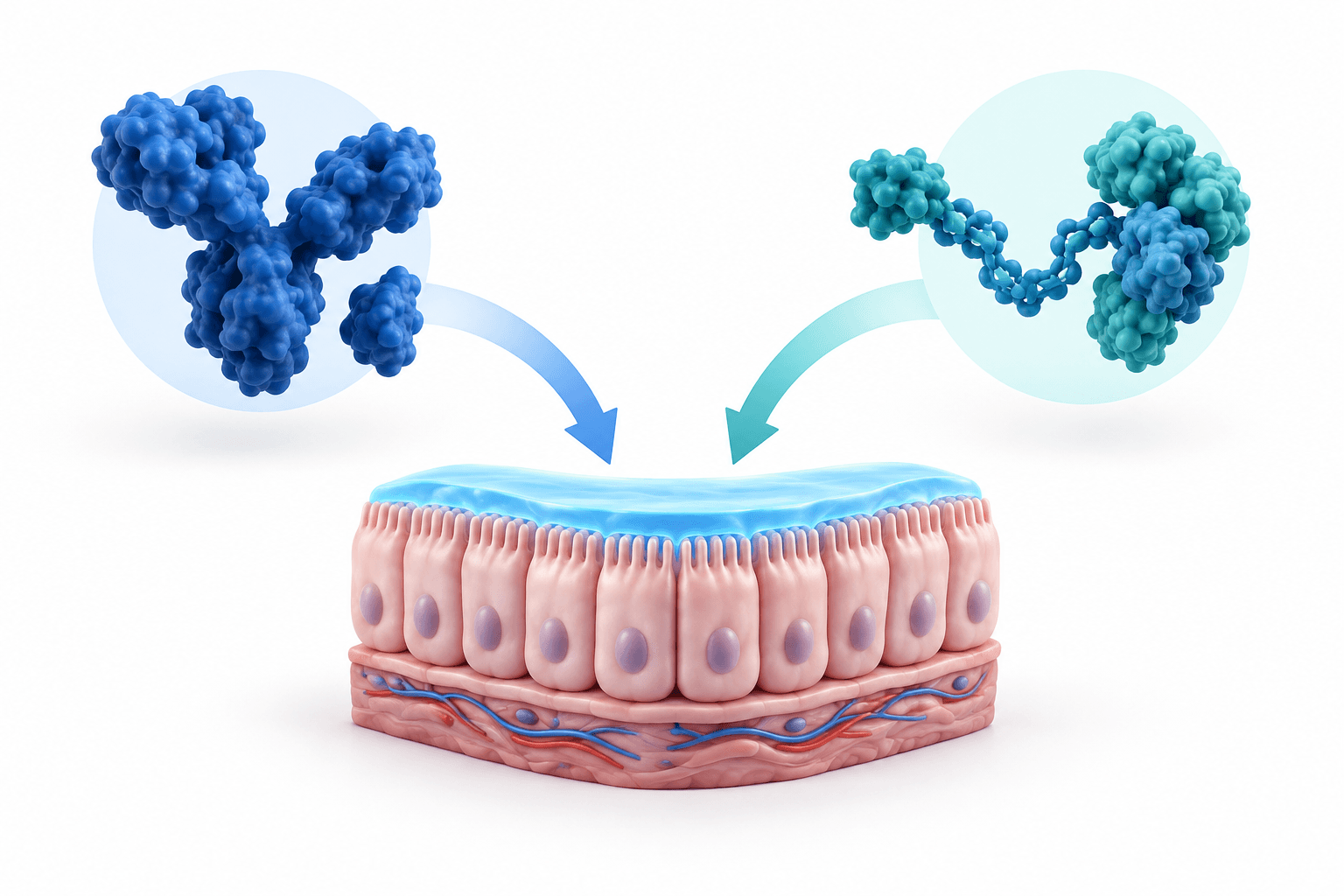
ABBV-466 combines risankizumab, which inhibits IL-23 p19, with trosunilimab, which inhibits integrin α4β7. The approach aims to reduce inflammatory signaling while limiting immune-cell trafficking to the gut.
Gene-expression analyses showed epithelial repair and barrier restoration at Week 12, followed by tissue remodeling and metabolic changes at Week 24 that were generally absent with either monotherapy, AbbVie said. These molecular findings are separate from the clinical remission endpoint.
Serious adverse events occurred in 10.4% of the ABBV-466 group, compared with 9.6% for risankizumab and 9.0% for trosunilimab. Safety was assessed through Week 24. Similar observed rates in this study do not establish equivalent safety, and ABBV-466’s safety and efficacy have not been established by regulatory authorities.
Conclusion
TARGET-CD remains ongoing and is the confirmed program to watch. The results provide an early clinical signal for AbbVie’s dual-targeting approach, but the announcement did not set a date for a later-stage trial or regulatory submission.
Read More News
Disclaimer
This FinanceVelix article provides general information, not personalized financial, investment, legal, or tax advice. Market prices, interest rates and economic conditions can change; investments carry a risk of loss. Facts reflect the material available when published and may change. Check important information independently and consult a qualified professional when needed. Mentioning an asset, company, or service is not an endorsement.