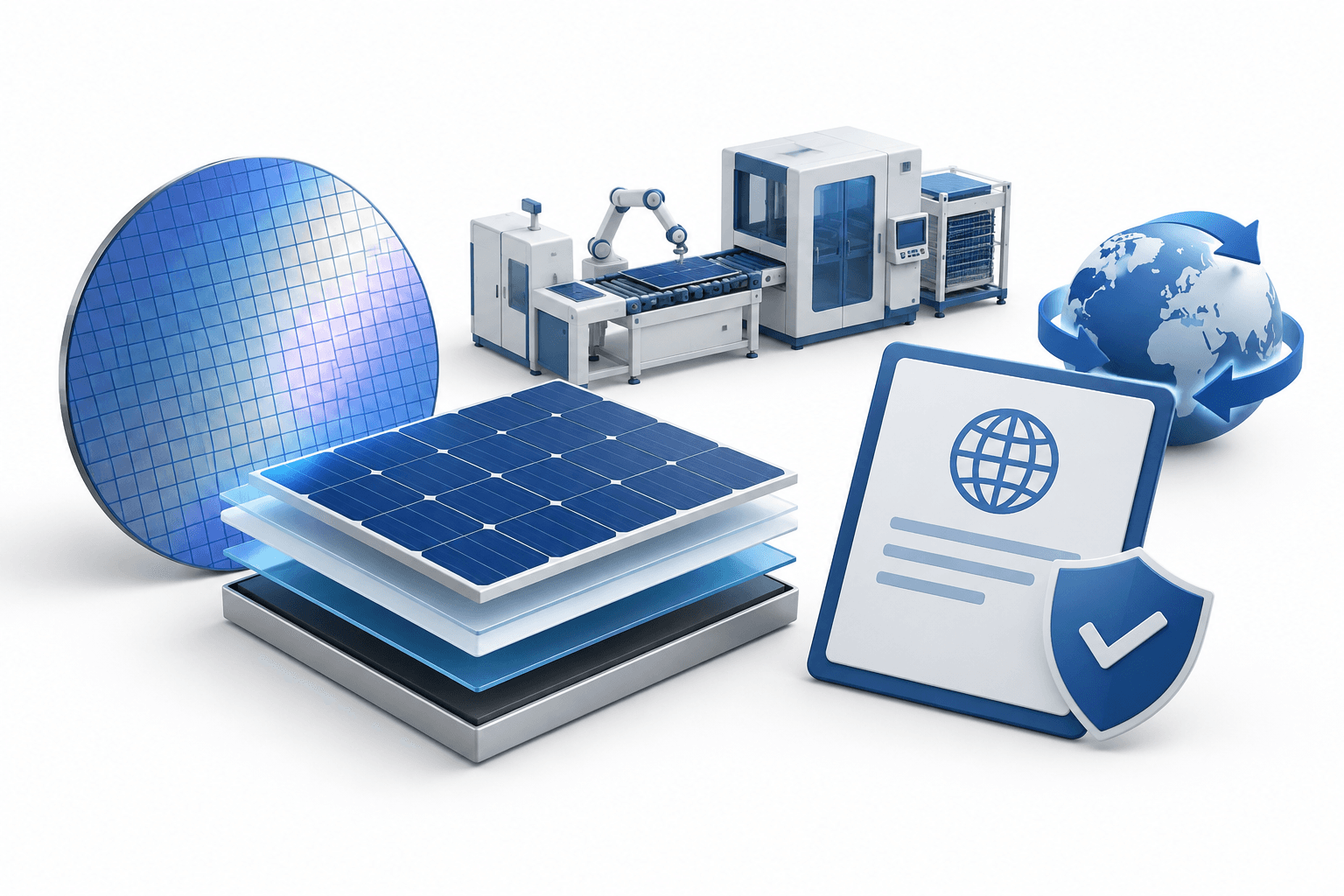
Solar export controls proposed by China would add 12 photovoltaic technologies to its technology-export control catalogue, potentially limiting transfers of manufacturing know-how overseas. The October 16, 2026 announcement includes proposed outright bans as well as restrictions, while temporary pre-export registration requirements have already taken effect.
Key Takeaways
- The proposal covers 12 technologies across polysilicon, wafer and solar-cell manufacturing.
- Some technologies would face export bans, not merely licensing restrictions.
- The ministry has not identified a Tesla-specific operational impact.
Table of Contents
- Solar export controls distinguish bans from restrictions
- Technology transfers, not a blanket solar-product ban
- What the proposal means for Tesla
- Conclusion
Solar export controls distinguish bans from restrictions
China’s commerce and science ministries opened consultation on revisions to the technology-export catalogue on October 16. The photovoltaic measures form part of a broader proposal covering artificial intelligence and biotechnology as well as solar manufacturing.
The commerce ministry’s explanation of the proposed technology-export rules identifies perovskite and tandem-cell module production technology among the proposed prohibited exports. Polysilicon engineering technology with annual capacity of at least 30,000 tonnes per production line is among the proposed restricted exports.
That distinction matters for overseas manufacturing projects: a prohibition would prevent an affected technology transfer, while restricted status would make it subject to export licensing. The proposed catalogue changes should not be confused with the temporary registration requirements already in force.
| Item | Details |
|---|---|
| Broader proposal | 40 technologies across artificial intelligence, biotechnology and photovoltaics. |
| Proposed categories | 14 prohibited and 26 restricted technologies across all three fields. |
| Registration period | From publication of Announcement No. 48 until the revised catalogue takes effect. |
| Consultation deadline | November 15, 2026. |
Technology transfers, not a blanket solar-product ban
The ministry said products manufactured using the technologies are outside the scope of these technology controls. It also said unlisted photovoltaic equipment generally falls outside the announcement, while the small number of listed equipment categories are covered when they embody technology meeting the control thresholds.
The practical focus is therefore on transferring manufacturing capabilities, rather than imposing a blanket ban on solar products. The ministry noted that technology exports can accompany the export, installation, commissioning, modification and upgrading of photovoltaic production lines.
Officials cited the growing use of solar technology in aerospace, defence, unmanned equipment and high-security infrastructure as the national-security rationale. The ministry said the revision does not target any particular country, region or entity.
What the proposal means for Tesla
Tesla’s energy business includes solar-generation products alongside energy-storage systems. Restrictions on Chinese manufacturing technology could matter to overseas solar expansion where a project depends on a covered technology transfer.
However, the ministry’s announcement does not establish that Tesla uses the affected technologies or has a project requiring their transfer. A Tesla-specific production delay, additional cost or change in expansion plans cannot be treated as a confirmed consequence.
For companies with relevant transactions, the immediate requirement is registration. Exporters must assess whether planned transfers fall within the temporary rules; exports already started but not completed are also covered.
Conclusion
The next scheduled milestone is the November 15 consultation deadline. The final catalogue will determine which proposed solar-technology bans and restrictions take effect; temporary registration is already an immediate compliance requirement.
Read More News
Disclaimer
This FinanceVelix article provides general information, not personalized financial, investment, legal, or tax advice. Market prices, interest rates and economic conditions can change; investments carry a risk of loss. Facts reflect the material available when published and may change. Check important information independently and consult a qualified professional when needed. Mentioning an asset, company, or service is not an endorsement.