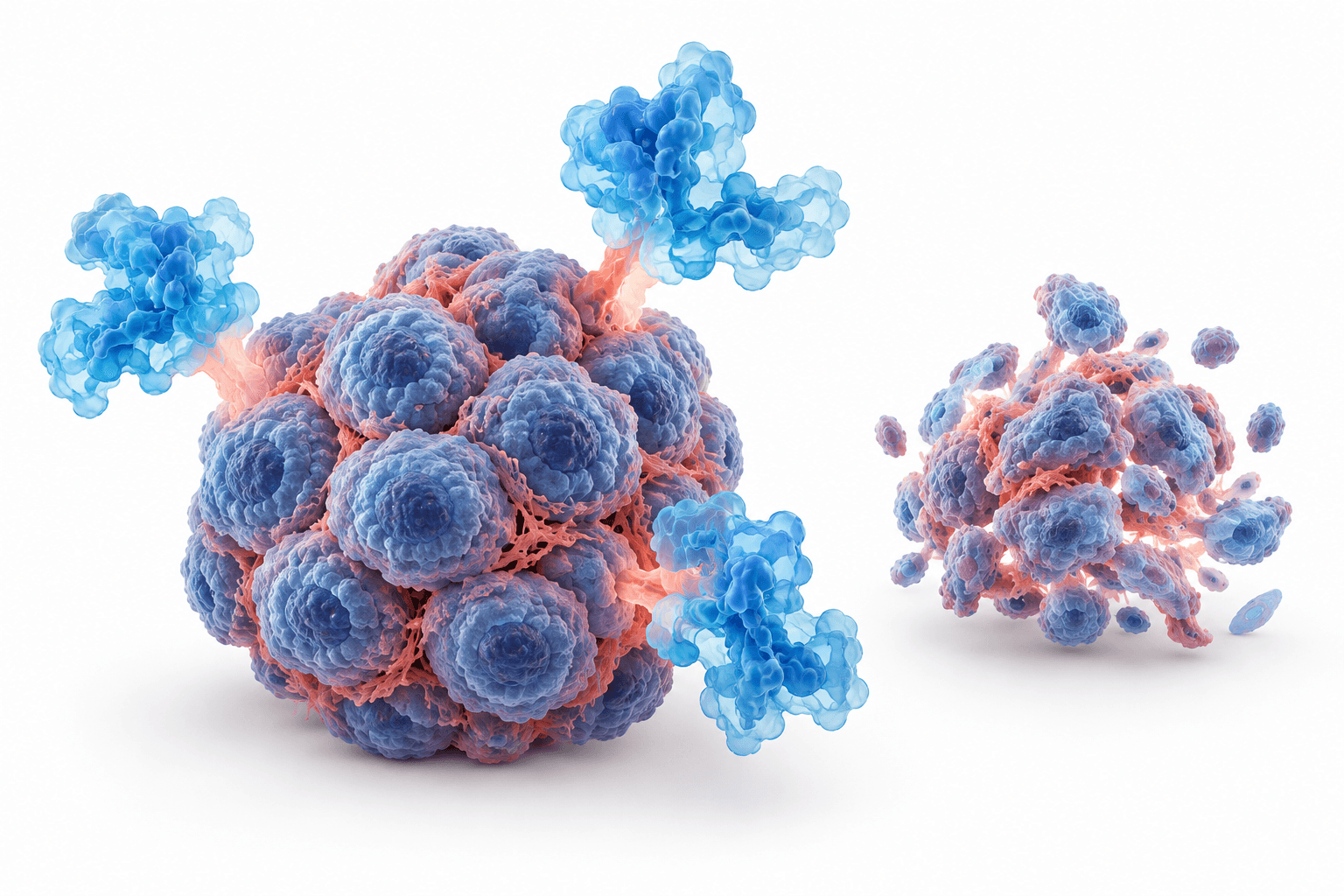
Propanc PRP research announced on October 16, 2026, suggests the company’s experimental pancreatic proenzyme formulation could make chemotherapy-resistant pancreatic cancer cells more vulnerable to subsequent treatment. The findings come from laboratory models, not patients, and support further investigation rather than establish a clinical benefit.
Key Takeaways
- Researchers tested PRP before chemotherapy to assess whether it could alter resistant cancer cells.
- The company reported changes in cell growth, invasion and biological pathways associated with resistance.
- Propanc plans a first-in-human Phase 1b study in the first quarter of 2027; patient benefit remains unproven.
Table of Contents
- Propanc PRP research tests a sequential treatment strategy
- Laboratory results show changes across several processes
- First human study remains a planned milestone
- Conclusion
Propanc PRP research tests a sequential treatment strategy
Propanc Biopharma’s preclinical research announcement describes a collaboration involving the Universities of Jaén and Granada, led by Dr. Maria Belén Toledo. Researchers combined cellular tests with transcriptome-wide profiling, which examines RNA molecules within cells, to investigate pancreatic cancer models with acquired chemotherapy resistance.
The treatment order was central to the experiment. Researchers first exposed resistant cells to PRP, then introduced chemotherapy to test whether the cells had become more responsive. The company said this sequence produced the strongest functional response in the study.
The proposed role for PRP is therefore not simply to kill tumor cells directly. Researchers are investigating whether it can alter the cellular adaptations that help tumors survive treatment, potentially creating a more vulnerable state before chemotherapy.
| Item | Details |
|---|---|
| Cell proliferation | PRP alone reduced proliferation by 50% in wild-type cells and 54% in chemotherapy-resistant cells. |
| Colony formation over 21 days | PRP pretreatment suppressed colony-forming capacity by 59% in wild-type cells and 39% in resistant cells. |
| Invasive capacity | PRP alone reduced invasion by 81% in wild-type cells and 47% in resistant cells. |
| Migration over 72 hours | Wound closure reached 21% in treated wild-type cells and 57% in treated resistant cells, versus 100% in untreated controls. |
Laboratory results show changes across several processes
Propanc reported that PRP affected interconnected processes involving cell identity, drug response, DNA repair, survival and susceptibility to cell death. The nature and magnitude of those changes differed between wild-type and chemotherapy-resistant models, underscoring that resistance was not uniform.
The study assessed growth, colony formation, migration, invasion and susceptibility to cell death. The selected results below concern PRP treatment in laboratory models; they are not measures of tumor shrinkage or survival in patients.
These findings provide a rationale for additional testing, but reductions in cellular proliferation or invasion do not establish that the treatment will be effective or safe in people.
First human study remains a planned milestone
Chief Executive Officer James Nathanielsz said Propanc was progressing PRP toward a first-in-human Phase 1b study for patients with advanced solid tumors in the first quarter of 2027. That timetable is a company plan, not confirmation that the study has begun.
The company also said it would undertake validation in clinically relevant models to determine whether the resistance-remodeling effect could translate into therapeutic benefit. For the Australian biotechnology company, the announcement advances the scientific rationale for its lead candidate without resolving the clinical uncertainties.
Conclusion
The next stated development steps are validation in clinically relevant models and the planned first-in-human study in Q1 2027. The laboratory findings support continued investigation, while evidence of safety and benefit in patients remains outstanding.
Read More News
Disclaimer
This FinanceVelix article provides general information, not personalized financial, investment, legal, or tax advice. Market prices, interest rates and economic conditions can change; investments carry a risk of loss. Facts reflect the material available when published and may change. Check important information independently and consult a qualified professional when needed. Mentioning an asset, company, or service is not an endorsement.