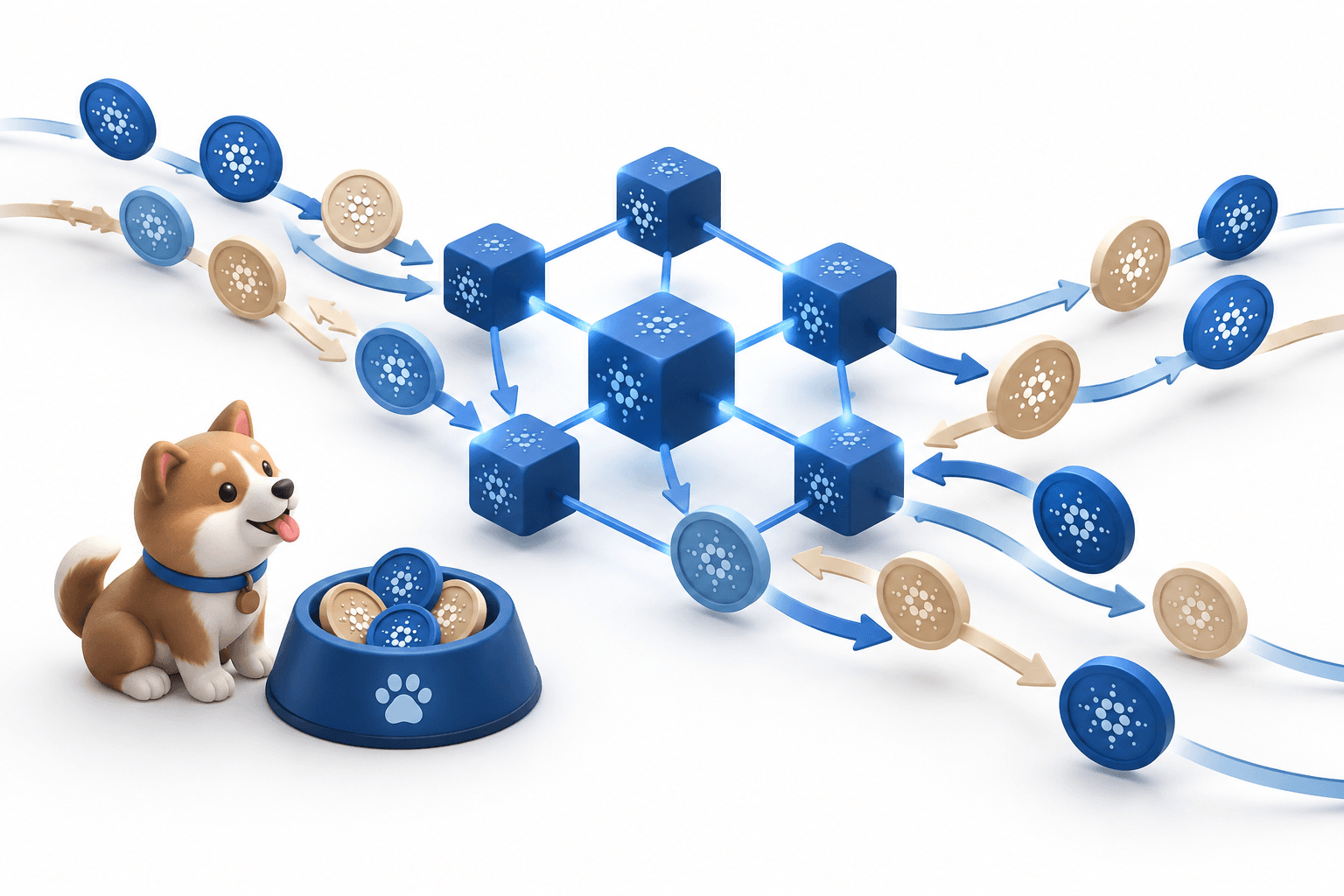
Cardano transactions reached a record 1,780,896 during the five-day epoch ending October 11, 2026, as meme-token project HOSKY revived its Doggie Bowl distribution campaign. HOSKY said on October 16 that the campaign was a major driver of the increase; Cardano member-based organization Intersect subsequently linked the record largely to the revived distribution mechanism.
Key Takeaways
- Epoch 660 surpassed Cardano’s November 2021 transaction record.
- Doggie Bowl generated incoming payments and outgoing token distributions, including repeated and automated participation.
- The transaction count measures ledger activity, not unique users, while the reported throughput peak was not sustained.
Table of Contents
- Cardano transactions surpass the 2021 benchmark
- How Doggie Bowl generated network activity
- What the records do—and do not—show
- Conclusion
Cardano transactions surpass the 2021 benchmark
The epoch total exceeded the previous record of 1,566,974 transactions set in November 2021. HOSKY said activity was 11.27 times the level in the preceding epoch, highlighting the scale of the campaign-driven jump.
Intersect’s October 17 ecosystem update confirmed the epoch’s transaction total and 337,720 ADA in fees, while attributing the achievement largely to the Doggie Bowl revival. That corroborates the headline epoch figures, but does not establish every daily or throughput claim in HOSKY’s announcement.
HOSKY also reported a daily transaction record on October 8 and said epoch fees exceeded the previous record by 9.54%. The fees represent amounts paid to use the network, rather than proceeds received by token holders.
| Item | Details |
|---|---|
| Epoch 660 transactions | 1,780,896 over five days ending October 11, 2026 |
| Previous epoch transaction record | 1,566,974, set in November 2021 |
| Epoch 660 fees | 337,720 ADA |
| October 8 daily transactions | 542,532, a record reported by HOSKY |
How Doggie Bowl generated network activity
HOSKY reopened the distribution mechanism on October 6 with the stated aim of helping Cardano break its transaction record. Participants sent 2 ADA to a designated address and received approximately 1.x ADA back, together with a randomized allocation of HOSKY tokens.
Repeated participation, including automated activity, produced both incoming payments and outgoing distributions. Some payout transactions served multiple recipients, so neither transaction totals nor payout counts can be treated as a direct measure of individual participants.
The revival followed earlier Doggie Bowl activity that HOSKY said helped drive records during epochs 302 and 304 in November 2021. Intersect described the latest campaign as a single-epoch effort.
What the records do—and do not—show
The figures cover different measurement windows: a five-day epoch, one UTC calendar day and a brief throughput peak. HOSKY’s reported peak of approximately 440 transactions per second should not be read as a sustained processing rate.
The campaign demonstrated increased activity on Cardano’s production blockchain, but repeated distributions do not by themselves establish broader user adoption or lasting demand for blockspace. Distinguishing campaign traffic from activity after the distribution ends is therefore important when assessing the record.
Conclusion
Epoch 660 set a transaction record, with the Doggie Bowl revival central to the increase. The next useful comparison is network activity after that single-epoch campaign, rather than treating its peak traffic as a continuing baseline.
Read More News
Disclaimer
This FinanceVelix article provides general information, not personalized financial, investment, legal, or tax advice. Market prices, interest rates and economic conditions can change; investments carry a risk of loss. Facts reflect the material available when published and may change. Check important information independently and consult a qualified professional when needed. Mentioning an asset, company, or service is not an endorsement.