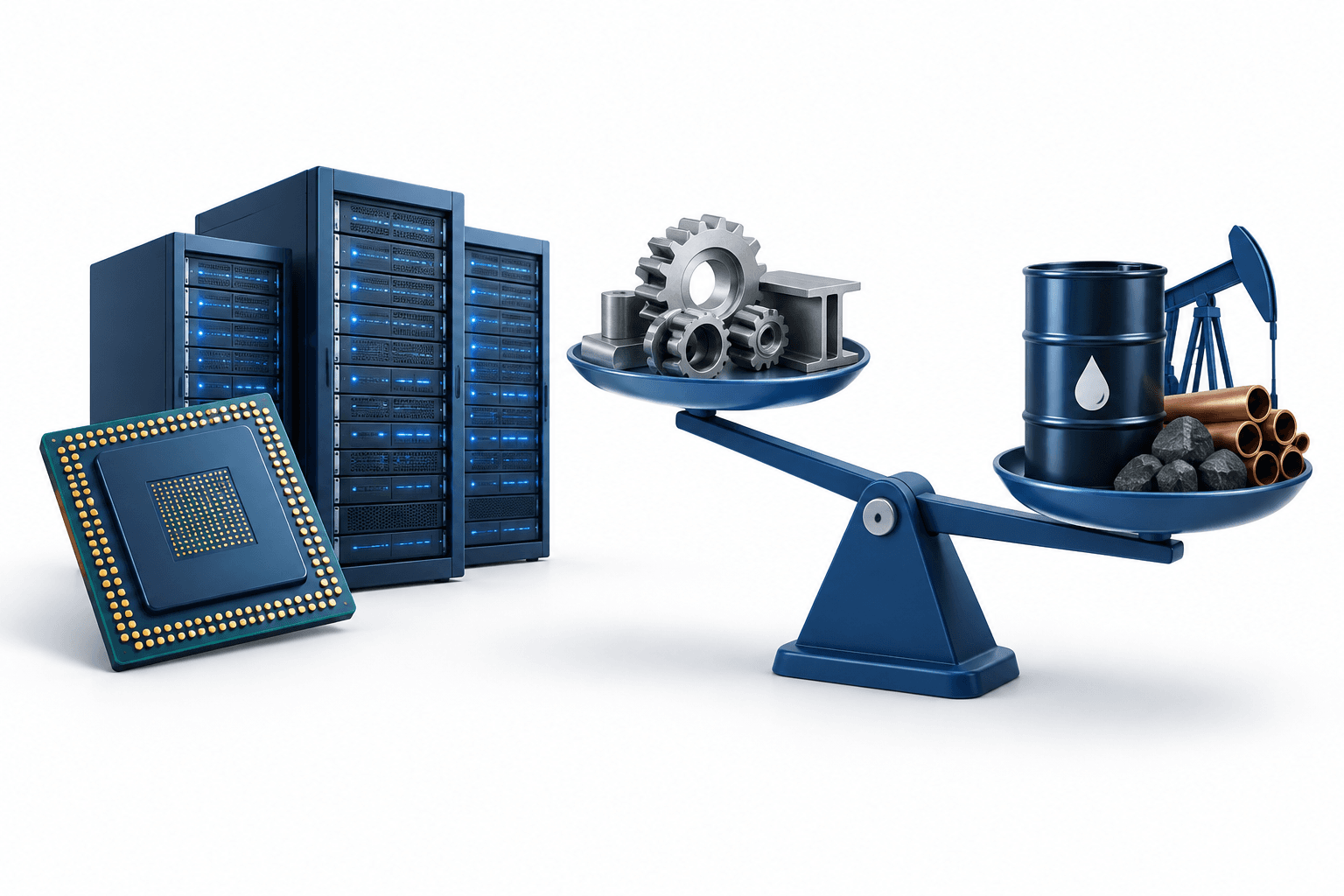
US stocks recovered from early losses to close higher on October 15, 2026, as selling pressure on artificial intelligence shares eased despite a sharp rise in wholesale inflation. The Dow Jones Industrial Average outperformed the technology-heavy Nasdaq, which finished only narrowly positive after a bruising session in Asian markets.
Key Takeaways
- The Dow gained 1.1%, while the S&P 500 and Nasdaq posted smaller advances.
- CoreWeave rebounded 6% after losing more than 15% in the previous session.
- September producer prices rose 6.3% from a year earlier, the largest annual increase since December 2022.
Table of Contents
- US stocks recover as pressure on AI shares moderates
- Producer inflation accelerates, but Treasury yields ease
- Asian losses contrast with gains in Europe
- Oil benchmarks diverge as the dollar weakens
- Conclusion
US stocks recover as pressure on AI shares moderates
Wall Street opened under pressure after steep Asian equity losses and the Nasdaq’s nearly 2% decline on October 14. Concerns about the risks surrounding large artificial intelligence investments had weighed on technology shares.
CoreWeave’s recovery helped steady sentiment. The data center operator rose 6% after Nvidia Chief Executive Jensen Huang expressed optimism about its prospects, following a decline of more than 15% on Wednesday.
Semiconductor shares also recovered from their weakest levels, although the Philadelphia semiconductor index still finished lower. The contrast between the Dow’s stronger advance and the Nasdaq’s small gain showed that the recovery was uneven rather than a broad technology rally.
| Item | Details |
|---|---|
| Dow Jones Industrial Average | Closed at 52,177.69, up 1.1% on October 15, 2026. |
| S&P 500 | Closed at 7,744.06, up 0.3%. |
| Nasdaq Composite | Closed at 26,713.03, up 0.1%. |
| Kospi | Closed at 5,554.22, down 7.6%. |
| Nikkei 225 | Closed at 64,425.95, down 4.9%. |
Producer inflation accelerates, but Treasury yields ease
The Bureau of Labor Statistics’ September 2026 producer price release showed final-demand prices rising 1.3% from August and 6.3% from a year earlier. Those were the largest monthly and annual increases since March 2022 and December 2022, respectively.
Energy was a major contributor: final-demand energy prices jumped 10.8% during September, while gasoline prices rose 20.3%. Inflation was not confined to energy, however. Prices excluding food, energy and trade services increased 0.5% for the month and 5.0% over 12 months.
Treasury yields nevertheless retreated. Tom Cahill of Ventura Wealth Management said the move suggested investors saw an opportunity to shift some money from equities into fixed income. Falling yields coincided with the stock market’s recovery, but did not erase the stronger inflation readings.
Asian losses contrast with gains in Europe
South Korea’s Kospi fell more than 8% during trading, triggering a brief trading halt, before trimming its decline by the close. Japan’s Nikkei also suffered a steep loss as technology concerns spread across the region.
European markets finished higher, with London’s FTSE 100 gaining 1.1%, Paris’s CAC 40 adding 0.8% and Frankfurt’s DAX rising 0.3%. The regional divergence underscored how differently markets absorbed the technology selloff.
Oil benchmarks diverge as the dollar weakens
West Texas Intermediate crude rose 3.0% to $97.97 a barrel following a large decline in US commercial inventories. Brent moved in the opposite direction, slipping 0.1% to $105.92 a barrel.
The dollar weakened against the euro, pound and yen. The euro rose to $1.1213 from $1.1157 on Wednesday, while sterling advanced to $1.3274 from $1.3193.
Conclusion
The October 15 rebound left technology shares lagging the Dow despite some relief in AI-related selling. The next scheduled producer-price update, covering October, is due November 13 at 8:30 a.m. ET.
Read More News
Disclaimer
This FinanceVelix article provides general information, not personalized financial, investment, legal, or tax advice. Market prices, interest rates and economic conditions can change; investments carry a risk of loss. Facts reflect the material available when published and may change. Check important information independently and consult a qualified professional when needed. Mentioning an asset, company, or service is not an endorsement.