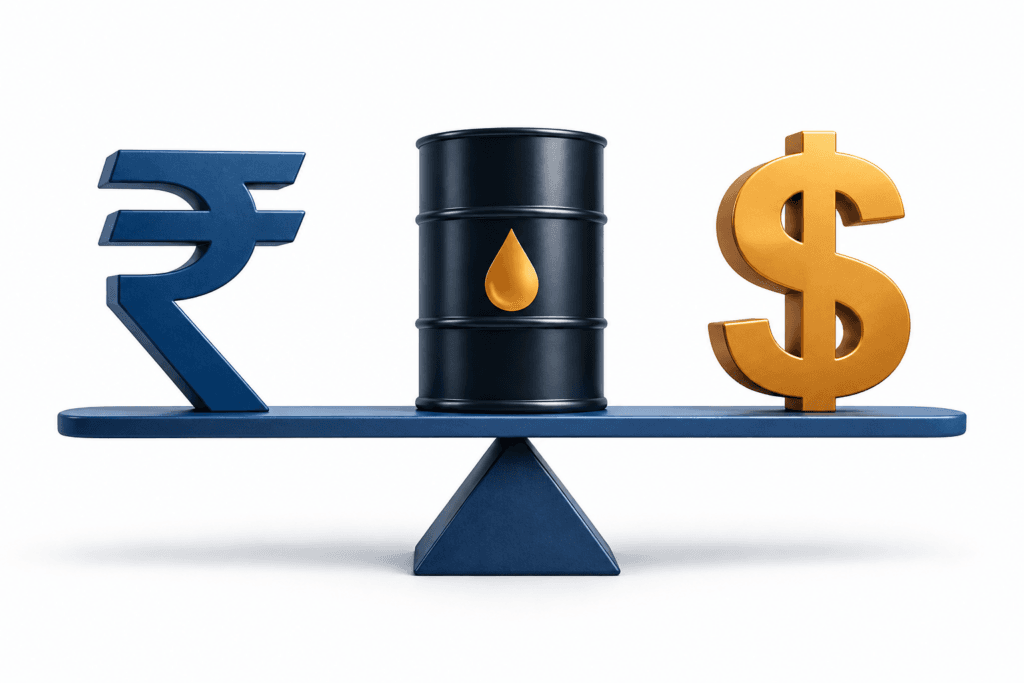
Indian bonds fell for a third consecutive session on October 22, 2026, pushing the benchmark government yield above 7.45% as rising oil prices intensified inflation concerns and expectations of further Reserve Bank of India rate increases.
Key Takeaways
- The benchmark 2036 bond yield closed at 7.4596%, up 1.69 basis points from the previous session.
- Oil at $112.50 a barrel added to inflation concerns after the RBI raised its repo rate to 5.50% earlier in October.
- Overnight indexed swap rates were largely unchanged despite the government bond selloff.
Table of Contents
- Indian bonds extend a 10-week rise in yields
- Oil and food costs sharpen rate concerns
- Swaps hold steady as investors assess further tightening
- Conclusion
Indian bonds extend a 10-week rise in yields
The yield on the benchmark 6.94% government bond maturing in 2036 ended at 7.4596%, compared with 7.4427% in the previous session. Its cumulative increase over the preceding 10 weeks reached 69 basis points.
Bond yields move inversely to prices, so the rise represents a further decline in the market value of the benchmark security. The latest close also took the yield above the psychologically significant 7.45% level.
Tanuj Khosla, managing director and head of multi-strategy credit at InCred Global Asset Management, said higher oil prices and US yields were pushing up yields across emerging markets, including India.
| Item | Details |
|---|---|
| One-year overnight indexed swap | Closed at 6.56% on October 22, 2026. |
| Two-year overnight indexed swap | Closed at 6.63%. |
| Five-year overnight indexed swap | The liquid five-year rate settled at 6.80%. |
Oil and food costs sharpen rate concerns
Oil climbed to $112.50 a barrel in Asian trading, with Brent reaching its highest level since May. Further Houthi attacks in Saudi Arabia heightened concerns about a wider Middle East conflict and disruption to crude supplies.
India imports nearly 90% of its oil requirements, leaving it exposed to sustained increases in energy costs. Higher food prices following a deficient monsoon added to the pressure, with economists expecting retail inflation to exceed the RBI's 6% upper tolerance limit.
The RBI raised its repo rate to 5.50% earlier in October—its first increase in nearly four years—and shifted to a calibrated-tightening stance. Minutes of the latest policy meeting signaled further increases.
The RBI's explanation of interest-rate transmission, published in 2020, describes how higher central-bank rates can feed into borrowing costs and restrain spending and inflation. That policy mechanism provides background to the market's concern about further tightening; it does not establish the timing of another increase.
Swaps hold steady as investors assess further tightening
Overnight indexed swap rates finished largely unchanged, contrasting with the decline in government bond prices. Most of the negative factors were already reflected in swap pricing.
Khosla expected the benchmark bond yield to test 7.50%–7.60% before year-end unless Brent retreated meaningfully from $112 a barrel. He also expected an RBI increase in December. Those are his forecasts, not an announced central-bank decision.
Conclusion
The selloff left the benchmark yield above 7.45%, while swaps showed little additional repricing. Oil prices and incoming inflation readings remain the key developments to watch; a further RBI increase remains an expectation rather than an announced decision.
Read More News
Disclaimer
This FinanceVelix article provides general information, not personalized financial, investment, legal, or tax advice. Market prices, interest rates and economic conditions can change; investments carry a risk of loss. Facts reflect the material available when published and may change. Check important information independently and consult a qualified professional when needed. Mentioning an asset, company, or service is not an endorsement.