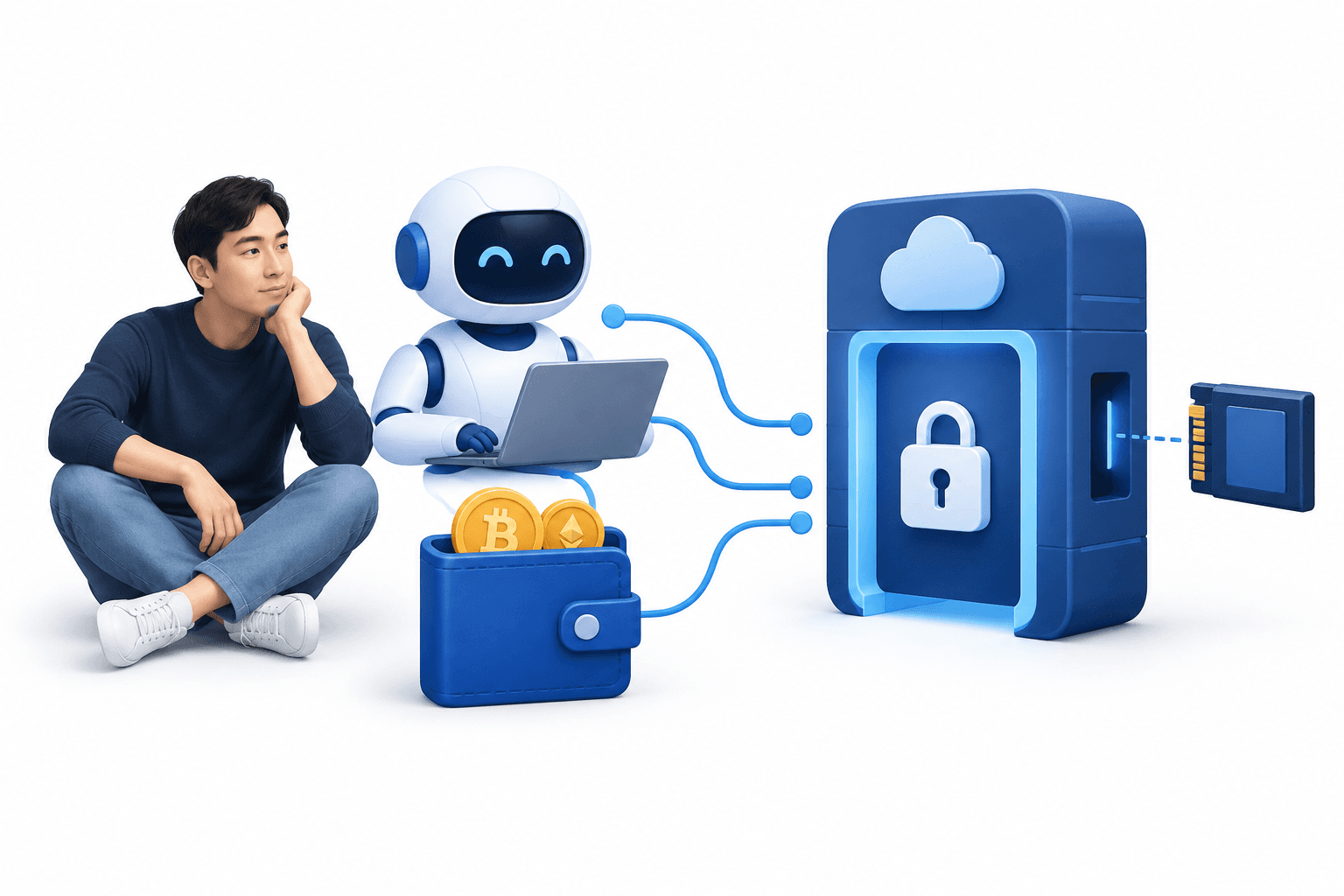
AI trading agents can monitor crypto markets while their users sleep, but the service behind a personalized assistant can still cut off access. Animoca Brands chairman Yat Siu warned that traders risk becoming dependent on agents they do not control, potentially losing access to an assistant after spending months teaching it their preferences.
Key Takeaways
- Siu says an account suspension could interrupt workflows built around an agent’s accumulated knowledge of its user.
- Coinbase and Binance have introduced tools that let agents handle crypto transactions or spot orders, extending their role beyond answering questions.
- Personalized questions can help distinguish trading strategies, but similar AI models may also encourage investors to take related positions.
Table of Contents
- AI trading agents create a dependency beyond trading
- What agents can already do with crypto
- Why automation does not guarantee an edge
- Personalization comes with an information cost
- Conclusion
AI trading agents create a dependency beyond trading
Speaking on the sidelines of Token2049 Singapore, Siu described a risk that grows as an assistant becomes more useful: the company operating it still controls access. An account suspension could interrupt the activities a user has built around that service.
Memory is central to that dependency. A trader might spend months teaching an agent which markets to watch and what information to consider before a decision. Remembering those conversations saves repeated explanations, but makes losing the assistant more disruptive.
Siu argued that users should, at minimum, have the right to download their data so another agent might take over. That was a recommendation for portability, not an announcement that such transfers are available across services.
| Item | Details |
|---|---|
| Coinbase Agentic Wallets | Introduced in February; agents can spend and trade crypto within limits set by users. |
| Binance AI Agent Skills | Launched in March; provides live market data and tools to place and manage spot orders. |
| Specialized assistants | Siu recommends separate agents after his own crypto-focused assistant misinterpreted unrelated questions. |
| Data portability | Siu advocates downloadable user data so another agent might take over. |
What agents can already do with crypto
The practical distinction from a chatbot is continuing activity rather than a response only when prompted. Siu used conference planning as an example: an agent could watch for new announcements and suggest an event, rather than simply return a list on request.
Crypto companies are extending that model to money management. Coinbase introduced Agentic Wallets in February, allowing agents to spend and trade within user-set limits. Binance launched AI Agent Skills in March, providing live market data and tools to place and manage spot orders.
Those capabilities let users delegate more market-following work around the clock. They do not, by themselves, establish that an agent will produce a better trading result.
Why automation does not guarantee an edge
Siu said people asking an AI about the same trade could receive roughly the same answer. The differentiator, in his account, is the follow-up: questions grounded in a user’s knowledge, concerns and preferences can shape a more personalized strategy over time.
The potential for similar responses also has market-wide implications. In April 2025, the Bank of England’s Financial Policy Committee warned that widespread use of similar models could lead investors toward related positions during stress and amplify market shocks.
Specialization matters too. Siu said his own agent became so focused on crypto trading and investment management that it interpreted unrelated questions through that lens. His proposed solution was to use separate, specialized agents rather than combine scheduling, travel and crypto advice in the same assistant.
Personalization comes with an information cost
Siu suggested treating an AI assistant like a third-party adviser: before sharing a document, consider what information it needs and what can be omitted. Details about income, personal finances and close relationships expand what the service knows about its user.
A 2026 Pew Research Center survey found that 71% of US adults believed increased AI use would make their personal information less secure.
Siu’s view leaves humans responsible for supplying ideas and directing attention, even when they are not approving every action. Delegating execution, in other words, does not eliminate the user’s role in shaping what an agent does.
Conclusion
Siu’s warning centers on the trade-off behind personalization: an agent can become more useful as it learns, while the user remains dependent on the provider for access. Trading tools are already available; control over the assistant and its accumulated data is a separate issue.
Read More News
Disclaimer
This FinanceVelix article provides general information, not personalized financial, investment, legal, or tax advice. Market prices, interest rates and economic conditions can change; investments carry a risk of loss. Facts reflect the material available when published and may change. Check important information independently and consult a qualified professional when needed. Mentioning an asset, company, or service is not an endorsement.