Compressed biogas projects in Maharashtra need coordinated action on policy, financing and waste supplies, Bharat Petroleum Corporation Limited said at an October 22, 2026, workshop in Mumbai. Held with the Ministry of Petroleum and Natural Gas and the Maharashtra government, the event focused on turning agricultural residues, cattle dung and municipal organic waste into renewable energy.
Key Takeaways
- BPCL called for closer coordination among governments, industry, farmers and financial institutions.
- A ministry official urged Maharashtra to align policy, establish a land bank and assess feedstock availability.
- Discussions covered reliable buyers, stable pricing, approvals and infrastructure needed to develop projects.
Table of Contents
- Compressed biogas expansion hinges on project readiness
- Waste supplies and manure connect energy with agriculture
- Commercial conditions remain central to implementation
- Conclusion
Compressed biogas expansion hinges on project readiness
The workshop, titled “Waste to Wealth – Scaling GOBARdhan,” brought together policy and commercial questions that must be addressed to move projects into operation. BPCL reiterated its role as a producer, buyer and facilitator in the sector.
Vikas Singh, Director (GP) at the Ministry of Petroleum and Natural Gas, urged Maharashtra to align its state policy with the GOBARdhan initiative, establish a land bank and carry out a detailed feedstock assessment. These were requests to facilitate development, rather than announcements of completed arrangements.
Participants also discussed the Model State CBG Policy, SASCI 2026-27 and Maharashtra’s CBG policy and implementation requirements.
| Item | Details |
|---|---|
| Offtake | Assured purchases of plant output were identified as a key challenge. |
| Pricing | Participants discussed the need for stable pricing. |
| Approvals | Streamlined approvals were among the implementation priorities. |
| Project support | Financing and supporting infrastructure were also on the agenda. |
Waste supplies and manure connect energy with agriculture
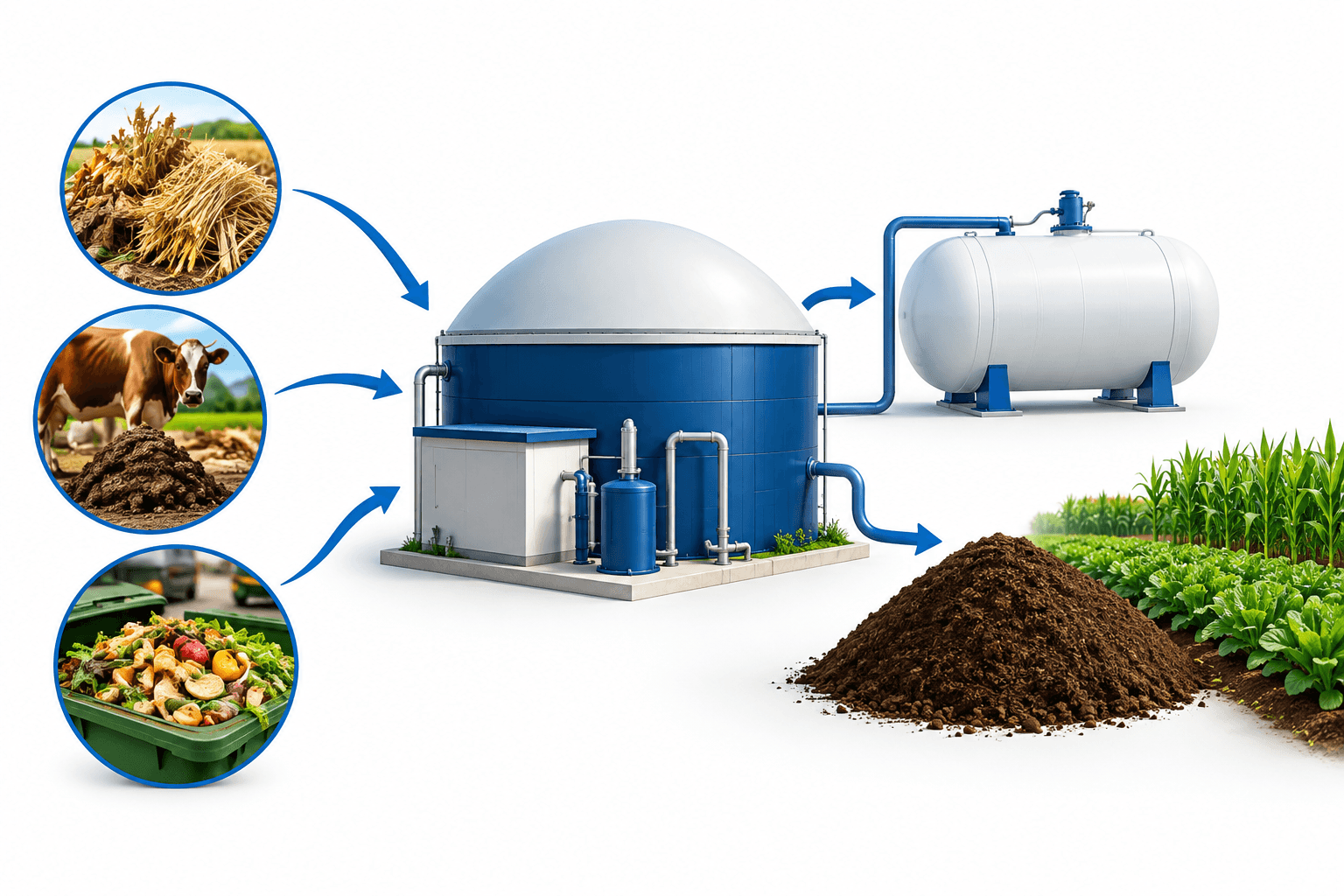
BPCL Chairman and Managing Director Sanjay Khanna said compressed biogas could connect renewable energy production with waste management, sustainable agriculture and rural livelihoods. He identified agricultural residues, cattle dung, press mud and municipal organic waste as potential inputs.
The government’s GOBARdhan initiative overview describes the conversion of cattle dung and farm solid waste into compost, fertilizer, biogas and bio-CNG. That framework explains the workshop’s emphasis on both fuel production and the use of organic by-products.
Khanna highlighted the role of manure from CBG plants in improving soil fertility. BPCL’s research and development team separately presented enriched fermented organic manure and its potential to support soil health and sustainable agriculture.
Maharashtra Chief Secretary Rajesh Aggarwal called for efficient use of agricultural and municipal solid waste to support energy generation and scientific waste management.
Commercial conditions remain central to implementation
The discussions extended beyond identifying available waste. Participants examined the conditions needed to finance, build and operate projects, including dependable demand for their output.
BPCL emphasised collaboration among government agencies, farmers, cooperatives and industry to translate policy objectives into operating facilities. For developers, the workshop’s agenda linked access to inputs and land with the commercial arrangements needed to sustain production.
Conclusion
The workshop set out practical priorities for expanding Maharashtra’s CBG sector. Follow-through on the proposed land bank, feedstock assessment and commercial arrangements will be the next developments to watch; the supplied account gives no implementation timetable.
Read More News
Disclaimer
This FinanceVelix article provides general information, not personalized financial, investment, legal, or tax advice. Market prices, interest rates and economic conditions can change; investments carry a risk of loss. Facts reflect the material available when published and may change. Check important information independently and consult a qualified professional when needed. Mentioning an asset, company, or service is not an endorsement.