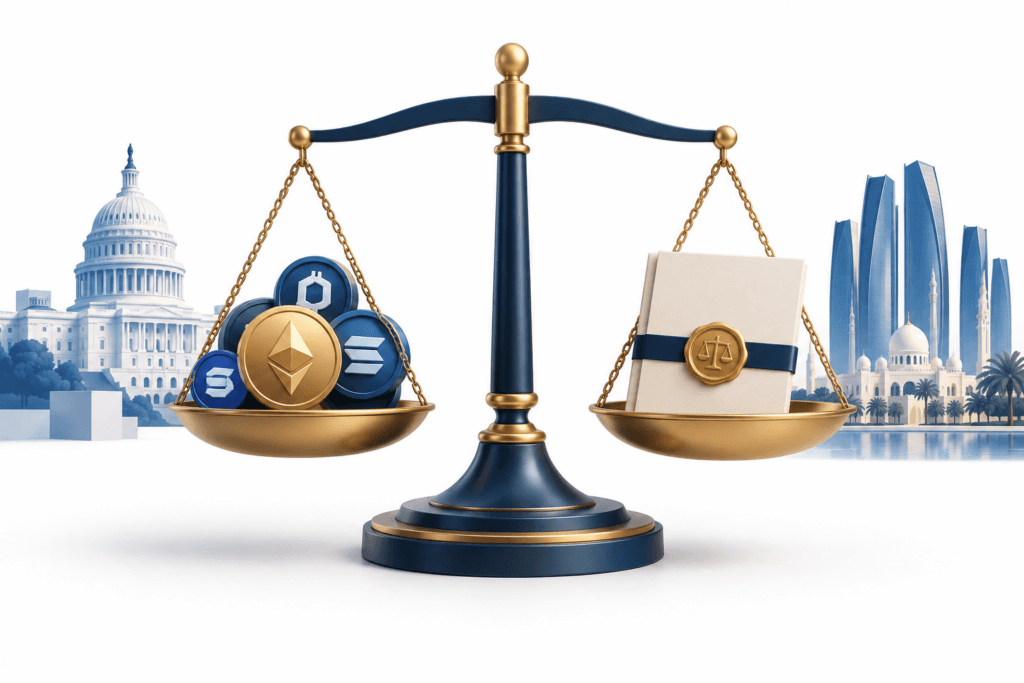
Bybit US expansion would center on partnering with an established brokerage that already has American customers, CEO Ben Zhou said. He cited Interactive Brokers as an example of the kind of firm the exchange could approach as it seeks to compete with Robinhood, rather than build its market entry around a lengthy state-by-state licensing effort.
Key Takeaways
- Zhou favors a partner with an existing US client base; Interactive Brokers was an example, not an announced partner.
- He estimates that obtaining US licenses state by state would take two to three years, strengthening the case for waiting for regulatory clarity.
- The UK is also under consideration, with Zhou seeing less concentrated competition but substantial entry costs.
Table of Contents
- Bybit US expansion puts customer access first
- Licensing costs shape the timing decision
- The UK offers a different competitive calculation
Bybit US expansion puts customer access first
The proposed partnership is about access to customers as well as entry into a new jurisdiction. Zhou said Bybit would prefer to work with an established business that wants to enter crypto and already has a US customer base. That would put distribution at the center of its challenge to incumbent platforms.
Zhou described partnerships as Bybit’s standard approach to entering new territories. But the American opportunity comes with formidable competition: he characterized the market as highly saturated, pointing to Coinbase’s established position and Robinhood’s growing importance.
| Item | Details |
|---|---|
| US route | Seek an established local partner with an existing customer base. |
| UK assessment | Market entry is being examined; a London office location has not been decided. |
| European product target | A planned app would offer derivatives and tokenized stocks. |
Licensing costs shape the timing decision
Zhou estimated that obtaining US licenses state by state would take two to three years, a prolonged process he wants to avoid.
That timetable also affects whether it makes sense to commit resources before the regulatory framework becomes clearer. Zhou raised the possibility of waiting for the Clarity Act or a better understanding of new law, rather than pursuing the existing route immediately.
He suggested that oversight could eventually move toward a federal model involving the Securities and Exchange Commission. That was a possible outcome he described, not an enacted replacement for state licensing requirements.
Zhou also argued that remaining outside the US has preserved what he called Bybit’s “completely clear record there.” In his view, that gives the company room to choose its moment rather than rush into a market simply because competitors are already present.
The UK offers a different competitive calculation
Zhou’s assessment of Britain was more favorable on competition, though not on cost. He said no global exchange dominates the market and identified Coinbase as probably its principal player. He also pointed to the UK’s work toward a new crypto regime as part of the opportunity.
Entering would still require a substantial commitment. Zhou compared the likely effort with obtaining a license under the European Union’s MiCA framework. Earlier in the year, he was invited to meet bodies including the Financial Conduct Authority and members of the House of Lords; a London office location remained undecided.
Europe provides a separate product-development track: Bybit’s planned app would combine derivatives and tokenized stocks, with a launch envisaged as early as the first quarter of the following year. That target sits alongside, rather than settles, its decisions about entering the US and UK.
Read More News
Disclaimer
This FinanceVelix article provides general information, not personalized financial, investment, legal, or tax advice. Market prices, interest rates and economic conditions can change; investments carry a risk of loss. Facts reflect the material available when published and may change. Check important information independently and consult a qualified professional when needed. Mentioning an asset, company, or service is not an endorsement.