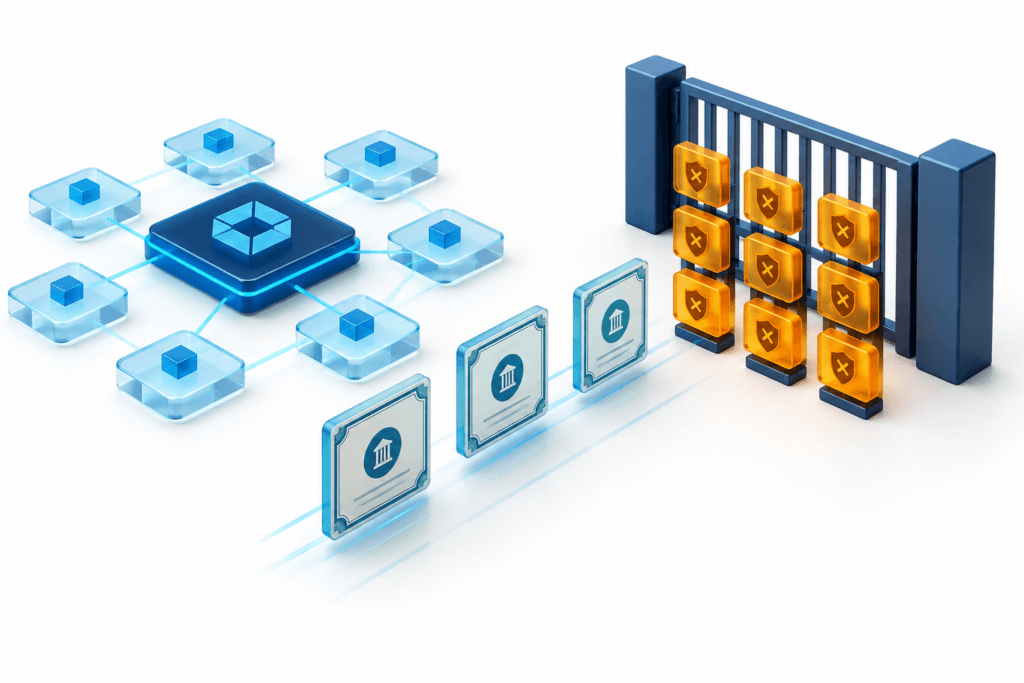
The SEC tokenization agenda expanded on October 23, 2026, as the U.S. Securities and Exchange Commission released fiscal 2027 examination priorities that explicitly include tokenized securities. The agency placed tokenization among emerging market-infrastructure trends and high-risk areas for clearing-agency examinations.
Key Takeaways
- Tokenization is explicitly included in fiscal 2027 priorities after not being named in 2026.
- The examination focus covers market-infrastructure reliability and clearing-agency risks.
- Crypto assets remain absent as a standalone priority for a second consecutive year.
Table of Contents
- SEC tokenization priorities center on market infrastructure
- What Regulation SCI covers
- No standalone crypto section as tokenized-share plans advance
- Conclusion
SEC tokenization priorities center on market infrastructure
The fiscal 2027 priorities put tokenized securities within the SEC’s examination of the systems supporting securities markets. Under Regulation SCI, examiners plan to consider tokenization alongside other emerging trends, including extended trading hours and quantum computing.
The agency also identified tokenization as a high-risk area for clearing-agency examinations. Other areas named for those examinations include default management, securities lending and operational risks.
This is an examination agenda, rather than an announcement approving a tokenized-securities platform or adopting a new tokenization rule. Its practical significance is the explicit attention to how tokenized securities interact with market infrastructure.
| Item | Details |
|---|---|
| Default management | Named alongside tokenization among clearing-agency examination risks. |
| Securities lending | Included in the clearing-agency high-risk areas. |
| Operational risks | Also identified for clearing-agency examination attention. |
What Regulation SCI covers
The SEC’s staff guidance on Regulation SCI explains the existing framework for technology resilience. The rules cover specified market entities, including exchanges, registered clearing agencies and certain alternative trading systems, and address systems supporting functions such as trading, clearance, settlement and market data.
Covered entities must maintain policies and procedures designed to support adequate systems capacity, integrity, resilience, availability and security. The framework also includes corrective action, event notifications, systems reviews and business-continuity testing.
The staff guidance provides background on those obligations; it does not establish the fiscal 2027 priorities. The SEC also states that the guidance itself is not a rule and creates no additional legal obligations.
No standalone crypto section as tokenized-share plans advance
Cryptocurrencies remain absent as a standalone examination priority for the second consecutive year. The SEC last included a dedicated crypto-assets section in its fiscal 2025 priorities. That narrower presentation should not be confused with an absence of scrutiny: tokenized securities now appear expressly within infrastructure examinations.
The priorities arrive as financial firms pursue tokenized-share offerings. Earlier in October 2026, an OKX and Intercontinental Exchange joint venture filed to launch a platform offering tokenized shares in more than 60 U.S.-listed companies. That was a filing for a planned platform, not confirmation that the service had launched.
Conclusion
The next planned step is the SEC’s fiscal 2027 examination work, with tokenization expressly within its infrastructure and clearing-agency scope. The priorities identify areas for scrutiny, not completed findings or platform approvals.
Read More News
Disclaimer
This FinanceVelix article provides general information, not personalized financial, investment, legal, or tax advice. Market prices, interest rates and economic conditions can change; investments carry a risk of loss. Facts reflect the material available when published and may change. Check important information independently and consult a qualified professional when needed. Mentioning an asset, company, or service is not an endorsement.