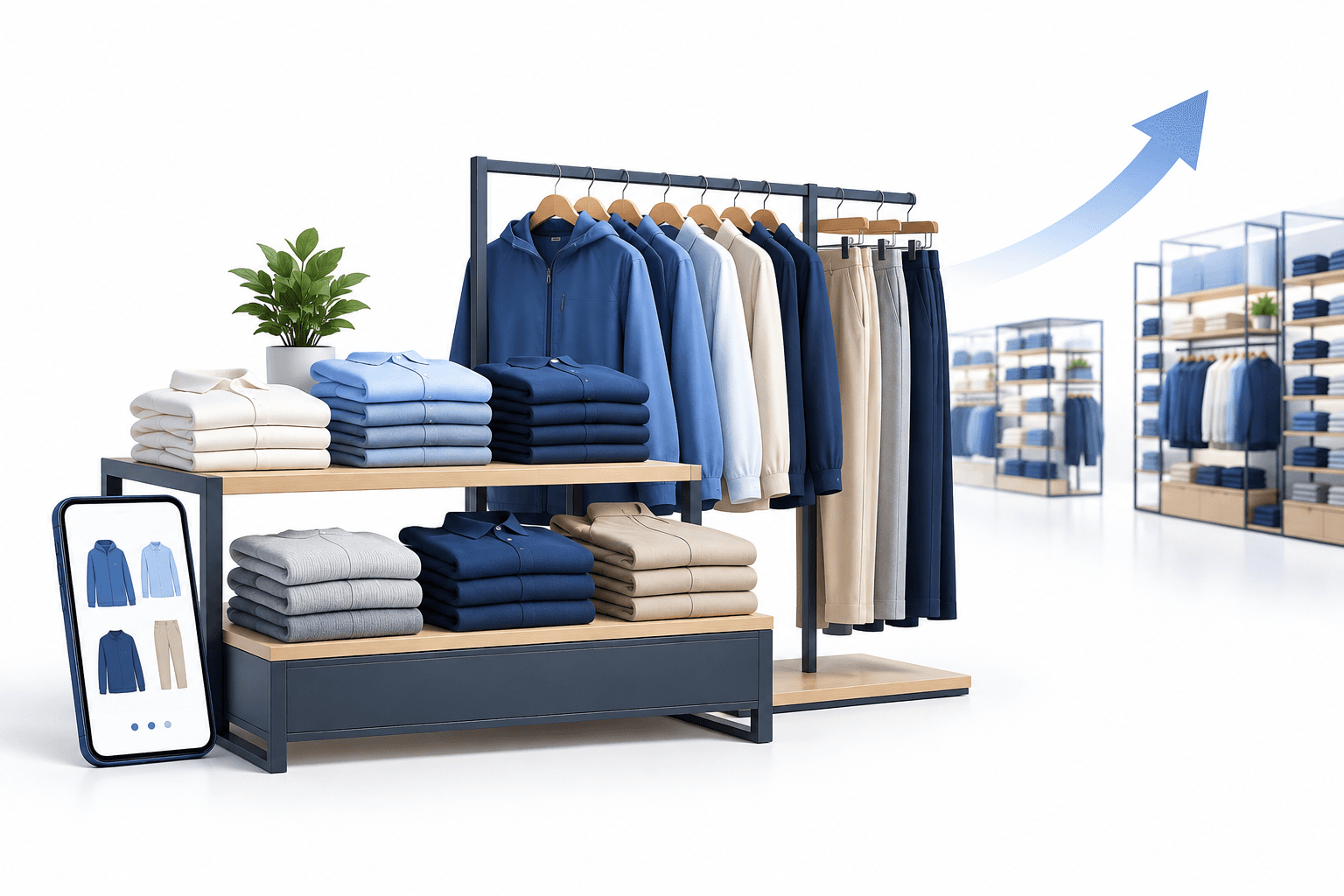
Uniqlo India’s revenue rose 44% year on year to Rs 1,724 crore in the year ended March 2026, while net profit increased 41% to Rs 253 crore. The Japanese clothing retailer plans to expand its store network and digital operations as it builds a larger business around everyday basics and functional clothing.
Key Takeaways
- Revenue has more than quadrupled since FY22, with the retailer operating over 20 stores in India.
- FY26 sales growth exceeded that of several established apparel retailers, although their businesses differ in scale and format.
- Expansion plans cover new and existing markets, alongside investment in the mobile app and ecommerce.
Table of Contents
- Uniqlo India grows faster than established apparel peers
- Quality-led shopping provides context, not proof of the growth driver
- Store and digital expansion remain the next steps
- Conclusion
Uniqlo India grows faster than established apparel peers
The results, disclosed in filings with the Registrar of Companies, show continued expansion seven years after Uniqlo entered India. Profit grew slightly more slowly than revenue, meaning the sales increase did not translate into an equally large percentage gain in earnings.
Uniqlo’s growth rate stood above those of several established clothing retailers. Its revenue base nevertheless remained smaller than those of Zara’s Indian business, Shoppers Stop and Aditya Birla Fashion and Retail.
The comparison also spans different retail models. Zara’s proposition centres on responding quickly to fashion trends, while Uniqlo emphasises versatile wardrobe staples, functionality and repeat use. Faster growth alone does not establish that one model is displacing the other.
| Item | Details |
|---|---|
| Zara India, FY26 | Revenue fell 1.2% to Rs 2,749 crore. |
| Shoppers Stop, FY26 | Revenue rose 9% to Rs 5,043 crore. |
| Aditya Birla Fashion and Retail, FY26 | Revenue rose 11% to Rs 8,177 crore. |
Quality-led shopping provides context, not proof of the growth driver
Deloitte India’s January 2026 fashion consumer research describes a shift towards intentional purchases and quality rather than simply buying more clothing. Its findings provide context for Uniqlo’s positioning, but do not establish what caused the retailer’s FY26 sales increase.
Deloitte’s research on accessible premium fashion found that most premium purchases were planned around discounts, festive periods or special occasions. Consumers sought tangible benefits from higher spending, including durability and craftsmanship, rather than treating a higher price as sufficient evidence of value.
Close to 40% of consumers had tried new fashion brands in the preceding year, with trusted recommendations and accessible prices supporting experimentation. The research drew on a nationwide survey of more than 600 respondents across metros, tier-1 and tier-2 cities, supplemented by market and industry analysis.
Store and digital expansion remain the next steps
Uniqlo said in its Indian filing that it remained confident about the market’s long-term growth potential. It plans to open stores in both existing and untapped markets while strengthening customer engagement through its mobile app and ecommerce operations.
The Indian expansion sits within parent Fast Retailing’s broader international ambitions. The group has identified Southeast Asia, India and Australia as regions with significant growth potential, with plans to adapt product ranges, marketing, stores and ecommerce operations to tropical climates.
These are expansion intentions rather than completed openings. The available information does not specify a timetable or a target number of additional Indian stores.
Conclusion
Uniqlo India ended FY26 with strong revenue and profit growth from a still-smaller base than several established rivals. The next developments to watch are the planned store openings and digital expansion, for which no detailed timetable was provided.
Read More News
Disclaimer
This FinanceVelix article provides general information, not personalized financial, investment, legal, or tax advice. Market prices, interest rates and economic conditions can change; investments carry a risk of loss. Facts reflect the material available when published and may change. Check important information independently and consult a qualified professional when needed. Mentioning an asset, company, or service is not an endorsement.