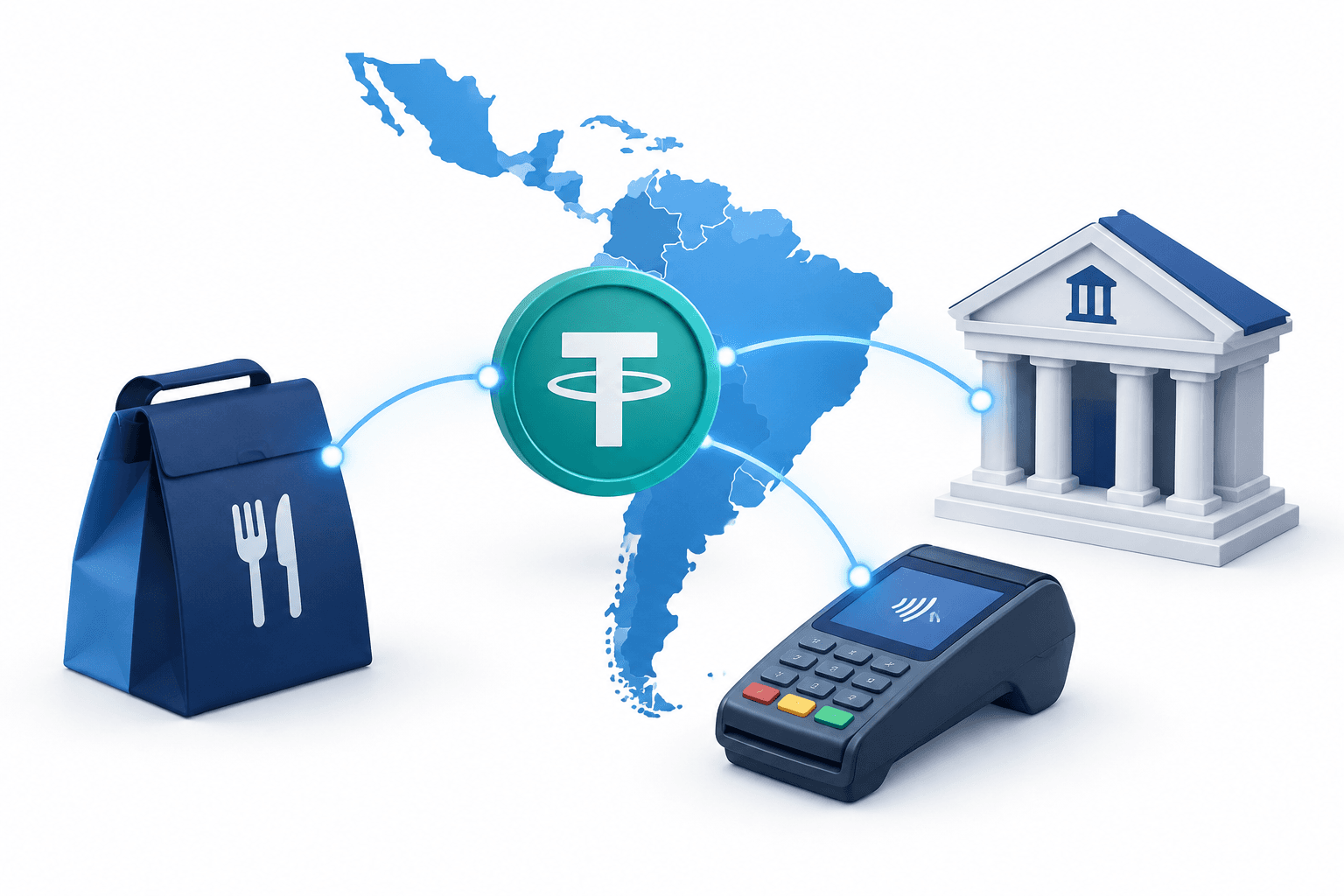
Tether has led a pre-seed investment round in Bolivian fintech Peso to support its expansion across Latin America. The company already connects USDT payments with food delivery, merchant services and Bolivia’s banking network. The investment amount was not disclosed.
Key Takeaways
- The funding is intended to support Peso’s payment infrastructure in Bolivia, Brazil, Colombia and Argentina.
- Peso already enables USDT payments for Yango food delivery orders in Bolivia.
- Bolivia has been considering a framework recognizing USDT for payments, savings and trade.
Table of Contents
- Peso funding targets regional payment connections
- USDT services extend beyond purchases
- Bolivia’s policy changes remain a separate process
- Conclusion
Peso funding targets regional payment connections
In its Wednesday announcement, Tether said the investment would help Peso expand infrastructure linking USDT with local currencies through banking and merchant payment systems. The four-country expansion is the intended use of the funding, rather than a completed rollout.
Peso’s existing services include QR payments, merchant point-of-sale tools and virtual accounts connected to Bolivia’s banking system through ACH transfers. Its integration with Yango allows customers in Bolivia to pay for food delivery orders using USDT.
USDT services extend beyond purchases
The investment follows another announcement involving stablecoin financial services in Bolivia. On Tuesday, lending platform Tala announced a partnership with El Dorado to provide credit through the digital wallet.
Under that arrangement, eligible customers can receive and repay loans in USDT on the Tempo blockchain. The service addresses lending, distinct from Peso’s focus on payment and banking connections.
Bolivia’s policy changes remain a separate process
Businesses in Bolivia have increasingly accepted USDT since 2025 amid high inflation and a prolonged shortage of US dollars that made foreign currency harder to obtain.
In November 2025, the government announced plans to integrate cryptocurrencies and stablecoins into the financial system, including bank custody and crypto-linked products. It began considering a framework in July 2026 that would recognize USDT for payments, savings and trade alongside the boliviano and US dollar.
The proposal followed Bolivia’s abandonment of its longstanding currency peg in June, as the dollar shortage fueled demand for dollar-denominated alternatives.
Conclusion
Tether’s backing supports Peso’s planned regional expansion from an existing Bolivian payments business. The financing amount remains undisclosed, while Bolivia’s proposed USDT framework is a separate policy development.
Read More News
Disclaimer
This FinanceVelix article provides general information, not personalized financial, investment, legal, or tax advice. Market prices, interest rates and economic conditions can change; investments carry a risk of loss. Facts reflect the material available when published and may change. Check important information independently and consult a qualified professional when needed. Mentioning an asset, company, or service is not an endorsement.