Bulten earnings for the third quarter of 2026 showed an EBIT margin of 8.1%, its third consecutive quarterly improvement, as the fastener supplier shifted toward an asset-light trading model. In its October 21 update, management described stronger cash conversion and growth beyond automotive, but the factory disposals also brought an approximately SEK 1.2 billion write-down.
Key Takeaways
- The Q3 EBIT margin reached 8.1%, but management declined to describe roughly 8% as a floor.
- Easier comparisons after the prior year's JLR cyberattack accounted for a large part of the reported sales increase.
- New financial targets remain subject to board decisions, with no announcement date set.
Table of Contents
- Bulten earnings reflect a lower-fixed-cost business
- Sales recovery needs a comparison caveat
- Customer mix remains central to margin ambitions
- Targets and separation work are still pending
- Conclusion
Bulten earnings reflect a lower-fixed-cost business
Bulten completed the sale of its European manufacturing operations and Tianjin factory, reducing the fixed-asset base behind its remaining business. CEO Axel Berntsson said the change should make profitability less sensitive to swings in automotive production volumes.
That distinction matters when assessing the quarter's margin. Historically, weaker automotive volumes could quickly erode profitability because manufacturing carried substantial fixed costs. Berntsson expects a more stable margin profile under the trading model, but did not provide a new profitability target or call the current margin a minimum.
Cash conversion exceeded 100% of EBIT in Q3, and management expects conversion to remain high. The disposals nevertheless had a substantial accounting cost: the approximately SEK 1.2 billion write-down contributed to a loss in discontinued operations and weakened the equity-to-assets ratio.
| Item | Details |
|---|---|
| Reporting period | Third quarter of 2026; update dated October 21. |
| EBIT margin | 8.1%, marking a third consecutive quarterly improvement. |
| Cash conversion | More than 100% of EBIT in Q3. |
| Disposal write-down | Approximately SEK 1.2 billion. |
| Other industries | 33% of sales in the earnings discussion. |
Sales recovery needs a comparison caveat
The earnings discussion cited 48% year-over-year growth in other industries, which represented 33% of sales. Berntsson cautioned that a large portion of the reported increase reflected easier comparisons following the previous year's JLR cyberattack. He said underlying growth was good, but not around 40%, and did not quantify the split.
Management highlighted development in Asia, particularly India, alongside opportunities in AI infrastructure, semiconductors and consumer electronics. Those opportunities are part of an effort to broaden the customer mix rather than rely as heavily on automotive.
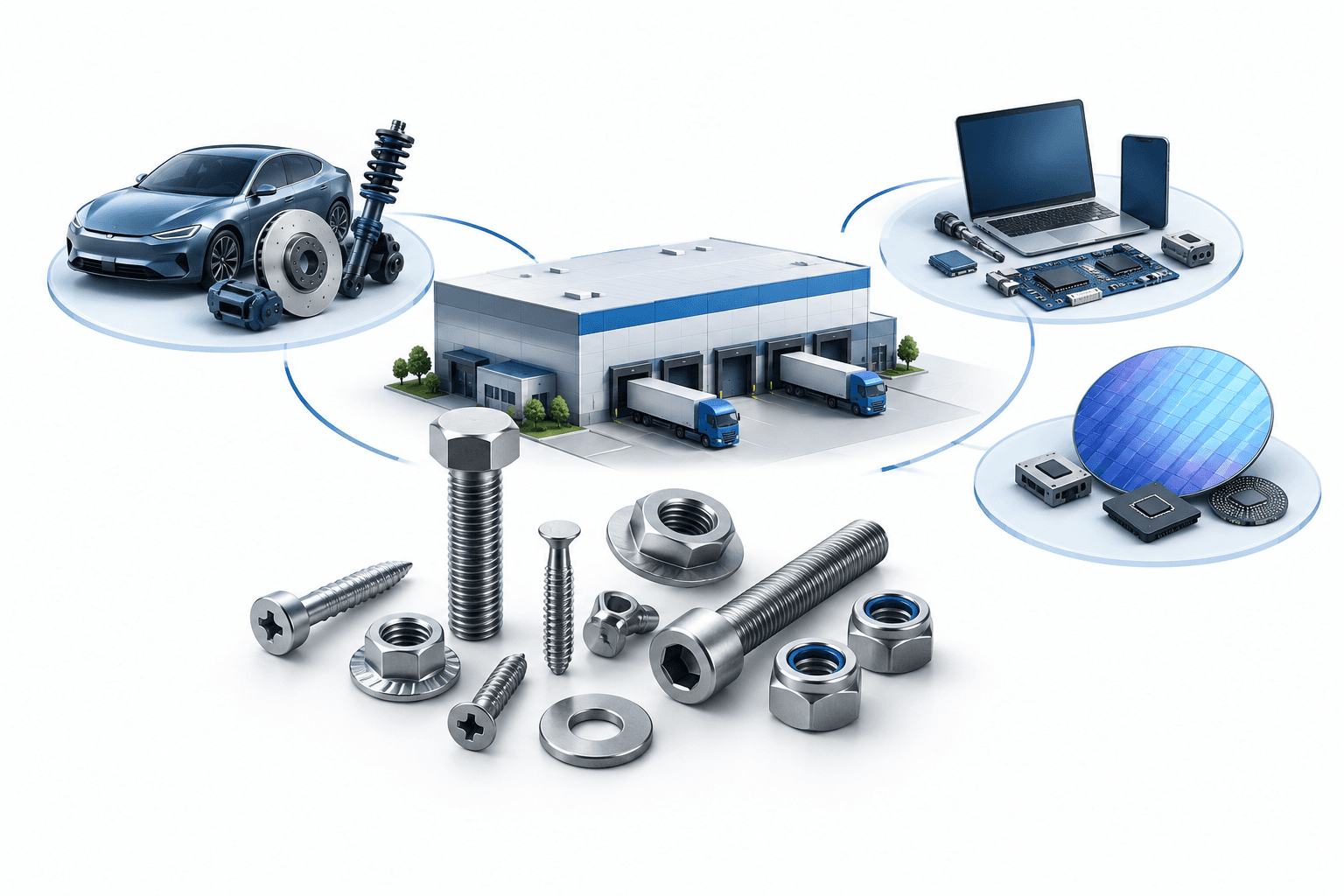
Bulten's description of its fastener solutions outlines services spanning development, supply, logistics and service, with customers in industries including automotive and consumer electronics. That background explains the scope of its offering; it does not establish the quarter's growth rates or project wins.
Customer mix remains central to margin ambitions
Berntsson attributed Bulten's margin gap with competitors Bufab and Bossard mainly to business mix. He said non-automotive activities already carry more favorable margins, while one large automotive customer generates a below-average margin.
Growing the rest of the business could therefore improve group profitability over time. However, Berntsson described the current mix as fairly average and did not expect a substantial near-term shift. His longer-term ambition is not formal margin guidance.
Targets and separation work are still pending
The board has yet to announce financial targets for the reshaped group. Berntsson confirmed that a Capital Markets Day is planned, most likely close to the target release, but gave no date. A potential name change also remains subject to an approval process before an extraordinary general meeting can be called.
Operational work includes IT separation and completion of the new factory in India. Management described organic improvement as the foundation of its strategy, with acquisitions a possible tool rather than a substitute. Share buybacks had not been a substantive topic in board discussions Berntsson had attended.
Conclusion
The Q3 improvement shows stronger operating profitability under Bulten's changed structure, but does not establish a margin floor or the pace of underlying sales growth. The next planned milestones are new financial targets and a Capital Markets Day; neither has a confirmed date.
Read More News
Disclaimer
This FinanceVelix article provides general information, not personalized financial, investment, legal, or tax advice. Market prices, interest rates and economic conditions can change; investments carry a risk of loss. Facts reflect the material available when published and may change. Check important information independently and consult a qualified professional when needed. Mentioning an asset, company, or service is not an endorsement.