Welspun Specialty earnings faced pressure in Q2 FY27 as weaker tube sales and higher operating costs offset growth in stainless steel bars. In its October 22, 2026 earnings update, the company reported quarterly EBITDA of about Rs 4 crore, while management said its 20%–30% volume-growth target could be delayed by a couple of quarters.
Key Takeaways
- Bar sales volume rose about 20% year on year, but tube shipments suffered from weak demand and delivery timing.
- Higher energy, freight and raw-material costs squeezed margins as customers resisted full price increases.
- The tube order book covers about four months of volume, with most deliveries scheduled for Q3 and Q4 FY27.
Table of Contents
- Welspun Specialty earnings reflect uneven product demand
- Trade barriers complicate the volume-growth target
- Specialized orders support plans without major expansion
- Conclusion
Welspun Specialty earnings reflect uneven product demand
The quarter exposed a divide between the company's two product businesses. Bar volumes benefited from greater market penetration, while tube sales were held back by cautious customers, delayed contract finalization and scattered delivery schedules.
Chief Executive Officer Anuj Burakia said the tube decline was not a deliberate decision to avoid low-margin business. He expected quarterly volumes to recover toward roughly 1,300 tonnes in the coming quarters, but that remains a management expectation rather than a completed recovery.
Higher energy prices and disrupted sea routes increased freight, raw-material and scrap costs. The company could pass on only part of those increases, leaving operating profitability under pressure.
| Item | Details |
|---|---|
| H1 FY27 EBITDA | About Rs 19 crore. |
| Customer additions | 24 new customers in H1 FY27. |
| Renewable energy share | Expected to reach about 67% of total energy use in FY27, versus 58% in FY26. |
Trade barriers complicate the volume-growth target
Management said the average safeguard duty on stainless steel bars exported from India to Europe had risen above 20%, from below 10%. Welspun has shifted attention toward non-European markets, including India, as European demand remains slow.
That shift does not remove the pricing challenge. Burakia said capacity previously serving Europe was being redirected into India, contributing to pockets of oversupply and aggressive selling. He described the domestic imbalance as temporary, while acknowledging that demand was currently slow across regions.
Against that backdrop, management said its 20%–30% volume-growth ambition could take a couple of quarters longer to achieve. The tube bid book represented about 10 months of volume, with most projects expected to be finalized in the current or following quarter. Those bids are not yet confirmed orders.
Specialized orders support plans without major expansion
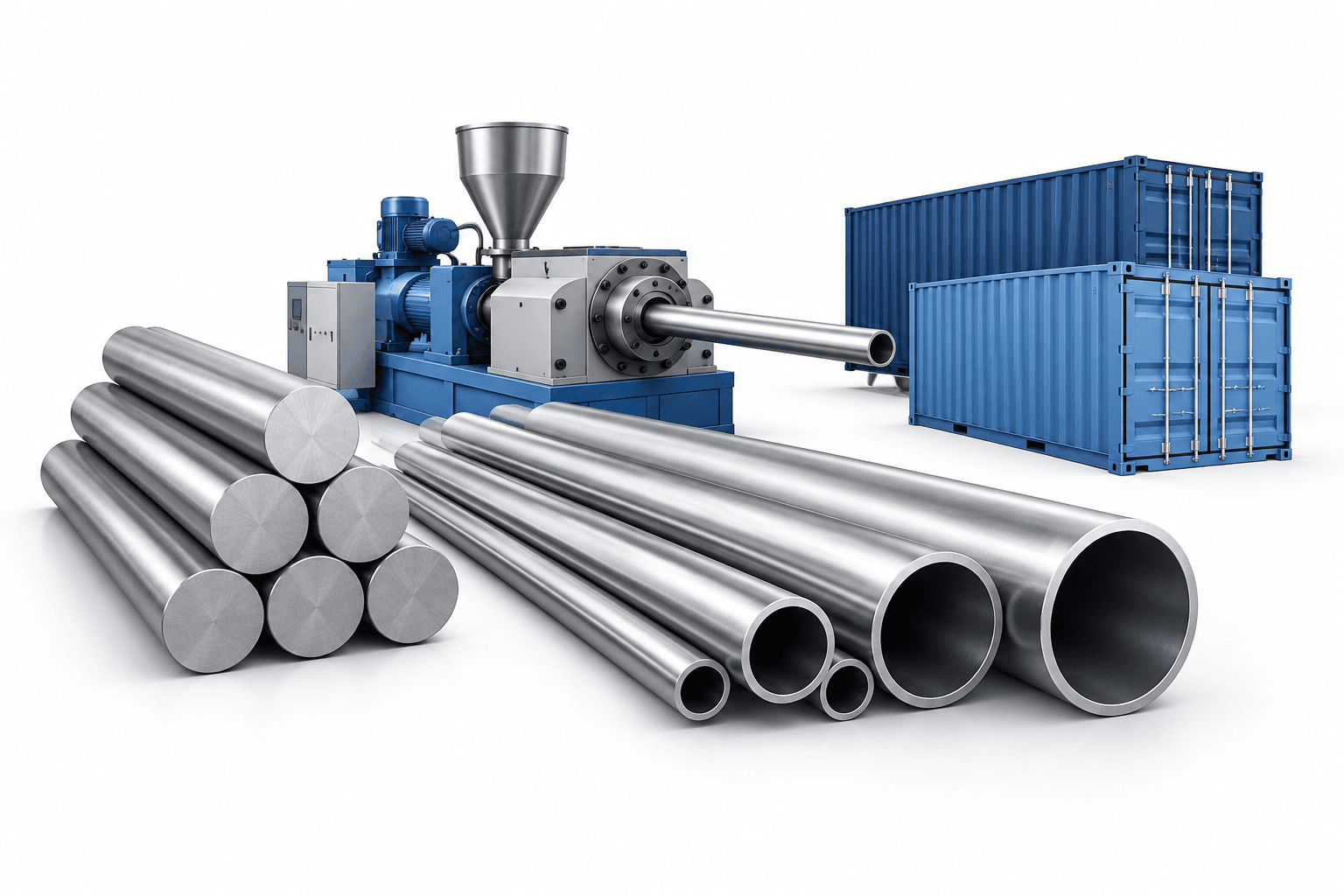
Welspun won orders for specialized products including 24-meter tubes, moderator heat-exchanger tubes for nuclear power and duplex fin tubes. Its integrated pipe and tube manufacturing capabilities span steelmaking, extrusion and downstream processing, providing context for its focus on specialized applications.
Burakia said ADNOC had approved the company's pipe product, while tube approval remained pending. He expected the latter soon but stressed that Welspun did not have access to ADNOC's internal approval systems.
The company plans no significant capital expenditure in FY27 or FY28 beyond maintenance, unless a specific investment opportunity arises. Its near-term priority is therefore delivering existing orders and improving volumes rather than committing to a major capacity expansion.
Conclusion
The next scheduled test is delivery of the tube orders concentrated in Q3 and Q4 FY27. Stronger shipments would address the quarter's volume weakness, while cost pass-through and domestic pricing remain separate challenges for profitability.
Read More News
Disclaimer
This FinanceVelix article provides general information, not personalized financial, investment, legal, or tax advice. Market prices, interest rates and economic conditions can change; investments carry a risk of loss. Facts reflect the material available when published and may change. Check important information independently and consult a qualified professional when needed. Mentioning an asset, company, or service is not an endorsement.