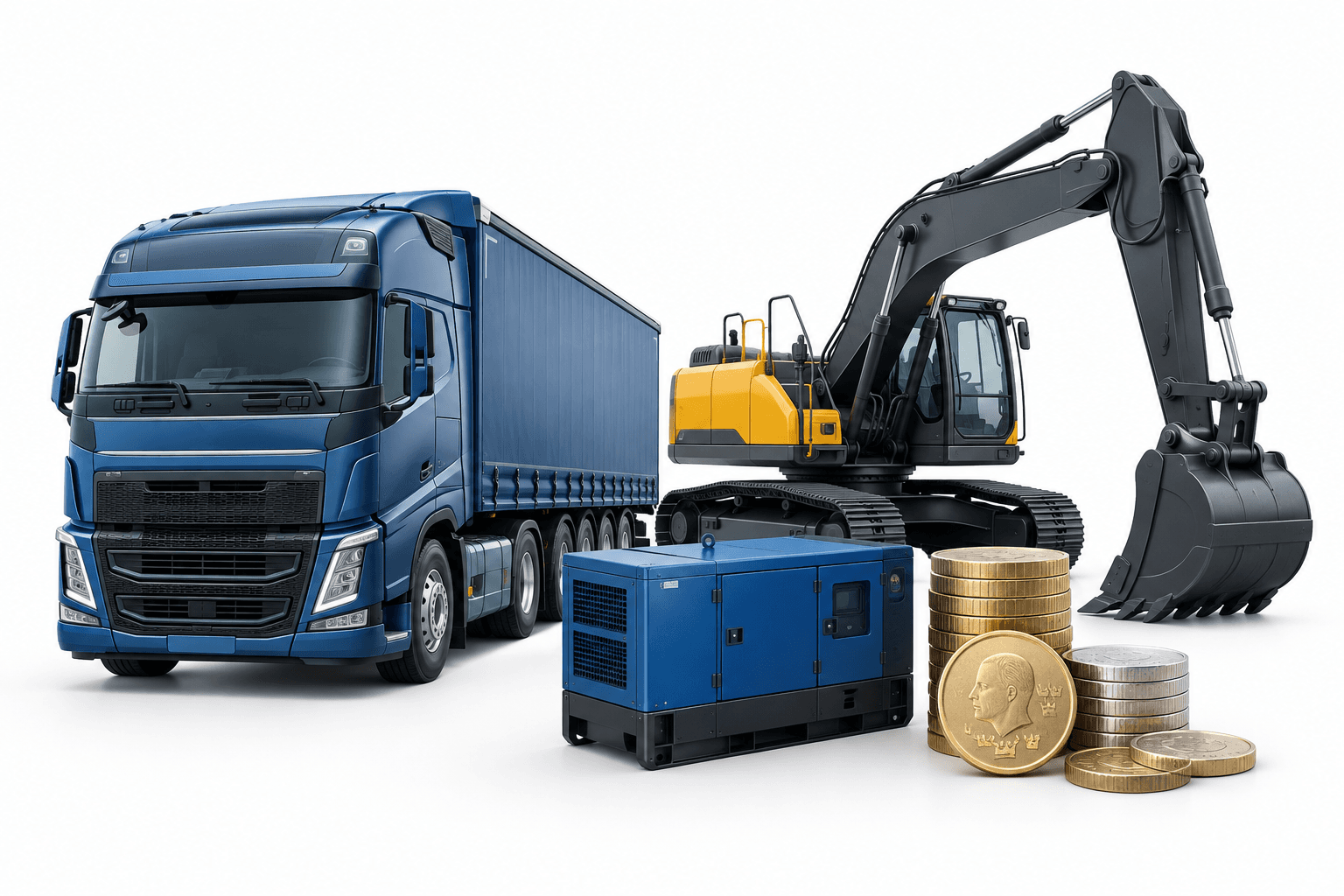
Volvo earnings improved in the third quarter of 2026, with adjusted operating income reaching SEK 14.7 billion on net sales of SEK 119.5 billion. The results, released on October 23, showed 7% organic sales growth and a 12.3% adjusted operating margin, as stronger truck demand and construction-equipment sales helped offset cost pressures.
Key Takeaways
- Adjusted operating margin increased to 12.3% from 10.6% a year earlier.
- Group truck orders rose 26%, while deliveries increased 11% to 49,600 vehicles.
- Tariff refunds supported third-quarter profitability, with further offsets expected in the fourth quarter.
Table of Contents
- Volvo earnings improve as sales and cash generation rise
- Truck orders strengthen, but North America remains uneven
- Construction equipment and Penta add support
- Refunds and currency benefits shape the fourth-quarter outlook
- Conclusion
Volvo earnings improve as sales and cash generation rise
Adjusted operating income increased from SEK 11.7 billion a year earlier, while the adjusted operating margin widened by 1.7 percentage points. Vehicle sales grew 8% organically and service sales increased 5%, giving the group growth in both equipment sales and its installed customer base.
Volvo’s third-quarter 2026 results event took place on October 23, with President and CEO Martin Lundstedt and CFO Mats Backman presenting the quarter.
Industrial Operations generated SEK 7.2 billion of operating cash flow. Management attributed the improvement to higher earnings and a smaller seasonal build-up in working capital. Negative market and customer mix, along with higher freight and material costs, remained pressures on profitability.
| Item | Details |
|---|---|
| Q3 earnings per share | SEK 5.29. |
| Industrial net financial position | SEK 43.8 billion net cash at the end of Q3. |
| Industrial return on capital employed | 27.5% on a rolling 12-month basis. |
| Financial Services credit portfolio | SEK 284 billion. |
| Financial Services return on equity | 10% on a rolling 12-month basis. |
Truck orders strengthen, but North America remains uneven
The truck business posted 8% organic sales growth and SEK 9.1 billion of adjusted operating income, with an 11.1% margin. Deliveries rose 11% to 49,600 vehicles, including a 42% increase in North America.
The regional recovery was not yet enough to erase earlier weakness: North American deliveries remained 4% lower year to date. Group truck order intake rose 26% in the quarter, while Lundstedt said North American orders were up 71% year to date.
Volvo opened its 2027 North American order book on September 1. Management said most September orders were for 2027 and that it was keeping order allocation restrictive rather than filling delivery slots too far ahead.
The company maintained its North American retail truck market outlook of 265,000 units for 2026 and forecast 300,000 units for 2027. Those figures are management’s market expectations, not Volvo delivery targets.
Construction equipment and Penta add support
Construction Equipment delivered 12% organic sales growth and SEK 3.2 billion of adjusted operating income, producing a 16.1% margin. Volvo-branded equipment volumes rose 8%, with Europe and North America supporting growth.
Volvo Penta’s organic sales increased 4%, and adjusted operating income reached SEK 1.1 billion at a 21.1% margin. Data-center business accounted for 32% of the division’s order book value. Management linked that demand to data-center and artificial-intelligence infrastructure expansion.
Buses moved in the opposite direction, with organic sales down 6% and an adjusted operating margin of 7.7%. Across the group, rolling 12-month service sales reached SEK 128 billion, providing a recurring business alongside new vehicle and equipment deliveries.
Electric-vehicle orders rose 107% to 6,590 units on a rolling 12-month basis, although deliveries declined 7%. The contrast shows that stronger orders had not yet translated into higher delivered volumes.
Refunds and currency benefits shape the fourth-quarter outlook
Management said refunds fully offset net U.S. tariff costs in the third quarter and expected Section 232 refunds to offset the anticipated net tariff impact in the fourth quarter. That support matters when assessing the margin improvement: profitability reflected both operating performance and tariff-related offsets.
Currency movements contributed approximately SEK 2 billion positively in the third quarter. Volvo expects a further positive currency effect of about SEK 1.3 billion in the fourth quarter and guided to a 23% tax rate for full-year 2026.
For construction equipment, Volvo raised its 2026 European market growth midpoint to 10% and maintained its North American expectation at 5%. Management expects 5% growth in both regions in 2027.
Conclusion
Volvo earnings showed stronger profitability and improving orders, but North American deliveries remained below their year-earlier level over the first nine months. The fourth-quarter results will show whether the expected tariff refunds and currency benefits materialize as the company begins converting its 2027 order book into production plans.
Read More News
Disclaimer
This FinanceVelix article provides general information, not personalized financial, investment, legal, or tax advice. Market prices, interest rates and economic conditions can change; investments carry a risk of loss. Facts reflect the material available when published and may change. Check important information independently and consult a qualified professional when needed. Mentioning an asset, company, or service is not an endorsement.