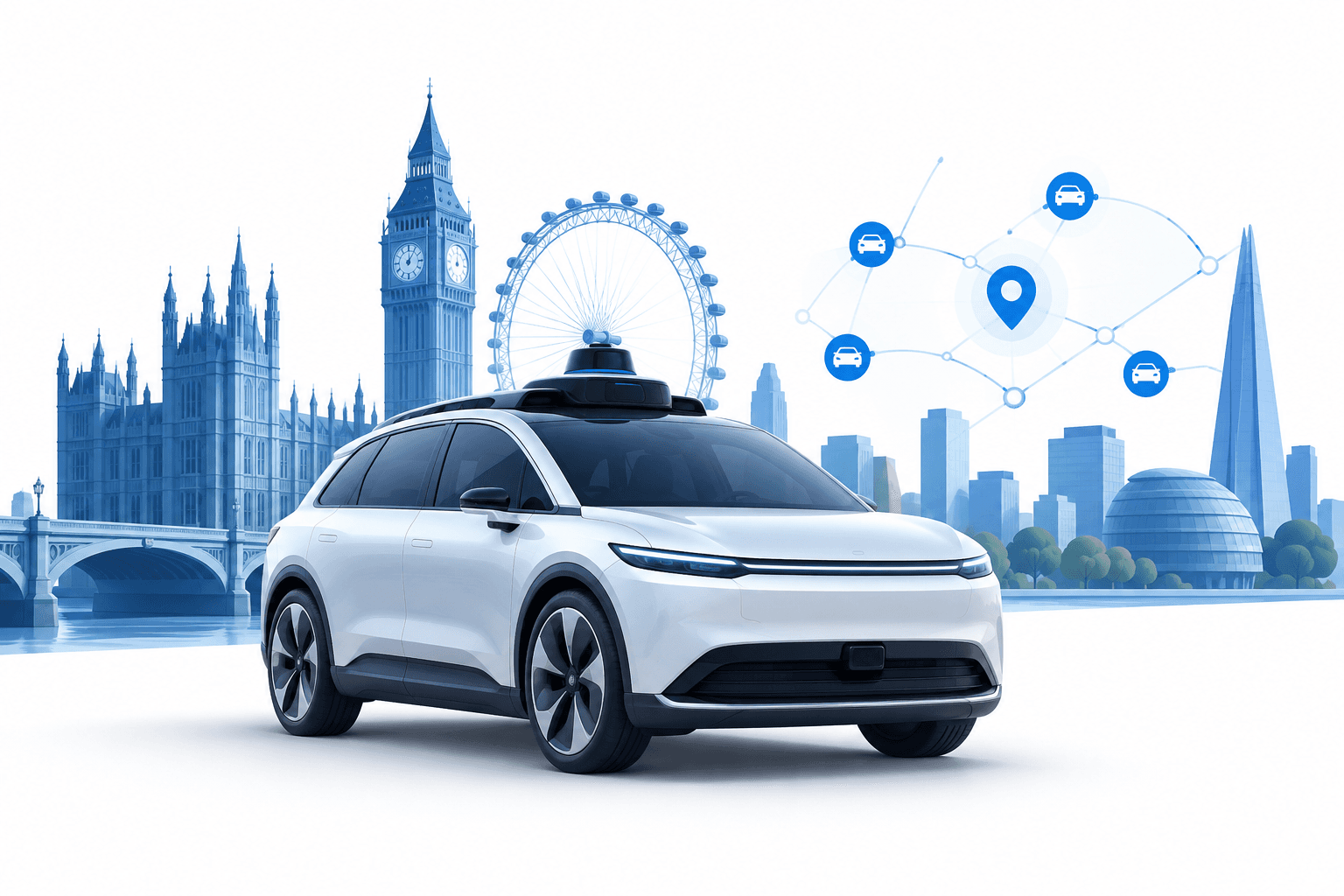
Baidu RT6 autonomous vehicles were showcased in London on October 23, 2026, ahead of a planned driverless robotaxi service with Lyft in 2027. The sixth-generation vehicle has been undergoing testing in the borough of Brent since July, with human safety operators onboard.
Key Takeaways
- The London showcase precedes a planned service launch, rather than marking the start of fully driverless passenger operations.
- Baidu and Lyft intend to combine autonomous vehicles with existing human-driven transport services.
- The partners’ original European deployment plan targeted 2026, subject to regulatory approval; the London service is now planned for 2027.
Table of Contents
- Baidu RT6 moves from testing toward a London service
- Lyft partnership pairs vehicles with a ride-hailing network
- The deployment dates cover different stages and markets
- Conclusion
Baidu RT6 moves from testing toward a London service
The London unveiling extends the international expansion of Apollo Go, Baidu’s autonomous-driving business. Testing in Brent has provided an on-road development stage ahead of the planned commercial service.
The presence of human safety operators is an important distinction: the testing described is not the same as an operating service without a driver. The 2027 launch remains a plan, not a completed deployment.
| Item | Details |
|---|---|
| Vehicle technology | The partnership specifies Baidu’s Apollo Autonomous Driving Foundation Model. |
| Safety design | The original deployment announcement described a 10-layer safety redundancy architecture. |
| European integration | Lyft identified FREENOW’s relationships with regulators and taxi operators as an enabler for deployment. |
Lyft partnership pairs vehicles with a ride-hailing network
The companies’ August 2025 European deployment agreement set out how Baidu’s technology would connect with Lyft’s platform. It described a hybrid network in which autonomous vehicles and human drivers would operate alongside one another, rather than robotaxis replacing the existing driver network.
Under that agreement, Lyft would manage the operational value chain and marketplace, while Baidu would supply vehicles, technology validation and technical support. The arrangement separates the autonomous-driving technology from the platform used to offer rides.
The RT6 is a purpose-built, fully electric vehicle designed for ride-hailing. The partnership envisages making its rides available through Lyft’s ecosystem.
The deployment dates cover different stages and markets
The August 4, 2025 partnership announcement initially envisaged deployments in Germany and the United Kingdom during 2026, pending regulatory approval. The October 2026 London showcase points instead to a 2027 target for the city’s fully driverless service.
Those dates should not be treated as identical milestones: the earlier announcement covered initial deployments across two countries, while the current plan concerns a London driverless service. The available information does not establish a revised timetable for the whole European rollout.
Conclusion
The next milestone for Baidu RT6 in London is the planned 2027 driverless service. Regulatory clearance and the transition from safety-operator testing to driverless operations remain the practical steps to watch.
Read More News
Disclaimer
This FinanceVelix article provides general information, not personalized financial, investment, legal, or tax advice. Market prices, interest rates and economic conditions can change; investments carry a risk of loss. Facts reflect the material available when published and may change. Check important information independently and consult a qualified professional when needed. Mentioning an asset, company, or service is not an endorsement.