Adani Green earnings strengthened in the six months ended September 30, 2026, as capacity expansion lifted power-supply EBITDA 41% to INR7,957 crore. Results announced on October 21 showed operational renewable capacity reaching 20.8 GW, but management’s subsequent earnings-call comments highlighted a constraint on further growth: delayed transmission infrastructure at Khavda.
Key Takeaways
- First-half power-supply revenue rose 36%, while the related EBITDA margin reached 92.9%.
- Management still targets 4.5–5 GW of FY27 commissioning, conditional on the delayed Khavda transmission corridor becoming available.
- Battery storage is expanding rapidly, while heavy capital spending is expected to keep leverage elevated through FY28–FY29.
Table of Contents
- Adani Green earnings benefit from capacity expansion
- Khavda transmission timing conditions the commissioning target
- Battery expansion offers flexibility, with contracting still underway
- Heavy investment keeps leverage in focus
- Conclusion
Adani Green earnings benefit from capacity expansion
Adani Green’s H1 FY27 results announcement showed power-supply revenue of INR8,299 crore, supported by a 32% increase in energy sales to 25,747 million units. Operational renewable capacity grew 24% year over year to 20.8 GW.
Growth accelerated in the second quarter: power-supply revenue increased 45% to INR4,019 crore, while EBITDA from power supply rose 51% to INR3,835 crore. The quarterly EBITDA margin reached 92%, compared with 90.5% a year earlier.
On the earnings call, CFO Saurabh Shah attributed EBITDA growth outpacing generation growth to battery-storage revenue, stronger wind resources, higher merchant and infirm-power realizations, and contained operating costs. These factors helped the company earn more from its expanding operating portfolio.
| Item | Details |
|---|---|
| Reporting period | H1 and Q2 FY27 ended September 30, 2026 |
| H1 cash profit | INR4,176 crore, up 35% year over year |
| Q2 cash profit | INR1,951 crore, up 45% year over year |
| Long-term return threshold | Management targets 13–14% return on equity with counterparties rated at least AA+ |
| Foreign-currency borrowing | Approximately 30% of the loan book; management said both principal and interest were fully hedged |
Khavda transmission timing conditions the commissioning target
CEO Ashish Khanna said the Phase 3 transmission corridor at Khavda was now expected in Q4 FY27 rather than Q3. The company still believed it could commission 4.5–5 GW during the fiscal year if the line became available in Q4.
Adani Green is completing supporting infrastructure ahead of the corridor’s arrival so that solar modules can be installed quickly once transmission access is sufficiently certain. Management said its approach is to avoid commissioning generation capacity before the ability to move that electricity onto the grid is assured.
The constraint is already affecting output. Solar capacity utilization fell to about 23% in H1 FY27 from 24.8% a year earlier, predominantly because of curtailment, Khanna said, despite slightly better resource availability.
The payment distinction matters: management said scheduled electricity is covered by take-or-pay arrangements, including deemed-generation payments when scheduled supply is curtailed. Electricity that cannot be scheduled at all is not paid for.
Battery expansion offers flexibility, with contracting still underway
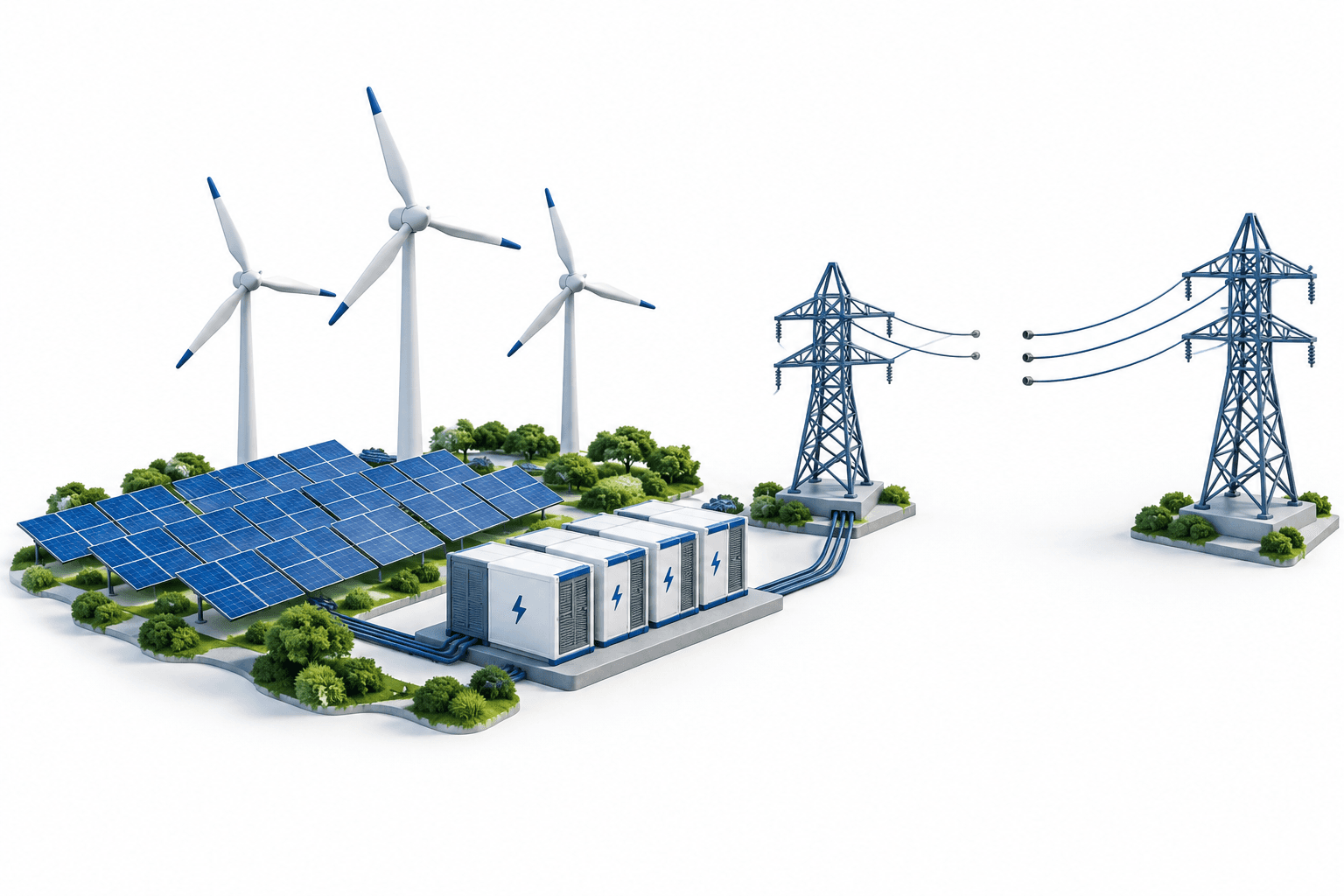
Adani Green added approximately 3.08 GWh of installed battery energy storage during Q2, bringing the total to 6.63 GWh. Management expects to exceed its 10 GWh storage target for FY27.
Storage can absorb renewable generation that might otherwise face grid constraints, helping the company manage curtailment at Khavda. It does not remove the dependence of new generating capacity on transmission availability.
Khanna said about 3.5 GWh of storage capacity was covered by long-term contracts, with contracting for the balance in progress. That leaves part of the installed portfolio exposed to merchant-market conditions rather than secured long-term revenue.
Heavy investment keeps leverage in focus
First-half capital expenditure rose 38% to INR17,160 crore, and net debt to run-rate EBITDA stood at 5.6 times. Management said the INR2.4 lakh crore investment program through FY30 remained on track, with accelerated battery deployment additive to, rather than a diversion from, its broader plans.
The company targets 50 GW of capacity by 2030, including 5 GW of pumped storage. That remains a development objective, not completed capacity.
Shah expected leverage to remain around its current range until FY28–FY29 before declining as more projects become operational and project loans amortize. Khanna said 72% of project loans carried fixed rates for three to five years, while the average borrowing cost had fallen to 8.9% from 11.1% in 2019.
The fixed-rate share limits near-term exposure to interest-rate changes, but it does not eliminate the funding demands of construction or the execution risk associated with delayed grid connections.
Conclusion
Adani Green earnings show strong operating growth, but the next execution milestone is the expected Q4 FY27 availability of Khavda’s Phase 3 transmission corridor. Its timing will determine whether management can deliver the planned fiscal-year commissioning alongside further battery-storage expansion.
Read More News
Disclaimer
This FinanceVelix article provides general information, not personalized financial, investment, legal, or tax advice. Market prices, interest rates and economic conditions can change; investments carry a risk of loss. Facts reflect the material available when published and may change. Check important information independently and consult a qualified professional when needed. Mentioning an asset, company, or service is not an endorsement.