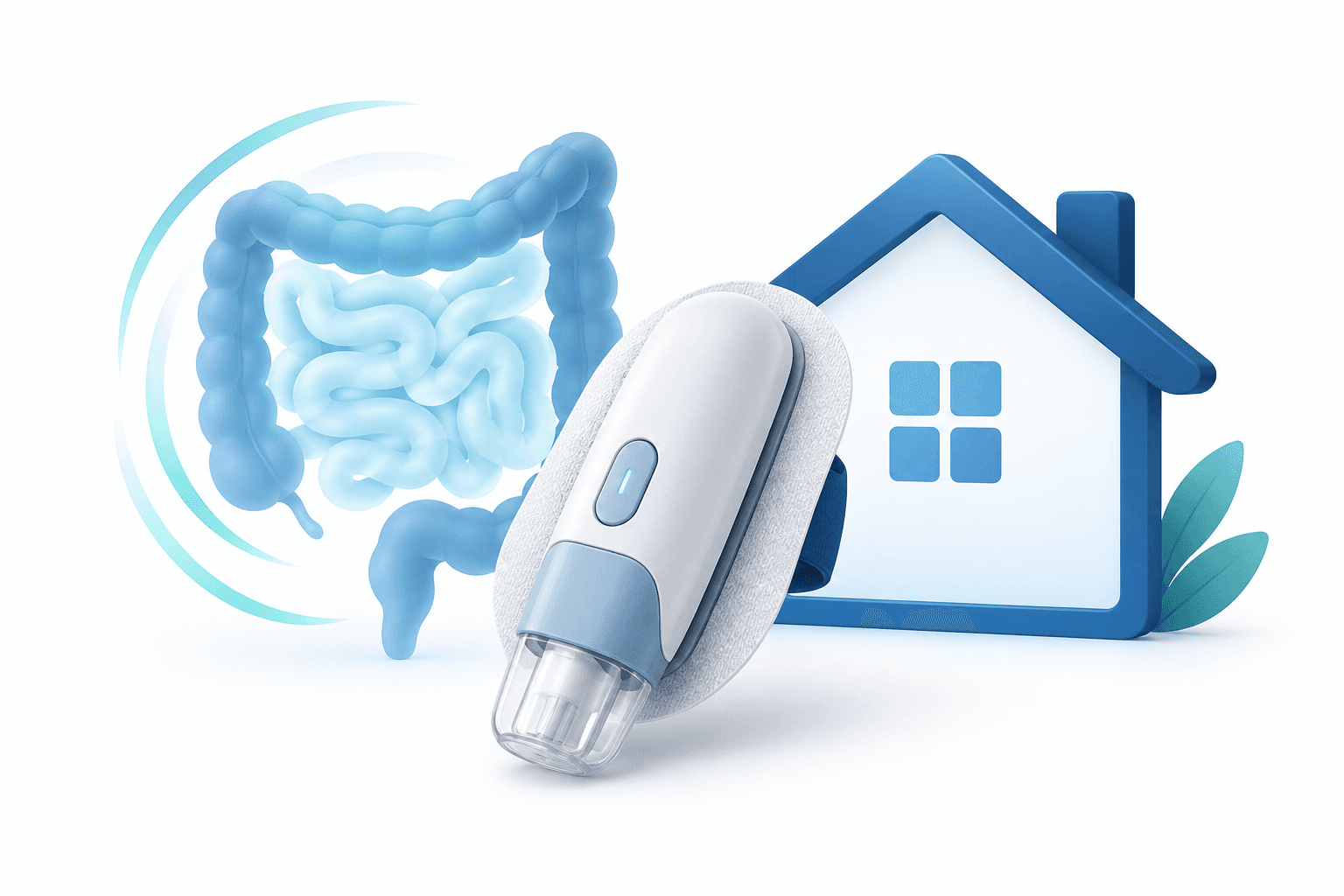
AbbVie announced on October 23, 2026, that the U.S. Food and Drug Administration approved a subcutaneous Skyrizi induction regimen for adults with moderately to severely active Crohn’s disease. The approval allows patients to begin treatment at home with an on-body injector, extending self-administration from maintenance treatment to the initial treatment phase.
Key Takeaways
- The new regimen adds an at-home starting option; intravenous induction remains available.
- The Phase 3 AFFIRM trial showed superior clinical remission and endoscopic response versus placebo at week 12.
- The FDA also revised tuberculosis screening language across Skyrizi’s approved indications.
Table of Contents
- Skyrizi induction adds an at-home starting option
- AFFIRM results supported the new regimen
- Safety findings and screening changes
- Conclusion
Skyrizi induction adds an at-home starting option
AbbVie’s FDA approval announcement describes an induction pack that delivers 720 milligrams under the skin through an on-body injector at weeks 0, 2, 4 and 8. Patients can then move to maintenance treatment beginning at week 12, with an on-body injector used every eight weeks.
The intravenous option remains available: patients can start with 600 milligrams at weeks 0, 4 and 8 before moving to maintenance dosing. The approval therefore expands how treatment can begin rather than replacing the existing infusion route.
The practical change is concentrated at the start of therapy. The on-body injector was introduced for Crohn’s maintenance treatment in 2022; the new approval lets eligible adults use that delivery approach throughout induction and maintenance. Greater flexibility is an intended benefit, not evidence that the new route improves adherence or commercial sales.
| Item | Details |
|---|---|
| Week-12 clinical remission, total population | Skyrizi: 56%; placebo: 30%. |
| Week-12 endoscopic response, total population | Skyrizi: 43%; placebo: 15%. |
| Week-12 endoscopic remission, total population | Skyrizi: 26%; placebo: 11%. |
AFFIRM results supported the new regimen
The approval was supported by AFFIRM, a randomized, double-blind Phase 3 trial comparing subcutaneous Skyrizi with placebo. The study met its co-primary endpoints of clinical remission and endoscopic response at week 12.
Across the full trial population, 180 patients received subcutaneous Skyrizi and 94 received placebo. The results below compare those groups at week 12; endoscopic response measures improvement observed during examination of the digestive tract.
AbbVie said results were particularly strong among patients without prior advanced therapy failure. In that subgroup, clinical remission reached 74% with Skyrizi versus 27% with placebo. These findings do not establish superiority over intravenous Skyrizi, because the comparison described in AFFIRM was against placebo.
Safety findings and screening changes
AbbVie said the safety profile of subcutaneous induction was generally consistent with Skyrizi’s established profile in Crohn’s disease, with no new safety risks observed. Skyrizi nevertheless carries warnings including serious allergic reactions, infections and liver problems.
Separately, the FDA approved revised tuberculosis language in the prescribing information across all approved indications. The updated wording allows healthcare providers to use clinical judgment when deciding whether to evaluate patients for tuberculosis before treatment; it does not remove the need to monitor for infection.
For AbbVie, the announcement expands the administration options for an existing immunology medicine. It did not include a quantified sales forecast for the new regimen.
Conclusion
Skyrizi induction can now begin at home as well as intravenously for eligible adults with Crohn’s disease. Under the approved subcutaneous schedule, the next treatment phase is maintenance beginning at week 12, followed by dosing every eight weeks.
Read More News
Disclaimer
This FinanceVelix article provides general information, not personalized financial, investment, legal, or tax advice. Market prices, interest rates and economic conditions can change; investments carry a risk of loss. Facts reflect the material available when published and may change. Check important information independently and consult a qualified professional when needed. Mentioning an asset, company, or service is not an endorsement.