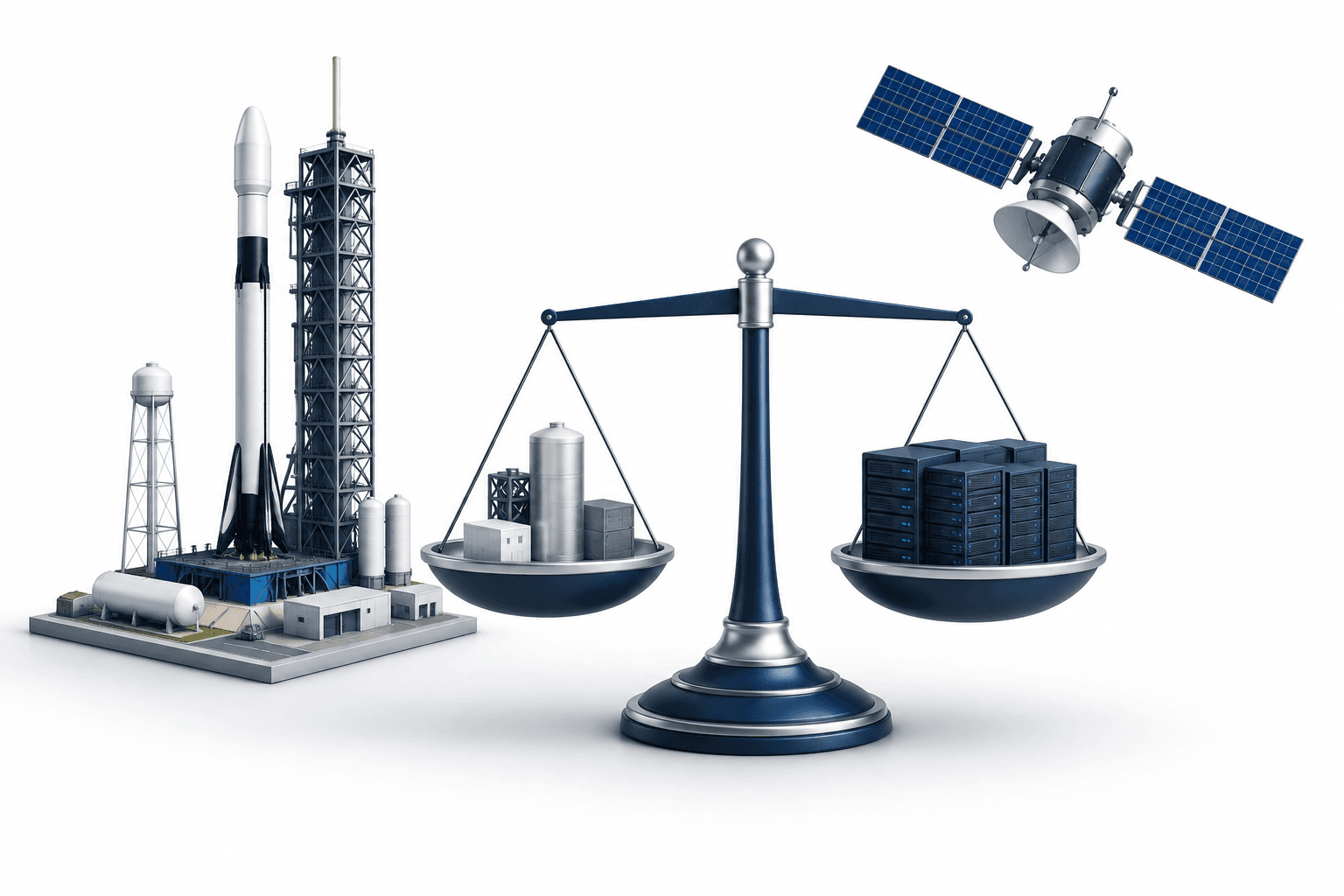
SpaceX shares fell more than 9% on October 22, 2026, closing at $144.75, down $14.56. The decline followed third-quarter earnings and came amid questions about the cost of expanding rocket infrastructure, satellite networks and computing capacity, alongside uncertainty over a possible combination with Tesla.
Key Takeaways
- The October 22 closing decline exceeded 9%, with shares losing $14.56.
- Expansion funding raises potential dilution risk, but a new share issuance is not established.
- A possible Tesla combination adds uncertainty over valuation, governance and capital allocation.
Table of Contents
- SpaceX shares retreat as funding questions gain attention
- Dilution remains a conditional financing risk
- Possible Tesla combination adds unresolved questions
- Conclusion
SpaceX shares retreat as funding questions gain attention
The central question is how Space Exploration Technologies Corp. would finance its next phase of expansion. Rocket facilities, satellite networks and computing infrastructure represent several competing demands for capital rather than a single investment project.
The third-quarter filing's asset categories include computer equipment, satellites, data-center infrastructure and launch sites. Those categories illustrate the breadth of the asset base, but do not by themselves establish future spending amounts or financing requirements.
The share-price decline is observable; the extent to which any individual spending concern drove the selling is not established by the available information.
| Item | Details |
|---|---|
| Trading session | October 22, 2026 |
| Closing price | $144.75 |
| Daily dollar decline | $14.56 |
| Daily percentage decline | More than 9% |
Dilution remains a conditional financing risk
Issuing additional shares is one potential way to fund expansion. If SpaceX raised equity and existing investors did not participate proportionately, their percentage ownership could decline.
That is a financing risk, not confirmation of an announced offering. The available information does not specify a new issuance size, price or timetable, so it does not support calculating a dilution impact.
The practical distinction is between the cost of building new capacity and the method used to pay for it. Strong earnings alone do not settle either question.
Possible Tesla combination adds unresolved questions
A possible combination with Tesla introduces a separate set of questions about how the businesses would be valued, governed and funded. Potential overlaps span artificial intelligence, communications, manufacturing and energy, but prospective strategic benefits are not completed outcomes.
No agreed transaction structure is established in the supplied information. Without terms, investors cannot assess ownership changes or how capital would be allocated across the combined businesses.
Conclusion
The next substantive disclosures to watch are capital-spending guidance, any announced financing and formal terms for a possible Tesla transaction. Until those details are available, expansion costs and potential ownership changes remain unresolved questions rather than quantified outcomes.
Read More News
Disclaimer
This FinanceVelix article provides general information, not personalized financial, investment, legal, or tax advice. Market prices, interest rates and economic conditions can change; investments carry a risk of loss. Facts reflect the material available when published and may change. Check important information independently and consult a qualified professional when needed. Mentioning an asset, company, or service is not an endorsement.