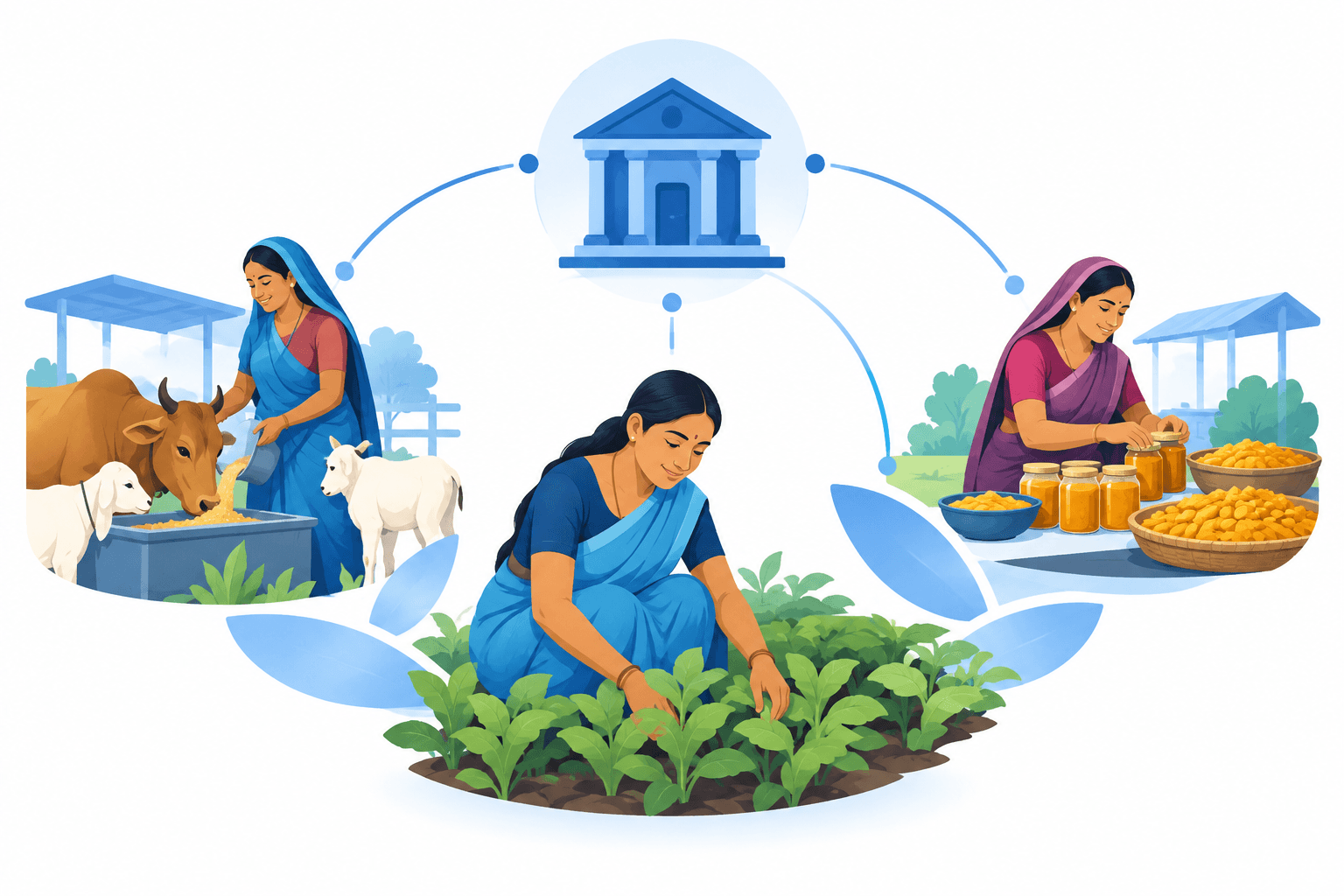
A $150 million SBI social loan from the International Finance Corporation is expected to support about 864,000 rural women working in agriculture and related activities across India. The development, announced on October 26, 2026, comes alongside a separate IFC–State Bank of India partnership intended to expand access to long-term rupee funding.
Key Takeaways
- Nearly 90% of the social financing will flow through women-led Self-Help Groups.
- The remaining financing will support women entrepreneurs under SBI’s Svayam Siddha Scheme.
- A separate derivatives agreement aims to expand local-currency funding and reduce borrowers’ foreign-exchange exposure.
Table of Contents
- SBI social loan focuses on rural livelihoods
- Separate swap partnership supports rupee funding
- Conclusion
SBI social loan focuses on rural livelihoods
IFC has extended the financing to State Bank of India as its first credit line to a public-sector bank. The intended beneficiaries work across agricultural value chains, including crop cultivation, animal husbandry, fisheries and food processing.
The financing model relies primarily on women-led Self-Help Groups, with a smaller allocation through SBI’s Svayam Siddha Scheme. That gives the loan two channels for reaching rural women rather than directing the entire amount through individual business lending.
The projected beneficiary count is an expected reach, not a measure of women already financed. The transaction’s completion at the institutional level does not establish that all underlying loans have been distributed.
| Item | Details |
|---|---|
| Derivatives framework | The partnership is governed by an ISDA Master Agreement. |
| SBI counterparty status | SBI becomes IFC’s first domestic swap counterparty in India and South Asia. |
| Previous swap-market mobilisation | IFC mobilised about ₹30,040 crore ($3.7 billion) through the dollar–rupee cross-currency swap market over the preceding three years. |
Separate swap partnership supports rupee funding
Alongside the social loan, IFC and SBI signed a derivatives partnership intended to strengthen IFC’s ability to source rupee-denominated funding. The arrangement is expected to support borrowers in infrastructure, agribusiness and financial services.
IFC’s local-currency financing approach explains the practical rationale: borrowers earning revenue in rupees can face higher local-currency repayment costs when foreign-currency debt becomes more expensive because of exchange-rate movements. Local-currency borrowing can reduce that mismatch.
The swap partnership is separate from the social loan. Its purpose is to broaden funding and risk-management capacity, rather than establish an additional allocation specifically for the rural women covered by the loan.
Conclusion
The next step for the SBI social loan is financing rural borrowers through the two designated channels. Its expected reach remains a target, while the separate swap partnership is intended to expand IFC’s capacity to provide rupee funding.
Read More News
Disclaimer
This FinanceVelix article provides general information, not personalized financial, investment, legal, or tax advice. Market prices, interest rates and economic conditions can change; investments carry a risk of loss. Facts reflect the material available when published and may change. Check important information independently and consult a qualified professional when needed. Mentioning an asset, company, or service is not an endorsement.