Ador Welding earnings for the second quarter of FY27 showed revenue rising 23% year on year to ₹345 crore, while higher steel costs and delayed price increases squeezed profitability. In its October 23, 2026 earnings discussion for the quarter ended September 30, management said quarterly EBITDA grew 9% and gross margin stood at 34.2%.
Key Takeaways
- Quarterly revenue grew faster than EBITDA as raw material inflation weighed on margins.
- Management targets margin recovery through price increases, but expects steel costs to remain elevated.
- Export diversification and potentially higher capital spending support a conditional FY29 revenue aspiration.
Table of Contents
- Ador Welding earnings show strong demand but slower profit growth
- Steel inflation leaves price recovery unfinished
- Export expansion aims to broaden a concentrated business
- Higher investment plans meet near-term working-capital demands
- Conclusion
Ador Welding earnings show strong demand but slower profit growth
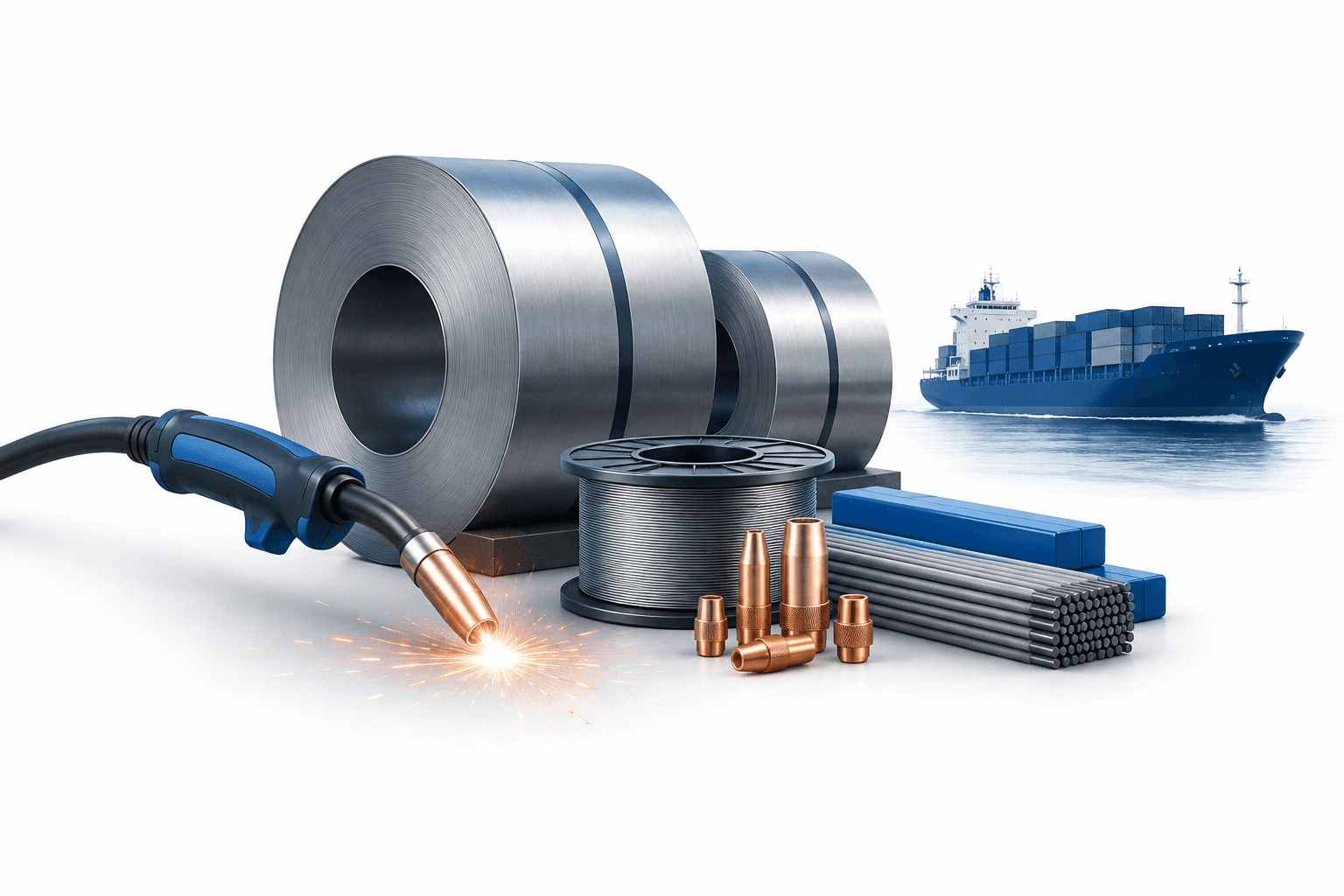
Demand across infrastructure, power, oil and gas, railways, shipbuilding, defense and heavy fabrication supported sales growth. Welding consumables contributed substantially to the first-half increase, with management linking further opportunities to steel consumption across customer industries.
The gap between 23% quarterly revenue growth and 9% EBITDA growth shows that the larger sales base did not translate into an equivalent increase in operating earnings. The first-half EBITDA margin nevertheless remained slightly above its year-earlier level.
Ador’s investor-meeting materials for October 23 include an audio recording and an investor presentation for the quarter ended September 30, 2026.
Managing Director and CEO Aditya Malkani expects revenue growth to remain above 10%, with volume growth in the mid-to-high teens. Those expectations are management’s outlook, rather than completed results.
| Item | Details |
|---|---|
| First-half FY27 revenue | ₹654 crore, up 23% year on year |
| First-half FY27 EBITDA margin | 11.2% |
| Declared interim dividend | ₹7.50 per equity share |
| Normal annual capital expenditure | ₹35–40 crore |
Steel inflation leaves price recovery unfinished
Malkani attributed roughly 80% of the second-quarter gross-margin decline to input cost inflation, particularly steel and other raw materials. Steel prices rose about 7–8% from the first quarter, while customer price increases took time to catch up.
Management said cost pass-through was progressing better after that lag, but did not expect steel prices to soften soon. The pace of cost increases could moderate, making the extent of price recovery important to profitability.
Malkani described 36–38% as an ideal minimum gross-margin range and 12–13% as the EBITDA-margin band the company should reach before pushing higher. These are management objectives, not margins already achieved or a dated recovery commitment.
Product mix also contributed to the pressure. Export sales and some products carry different margins, and management expects that mix effect to remain part of its growth strategy.
Export expansion aims to broaden a concentrated business
Exports represented around 20% of first-half revenue. The Middle East, served through Ador’s Dubai hub, accounted for about 80–85% of export sales, leaving the international business concentrated in one region.
The company also sells into the United States, parts of Africa and two European markets, and is entering a third European market. Expansion could broaden its geographic mix, although management acknowledged that export growth does not always produce the most favorable product mix.
Alongside consumables, Ador is investing in higher-end equipment, digitization and automation. Malkani said the company was exploring acquisitions in the small automation ecosystem, but discussions were early and nothing was imminent.
Higher investment plans meet near-term working-capital demands
Malkani said Ador remained broadly on track for its ₹2,000 crore FY29 revenue aspiration, provided underlying market opportunities continue. Capital expenditure could rise to ₹60–70 crore annually for one or two years over the next two to three years.
Management said the balance sheet could fund those plans without major debt or equity dilution. That is a financing assessment, not an announcement that the additional spending has already occurred.
Inventory was elevated at September 30 while payables were lower. Malkani attributed most of the movement to order backlog, with additional stocking prompted by steel-availability concerns. He expects the balances to even out through the year rather than develop into a persistent trend.
Conclusion
The next operating test for Ador Welding earnings is whether improved cost pass-through restores margins in the second half of FY27 while demand remains strong. Inventory normalization and execution of the investment plans will also show how the company is funding its expansion.
Read More News
Disclaimer
This FinanceVelix article provides general information, not personalized financial, investment, legal, or tax advice. Market prices, interest rates and economic conditions can change; investments carry a risk of loss. Facts reflect the material available when published and may change. Check important information independently and consult a qualified professional when needed. Mentioning an asset, company, or service is not an endorsement.