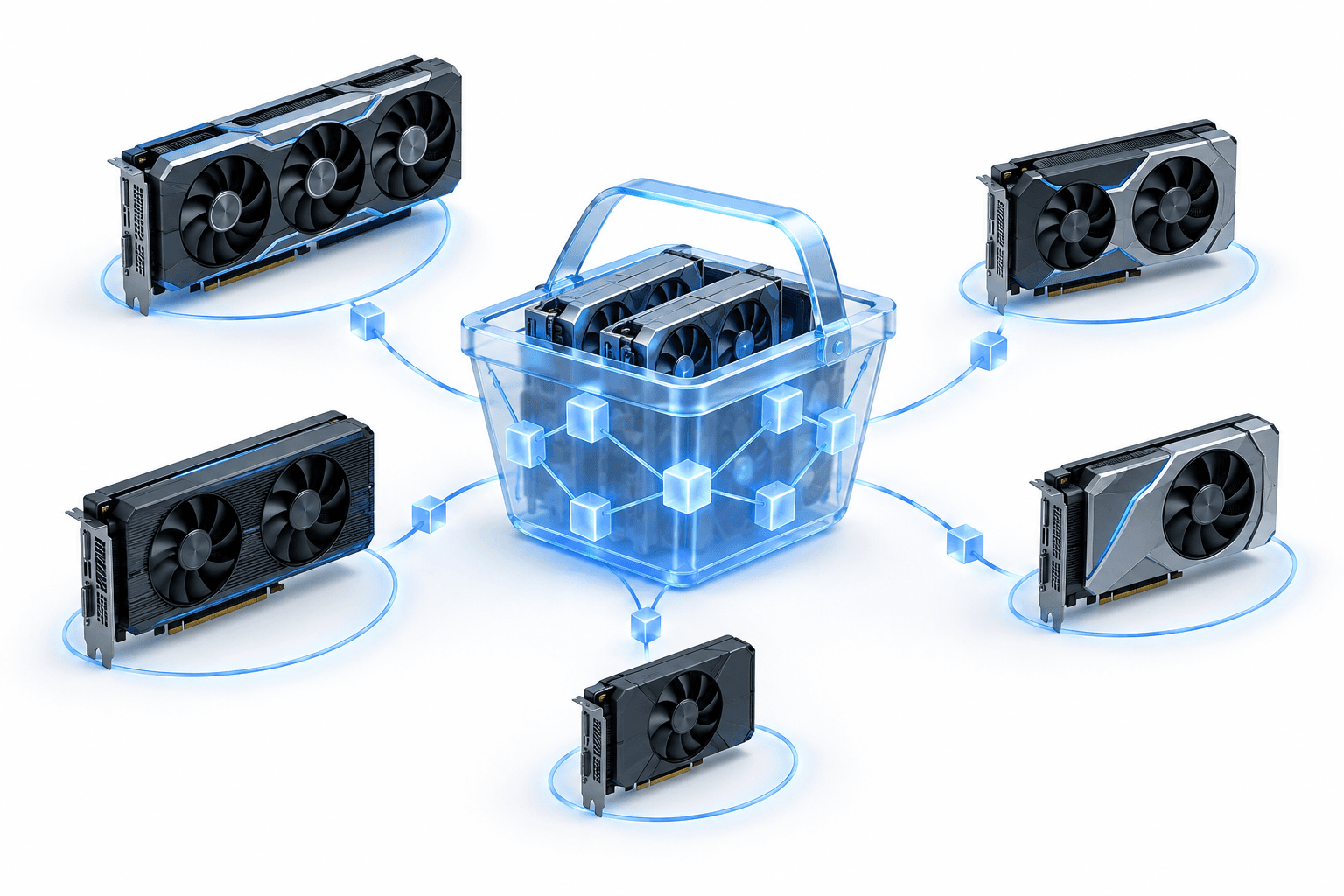
Injective compute futures went live on October 26, 2026, giving traders exposure to the rental costs of five Nvidia GPU models rather than a single chip. The Super Intelligence Compute Index, or SICI, underpins a perpetual futures market on Injective mainnet, with USDC margin and leverage of up to 10x.
Key Takeaways
- SICI expands Injective’s GPU rental offering beyond its earlier H100-only market.
- The benchmark updates hourly but uses a trailing seven-day average.
- The perpetual is live on mainnet and available for integration by ecosystem applications.
What Injective compute futures make available
Traders can take positions on whether the GPU rental-cost index will rise or fall. Injective’s SICI launch announcement confirms that the perpetual is live on mainnet and available for integration across its ecosystem applications, with USDC serving as the margin asset.
That establishes availability at the blockchain market level, rather than confirming that every Injective application already offers the contract. The announcement does not provide trading-volume or liquidity figures.
The launch broadens a product introduced in August 2025 that tracked Nvidia H100 rental prices. SICI instead combines five GPU models, spanning data-center hardware and the consumer-oriented GeForce RTX 4090.
| Item | Details |
|---|---|
| Nvidia H100 SXM 80GB | 40% index weight |
| Nvidia B200 | 25% index weight |
| Nvidia H200 | 15% index weight |
| Nvidia A100 SXM 80GB | 10% index weight |
| Nvidia GeForce RTX 4090 | 10% index weight |
How the rental benchmark is calculated
London-based LO:TECH builds and prices the index using rental data from compute marketplaces. Its reference prices are measured in US dollars per GPU-hour and pool on-demand and spot listings, subject to validation and outlier controls.
Each GPU component is rebased to 100 at the July 22, 2026 daily fixing, then combined at fixed weights. The published benchmark is quoted in index points, not dollars per GPU-hour.
LO:TECH updates SICI hourly using a trailing seven-day average of the hourly basket. The smoothing means the benchmark reflects more than the latest rental quote. The H100 has the greatest influence because it carries the largest weight.
A potential hedge, not a direct rental-price match
Injective says the market could help AI developers hedge against rising compute costs and GPU providers protect against falling rental revenue. Those are proposed uses of the contract, not evidence of adoption by either group.
The five-chip basket also creates an important distinction for potential hedgers: a business renting one particular GPU is exposed to its own rental terms, while SICI follows a weighted, smoothed benchmark across several models. The two need not move identically. Leverage can amplify losses as well as gains.
Read More News
Disclaimer
This FinanceVelix article provides general information, not personalized financial, investment, legal, or tax advice. Market prices, interest rates and economic conditions can change; investments carry a risk of loss. Facts reflect the material available when published and may change. Check important information independently and consult a qualified professional when needed. Mentioning an asset, company, or service is not an endorsement.




Comments
Be respectful. No spam, impersonation or private credentials. Ordinary posts and comments appear immediately; suspicious links are held for review.
Please wait…