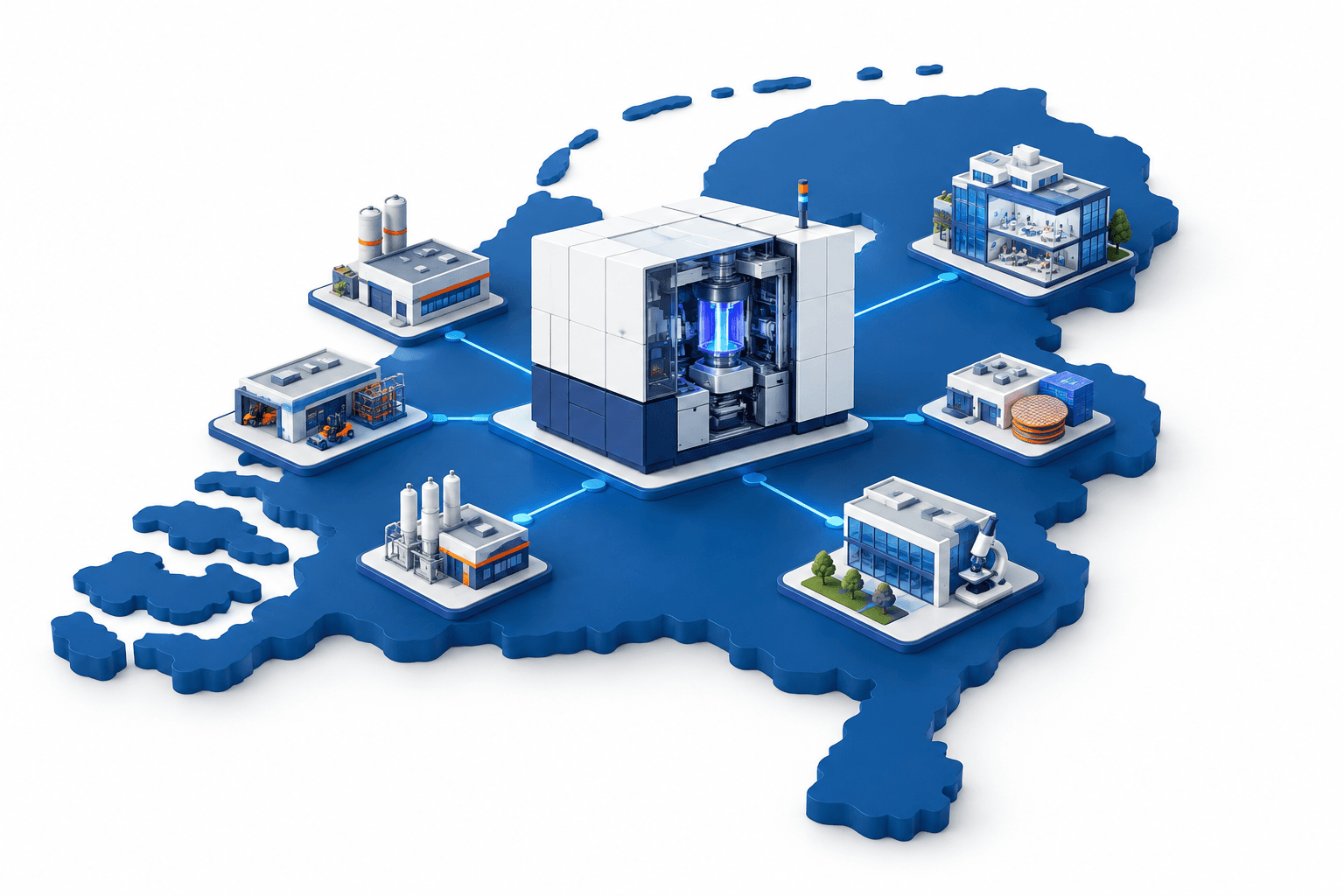
ASML economic footprint could reach 2.2% of Dutch value-added in 2026 when domestic suppliers and investment are included, ING economists estimated in research released on October 26, 2026. The chip-equipment maker’s direct contribution alone could rise to 1.6%, from an estimated 1.3% in 2025, underscoring how the global artificial intelligence investment boom is reshaping the Dutch economy.
Key Takeaways
- ING estimates ASML’s direct contribution could reach 1.6% of Dutch value-added in 2026.
- Domestic supply-chain activity and investment could lift the broader footprint to 2.2%.
- The growing contribution also increases exposure to semiconductor cycles and trade restrictions.
ASML economic footprint extends beyond its own production
ING’s assessment of ASML’s economic contribution, by economists Marcel Klok and Bert Colijn, separates the company’s own value-added from the activity generated through Dutch suppliers and investment. The 2.2% estimate is therefore a broader measure than ASML’s direct contribution, not an additional contribution on top of it.
The calculation also differs from measuring sales. ING assumes that about 40 cents of each euro of ASML turnover represents value-added generated domestically. Although ASML operates internationally, its main production and research and development activities are based in the Netherlands.
For the indirect effects, ING uses Dutch machinery-industry input-output data because ASML-specific information is unavailable. Its investment estimate excludes in-house research and development already counted in the direct contribution, avoiding double-counting.
| Item | Details |
|---|---|
| Direct contribution | ING estimate for 2026: 1.6% of Dutch value-added. |
| Domestic supply-chain contribution | ING forecast for 2026: 0.4% of Dutch value-added. |
| Investment-related contribution | ING forecast for 2026: 0.2% of Dutch value-added, excluding in-house R&D already counted directly. |
AI investment gives the Netherlands a distinctive advantage
ASML is the sole producer of the leading-edge lithography tools used to manufacture advanced semiconductors. Demand linked to artificial intelligence investment has strengthened the importance of both the company and its surrounding equipment-making cluster.
ING estimates that ASML accounted for about half of Dutch machinery-industry turnover in 2025. Its suppliers around Veldhoven connect that activity to other domestic businesses, extending the economic benefits beyond the company’s own operations.
The economists also identify potential productivity benefits as suppliers develop expertise, expand and attract new customers. Those wider spillovers are difficult to quantify and should not be treated as a measured addition to the 2.2% estimate.
A larger growth engine also brings concentration risk
ING cautions that ASML’s growing weight can make semiconductor-industry swings more consequential for Dutch economic growth. Restrictions on export markets or disruptions to specialized foreign inputs could affect both the company and its domestic suppliers.
The economists also identify shortages of talent, space and other domestic capacity constraints as possible limits to further expansion. The projected contribution for 2026 remains an estimate, dependent on business activity and the wider economy rather than a completed annual result.
Read More News
Disclaimer
This FinanceVelix article provides general information, not personalized financial, investment, legal, or tax advice. Market prices, interest rates and economic conditions can change; investments carry a risk of loss. Facts reflect the material available when published and may change. Check important information independently and consult a qualified professional when needed. Mentioning an asset, company, or service is not an endorsement.



Comments
Be respectful. No spam, impersonation or private credentials. Ordinary posts and comments appear immediately; suspicious links are held for review.
Please wait…