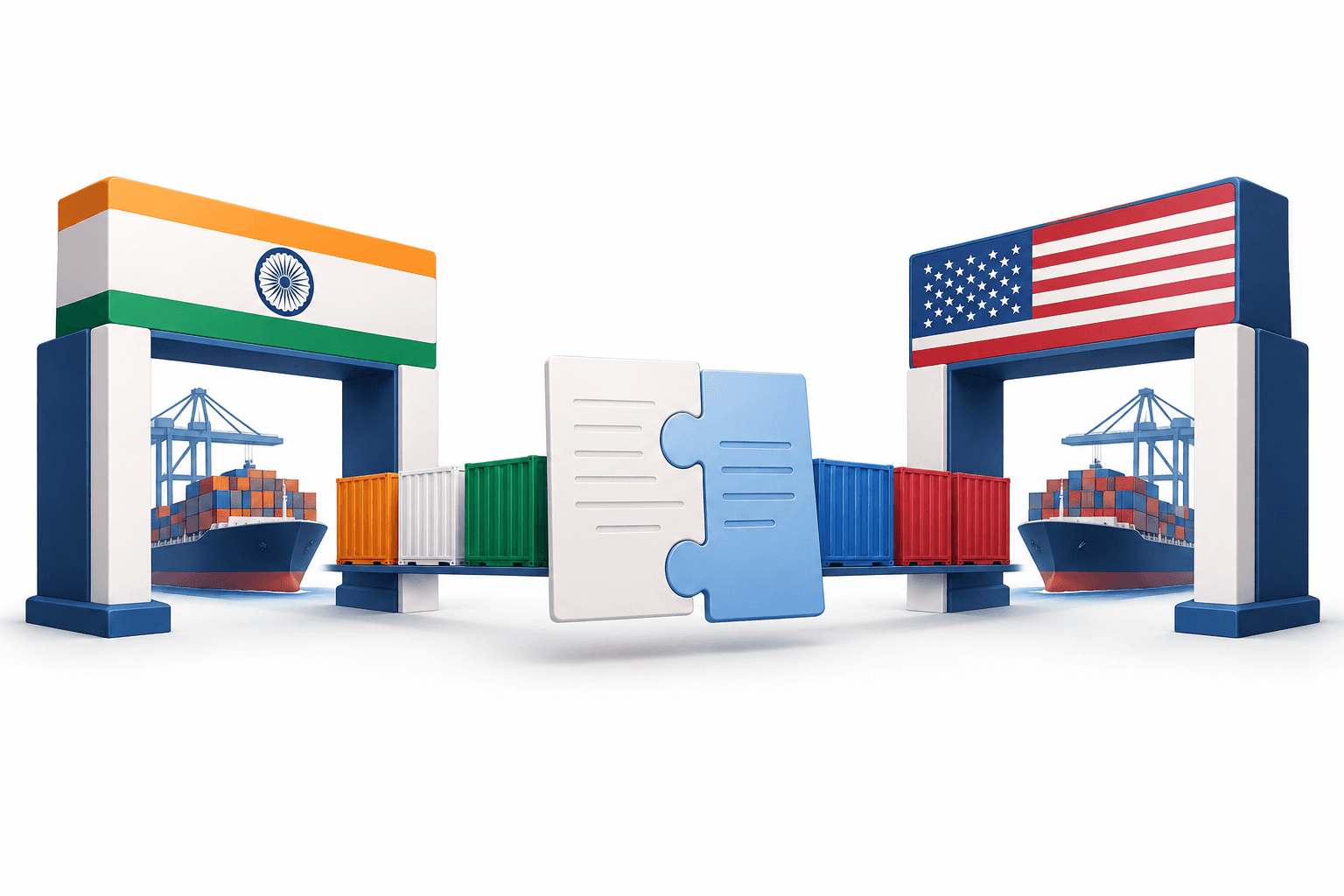
India-US trade deal negotiations have moved into a fine-tuning stage after most discussions were concluded, Commerce and Industry Minister Piyush Goyal said on October 26, 2026. His comments signal progress toward a proposed agreement, rather than confirmation that a final pact has been signed.
Key Takeaways
- Goyal said most discussions were complete, with the agreement now being fine-tuned.
- The February framework outlined tariff concessions, some conditional on concluding an interim agreement.
- India’s planned $500 billion in US purchases over five years remains an intention, not completed spending.
India-US trade deal talks move toward final terms
“We have concluded most of the discussions and are fine-tuning the agreement,” Goyal said in The Hague, where he was visiting with an Indian business delegation. He did not give a completion date in the remarks.
The update follows several October negotiating sessions. Goyal met US Trade Representative Jamieson Greer on October 1 at the G20 Trade Ministerial in Milwaukee and described their talks as productive. A team led by Commerce Secretary Rajesh Agrawal subsequently held discussions with US officials in Washington from October 15 to 17.
The two countries announced a framework for an interim agreement in February, as a step toward a broader bilateral trade agreement. Changes in the US tariff landscape led to further negotiations, leaving the final terms subject to continued discussion.
What the February framework proposed
The February 6 joint trade framework set out an 18% US reciprocal tariff on originating Indian goods and conditional removal of that reciprocal tariff for products including generic pharmaceuticals, gems and diamonds, and aircraft parts. Those provisions describe the earlier framework, not verification of the tariff rates currently being applied.
In return, India agreed under the framework to eliminate or reduce tariffs on all US industrial goods and a wide range of food and agricultural products. The listed categories included dried distillers’ grains, tree nuts, fruit, soybean oil, wine and spirits.
The distinction between a framework and a concluded agreement matters for businesses: some tariff relief was expressly tied to successful completion of the interim pact. The framework also allows either country to modify its commitments if the other changes the agreed tariffs.
Purchases and market access extend beyond tariffs
India stated an intention to purchase $500 billion of US energy products, aircraft and aircraft parts, precious metals, technology products and coking coal over five years. That figure represents a purchase intention in the framework, rather than spending already completed.
The proposed arrangements also cover increased trade in graphics processing units and other data-centre goods. India agreed to address barriers affecting US medical devices and restrictive import licensing for information and communication technology products, while both countries committed to tackling barriers to digital trade.
These provisions make the negotiations broader than a tariff bargain: the eventual terms would also shape licensing, product access and technology trade.
Read More News
Disclaimer
This FinanceVelix article provides general information, not personalized financial, investment, legal, or tax advice. Market prices, interest rates and economic conditions can change; investments carry a risk of loss. Facts reflect the material available when published and may change. Check important information independently and consult a qualified professional when needed. Mentioning an asset, company, or service is not an endorsement.




Comments
Be respectful. No spam, impersonation or private credentials. Ordinary posts and comments appear immediately; suspicious links are held for review.
Please wait…