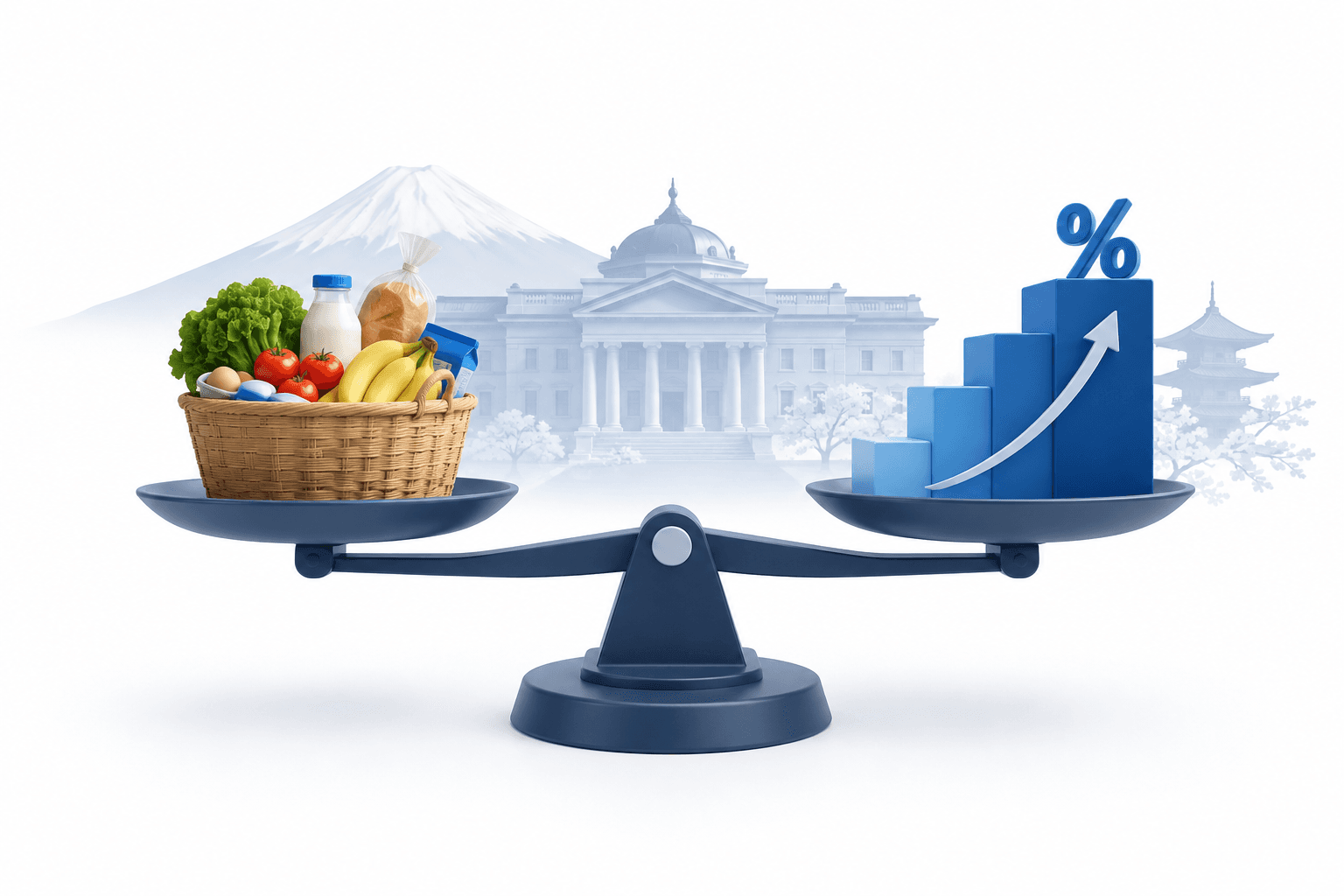
The BOJ inflation outlook could reach a turning point at the policy meeting ending October 30, 2026, with the Bank of Japan expected to judge that underlying inflation has broadly reached its 2% target. Policymakers are nevertheless widely expected to hold the policy rate at 1.25%, leaving a possible December increase as the next major decision.
Key Takeaways
- The expected inflation assessment would shift the emphasis from generating price growth to keeping it near 2%.
- An October rate hold would give policymakers more time to assess the effects of earlier increases.
- Economists expect a December rise to 1.5%, but the BOJ has not committed to that timetable.
Table of Contents
- BOJ inflation outlook approaches a policy turning point
- An October hold would leave December open
- Neutral-rate uncertainty complicates further tightening
- Conclusion
BOJ inflation outlook approaches a policy turning point
People familiar with the central bank’s thinking expect its quarterly outlook to indicate that underlying inflation has broadly reached the target and to slightly raise the inflation forecast for the next fiscal year. Those are expectations ahead of the meeting, not an announced BOJ assessment.
The BOJ’s price stability target is defined as a 2% year-on-year increase in the consumer price index and was adopted in January 2013. That longstanding benchmark explains the significance of the anticipated change, but does not itself establish that inflation is now sustainably at target.
Wage gains have become more firmly established and inflation expectations are hovering around 2%. The expected shift would therefore concern the durability of price growth, rather than simply whether headline inflation has crossed a numerical threshold.
| Item | Details |
|---|---|
| October policy decision | Meeting ends October 30, 2026; a hold is widely expected. |
| Current policy rate | 1.25%. |
| December economist forecast | 1.5%; not an announced BOJ decision. |
| Staff neutral-rate estimate | 1.1% to 2.5%. |
An October hold would leave December open
Keeping the policy rate at 1.25% would allow more time to examine how previous increases have affected lending conditions and economic activity. The BOJ raised rates in June and September, shortening the interval between moves compared with its roughly twice-yearly pace in 2024 and 2025.
Economists surveyed ahead of the meeting expect the rate to rise to 1.5% in December, followed by quarterly increases. That remains a forecast: policymakers are expected to avoid explicit guidance on the timing and pace of further tightening.
Naomi Muguruma, chief bond strategist at Mitsubishi UFJ Morgan Stanley Securities, said the BOJ would examine incoming economic data and market movements before deciding whether to increase rates in December or wait until January.
Neutral-rate uncertainty complicates further tightening
At 1.25%, the policy rate sits within the BOJ staff’s estimated neutral-rate range of 1.1% to 2.5%. A neutral rate neither stimulates nor restrains economic activity; the breadth of that estimate leaves uncertainty about how much additional tightening the economy can absorb.
Strong bank lending is expected to support the BOJ’s view that financial conditions remain accommodative. At the same time, persistent energy costs and higher import prices associated with a weak yen have added to inflation pressure.
The policy challenge is consequently changing. Instead of focusing primarily on overcoming deflation, the BOJ must weigh the risk of inflation overshooting against the possibility that faster rate increases weaken growth or unsettle financial markets.
Conclusion
The October 30 decision and quarterly outlook are the next confirmed checkpoints. The key distinction will be whether the BOJ changes its inflation assessment while leaving rates unchanged, and how clearly it preserves room for further tightening.
Read More News
Disclaimer
This FinanceVelix article provides general information, not personalized financial, investment, legal, or tax advice. Market prices, interest rates and economic conditions can change; investments carry a risk of loss. Facts reflect the material available when published and may change. Check important information independently and consult a qualified professional when needed. Mentioning an asset, company, or service is not an endorsement.