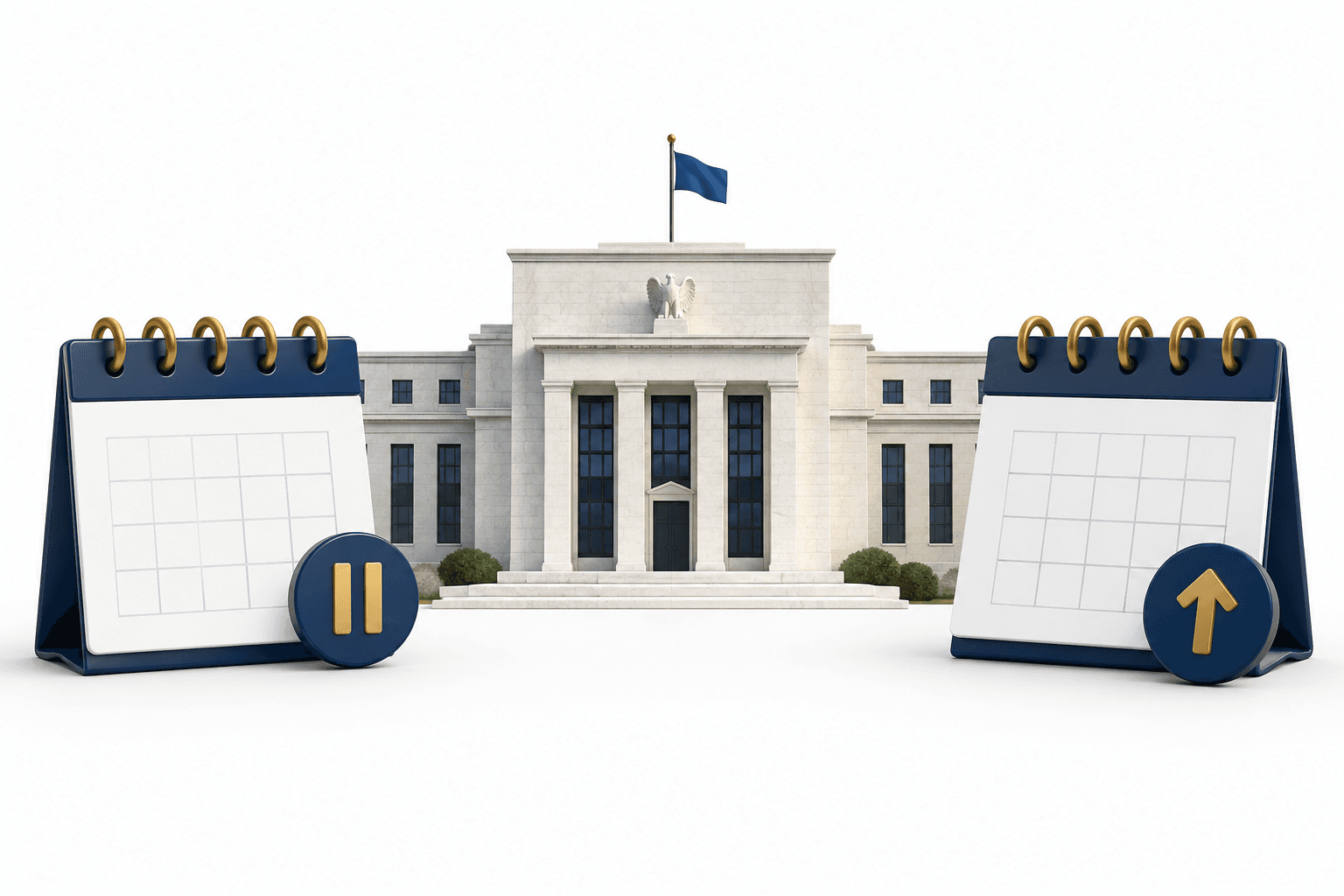
The Fed rate decision on October 28, 2026 is widely expected to leave the federal funds target range at 3.75%–4.00%. A poll conducted October 16–20 found that 94 of 100 economists expected no change, while all 100 forecast an increase in December. The central question is therefore whether an October pause comes with a clear signal that further tightening remains likely.
Key Takeaways
- Economists overwhelmingly expect an October hold, but unanimously forecast a December increase.
- No new economic projections are scheduled for October, putting greater emphasis on the statement and press conference.
- GDP and PCE inflation releases on October 29 will provide an immediate test of the Fed's message.
Table of Contents
- Fed rate decision follows a sharp shift in expectations
- No new projections puts the emphasis on Warsh
- Energy prices complicate the inflation assessment
- Thursday's data arrive after the policy announcement
- Conclusion
Fed rate decision follows a sharp shift in expectations
Market pricing has changed substantially since September 23, when CME FedWatch put the probability of an October increase at about 73%. By October 23, estimates had fallen to roughly 7%–10%. Those probabilities describe expectations at particular moments, not a commitment by policymakers.
The Federal Reserve's September policy statement records a unanimous 12–0 vote to raise the target range by 25 basis points to 3.75%–4.00% on September 16, 2026. Officials described economic activity as expanding at a solid pace and inflation as elevated.
An unchanged October rate would leave that September increase in place. It would not, by itself, establish that the tightening cycle has ended. The economists' December forecasts underline the distinction between pausing at one meeting and ruling out another increase.
| Item | Details |
|---|---|
| October policy announcement | October 28, 2026, at 2:00 p.m. ET. |
| Chair's press conference | October 28, 2026, at 2:30 p.m. ET. |
| GDP and PCE releases | October 29, 2026, at 8:30 a.m. ET. |
| Next scheduled projections | December 8–9, 2026 FOMC meeting. |
No new projections puts the emphasis on Warsh
The October meeting does not include a new Summary of Economic Projections. The next scheduled projections accompany the December 8–9 meeting, so investors will not receive a fresh set of officials' rate forecasts this week.
Chair Kevin Warsh said in Bangkok on October 16 that he would not prejudge either the October or December meeting. That leaves the policy statement and his post-decision press conference as the main opportunities to clarify how officials are weighing inflation, growth and financial conditions.
Continued emphasis on elevated inflation and resilient activity could be consistent with further tightening. A more cautious assessment of growth or financial conditions could leave the December outcome less certain. Neither interpretation should be confused with an announced rate decision.
Energy prices complicate the inflation assessment
Brent crude settled at $116.72 a barrel on October 23, up 3.14% that day and around 6% for the week, amid concern about Middle East supply disruptions. Higher energy costs are part of the backdrop to the meeting, although an oil-price increase alone does not determine monetary policy.
After September's increase, Warsh distinguished between an individual commodity shock, which monetary policy cannot control, and broader second-round inflation effects to which the Fed can respond. The relevant question is whether energy pressures spread into more persistent price increases.
That distinction also matters for gold and bitcoin investors: an October hold need not ease concerns about restrictive rates if expectations of a December increase remain intact.
Thursday's data arrive after the policy announcement
The Bureau of Economic Analysis is scheduled to release the advance estimate of third-quarter GDP and September Personal Income and Outlays, including the PCE inflation indexes, on October 29. Both releases arrive after the Fed has made its October decision.
The economist poll put expected third-quarter growth at about 3.2% annualized, compared with 2.2% in the second quarter. That is a forecast rather than a published result. The growth and inflation figures could quickly change expectations for December, even if Wednesday's decision matches the prevailing consensus.
Conclusion
The October Fed rate decision is expected to deliver a pause, not a confirmed end to tightening. The next scheduled milestones are the October 28 statement and Warsh press conference, followed by GDP and PCE data on October 29.
Read More News
Disclaimer
This FinanceVelix article provides general information, not personalized financial, investment, legal, or tax advice. Market prices, interest rates and economic conditions can change; investments carry a risk of loss. Facts reflect the material available when published and may change. Check important information independently and consult a qualified professional when needed. Mentioning an asset, company, or service is not an endorsement.