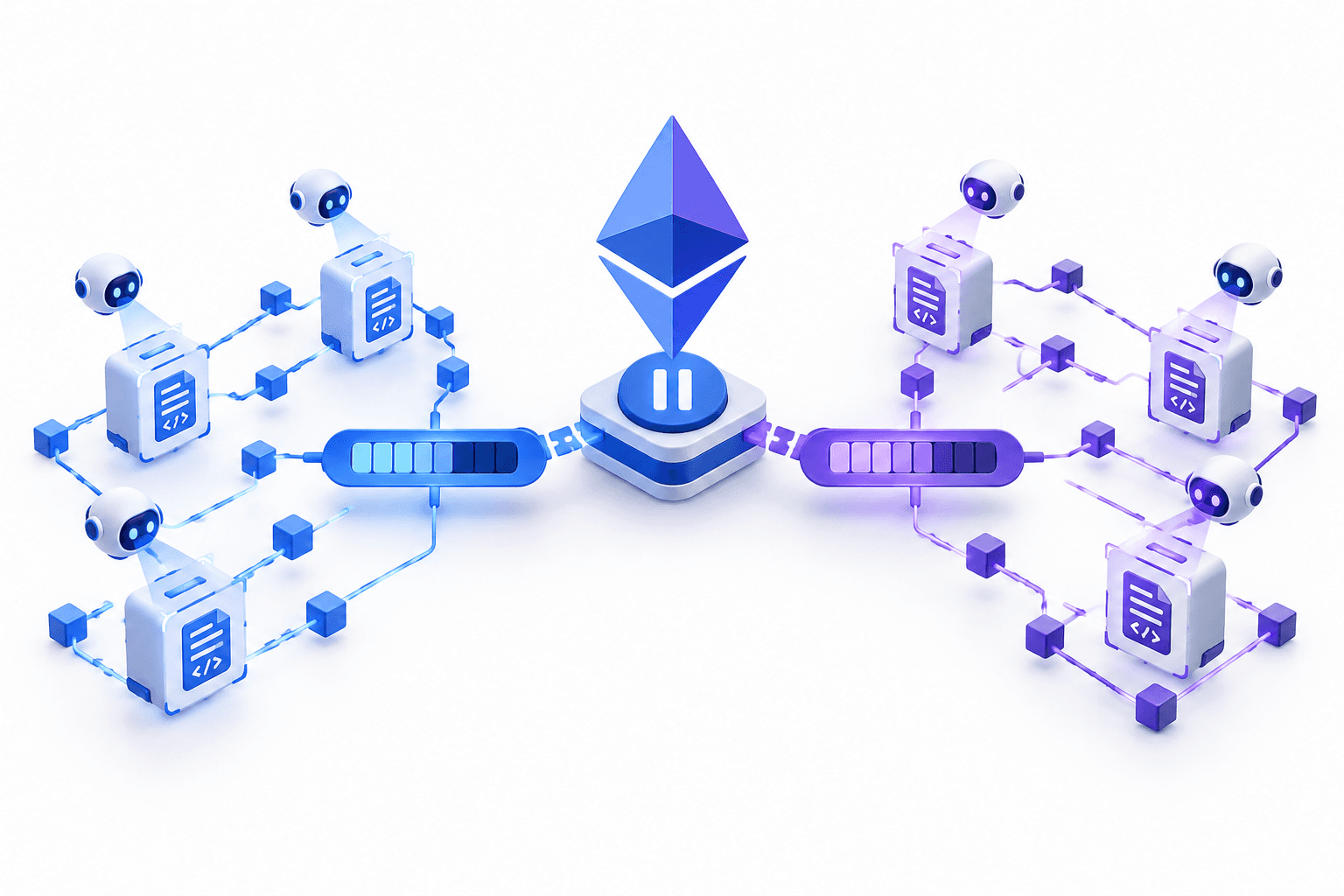
Ethereum Glamsterdam’s second and final testnet rehearsal was canceled during the week ending October 25, 2026, after ChainSecurity identified vulnerabilities linked to two proposed gas changes. Researchers are using coordinated AI agents to scan contracts for compatibility problems, while the Hoodi rehearsal remains unscheduled pending further review.
Key Takeaways
- The vulnerabilities involved EIP-8037 and EIP-8038 and potentially affected at least 13 DeFi contracts.
- The Hoodi rehearsal will not be rescheduled until the upgrade’s wider effects have been examined.
- Researchers from Eth Labs and the Ethereum Foundation coordinated AI contract scans through a shared GitHub message board.
Table of Contents
- Why the Ethereum Glamsterdam rehearsal was canceled
- What the proposed gas changes would do
- AI agents help broaden the compatibility review
- Conclusion
Why the Ethereum Glamsterdam rehearsal was canceled
The problems involved contracts that depend on Ethereum’s existing behavior when a contract call runs out of gas. Changes under EIP-8037 and EIP-8038 could break those assumptions, potentially creating opportunities for an attacker. The discovery concerns compatibility with the proposed upgrade; it does not establish that an exploit occurred.
Derek Chiang of Eth Labs described the discovery as arriving at “a few minutes to midnight,” leaving participants scrambling to address the consequences. He urged protocol designers to investigate possible breakages much earlier in the development process.
The immediate consequence is a pause in the final testnet dress rehearsal, rather than a completed deployment. No replacement date for the Hoodi test was available as of October 25.
| Item | Details |
|---|---|
| EIP-8037 | Proposes higher, harmonized state-creation costs and separate gas metering. |
| EIP-8038 | Proposes updated gas charges for state-access operations. |
| EIP-8198 | Known as Quick Slots; proposed for Hegota and subject to a separate AI-agent review. |
What the proposed gas changes would do
The EIP-8037 state-creation gas proposal would increase and harmonize charges for creating blockchain state, while introducing separate accounting for state creation and execution. Its stated aim is to limit excessive state growth as Ethereum raises its processing capacity.
EIP-8038 addresses the cost of accessing state, including account and storage operations. Together, the proposals change more than headline transaction charges: they alter accounting rules that existing contracts may rely on. That makes checking application behavior an important part of assessing the upgrade’s readiness.
AI agents help broaden the compatibility review
Chiang said two researchers, one from Eth Labs and another from the Ethereum Foundation, independently began using AI agents to search contracts for vulnerabilities. After discovering their parallel efforts, they created a GitHub repository that served as a message board for the agents to coordinate their work.
The approach has also been extended to a second board examining EIP-8198, known as “Quick Slots,” which has been proposed for the subsequent Hegota upgrade. The scans support the review process, but do not by themselves establish that every compatibility issue has been found or that Glamsterdam is ready to proceed.
Conclusion
The next milestone for Ethereum Glamsterdam is completion of the broader compatibility review needed to reschedule the Hoodi rehearsal. AI-assisted scans are part of that work, not confirmation that the upgrade’s risks have been resolved.
Read More News
Disclaimer
This FinanceVelix article provides general information, not personalized financial, investment, legal, or tax advice. Market prices, interest rates and economic conditions can change; investments carry a risk of loss. Facts reflect the material available when published and may change. Check important information independently and consult a qualified professional when needed. Mentioning an asset, company, or service is not an endorsement.