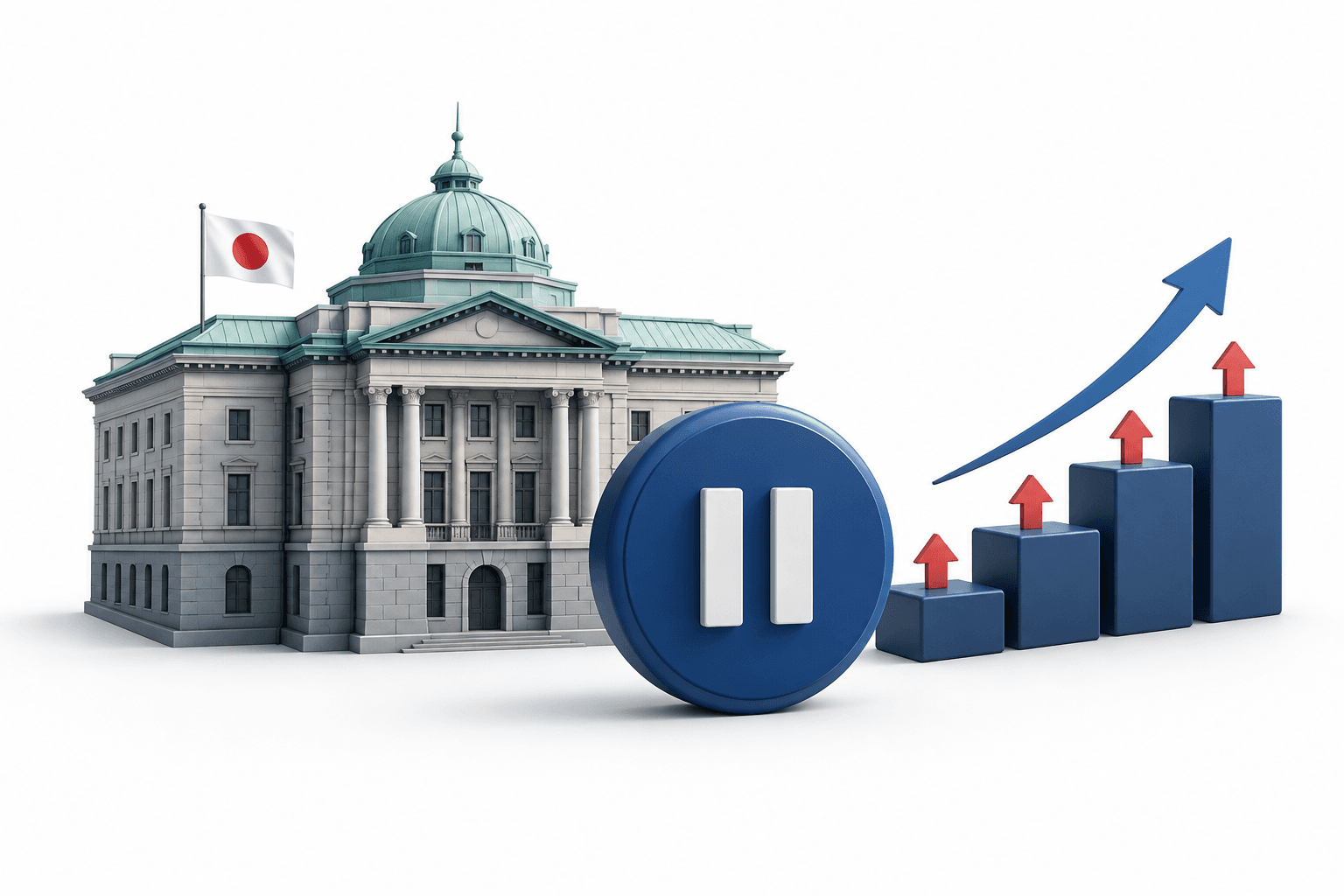
The BOJ rate outlook points to a pause rather than an end to tightening. All 16 economists and analysts surveyed from October 14–26, 2026, expect the Bank of Japan to keep its policy rate at 1.25% at its October 29–30 meeting, while preparing the ground for another increase in December or January.
Key Takeaways
- All 16 respondents expect an October hold after September’s rate increase.
- Rising prices and real wages support further tightening, but analysts differ on its timing.
- Thirteen respondents expect the policy rate to peak at 1.75%–2% around mid-2027.
BOJ rate outlook separates a pause from an endpoint
The expected hold would follow September’s increase, which took the policy rate to its highest level in 31 years. Survey respondents unanimously expect the central bank to signal that another increase remains possible in December 2026 or January 2027; that is their forecast, not a commitment by policymakers.
The BOJ’s monetary policy meeting calendar lists the October meeting for October 29–30, with an Outlook Report scheduled for October 30. It also schedules the January meeting for January 21–22, 2027, with another Outlook Report on January 22.
Homin Lee, senior macro strategist at Lombard Odier, said economic conditions support additional tightening, but fragility in Japan’s domestic bond market could prevent the policy board from agreeing on consecutive increases. Citi Research economist Sosuke Nakamura said he saw no clear acceleration in inflation sufficient to justify back-to-back hikes.
Inflation and wages keep further tightening in view
Japan’s core consumer inflation, which excludes fresh food, reached 2.1% year on year in September, its highest reading of 2026. Higher import and energy costs contributed to price pressures, even as government subsidies cushioned consumers’ energy bills.
Inflation-adjusted wages rose 1.5% from a year earlier in August, their eighth consecutive monthly increase. That gives policymakers evidence of stronger household purchasing power alongside the price pressures associated with imports.
Ryutaro Kimura, senior fixed income strategist at BNP Paribas Asset Management, is watching whether the BOJ changes its description of underlying inflation from approaching 2% to having reached it. Such a wording change remains something analysts are watching for, rather than an announced assessment.
Takuji Aida, chief Japan economist at Credit Agricole, expects the next increase in January, when the quarterly outlook provides another opportunity to assess activity and prices.
Yen and bond forecasts reflect expectations of more hikes
Nine respondents expect the yen to trade at 157–158 per dollar over the following month. Three-month forecasts are less aligned, spanning 150–160 per dollar.
For year-end 2026, nine respondents forecast a 10-year Japanese government bond yield of 3%–3.1%, compared with the cited current level of 2.809%. Seven expect the 30-year yield to reach 4%–4.1%, versus 3.829% on October 27.
Thirteen respondents expect the tightening cycle to end at a policy rate of 1.75%–2% around mid-2027. Those projections suggest that an October pause would leave further tightening ahead, but neither the timing nor the eventual peak has been decided by the BOJ.
Next milestone
The next confirmed milestone is the October 30 policy decision and scheduled Outlook Report, which will provide the BOJ’s own assessment rather than survey expectations.
Read More News
Disclaimer
This FinanceVelix article provides general information, not personalized financial, investment, legal, or tax advice. Market prices, interest rates and economic conditions can change; investments carry a risk of loss. Facts reflect the material available when published and may change. Check important information independently and consult a qualified professional when needed. Mentioning an asset, company, or service is not an endorsement.



Comments
Be respectful. No spam, impersonation or private credentials. Ordinary posts and comments appear immediately; suspicious links are held for review.
Please wait…