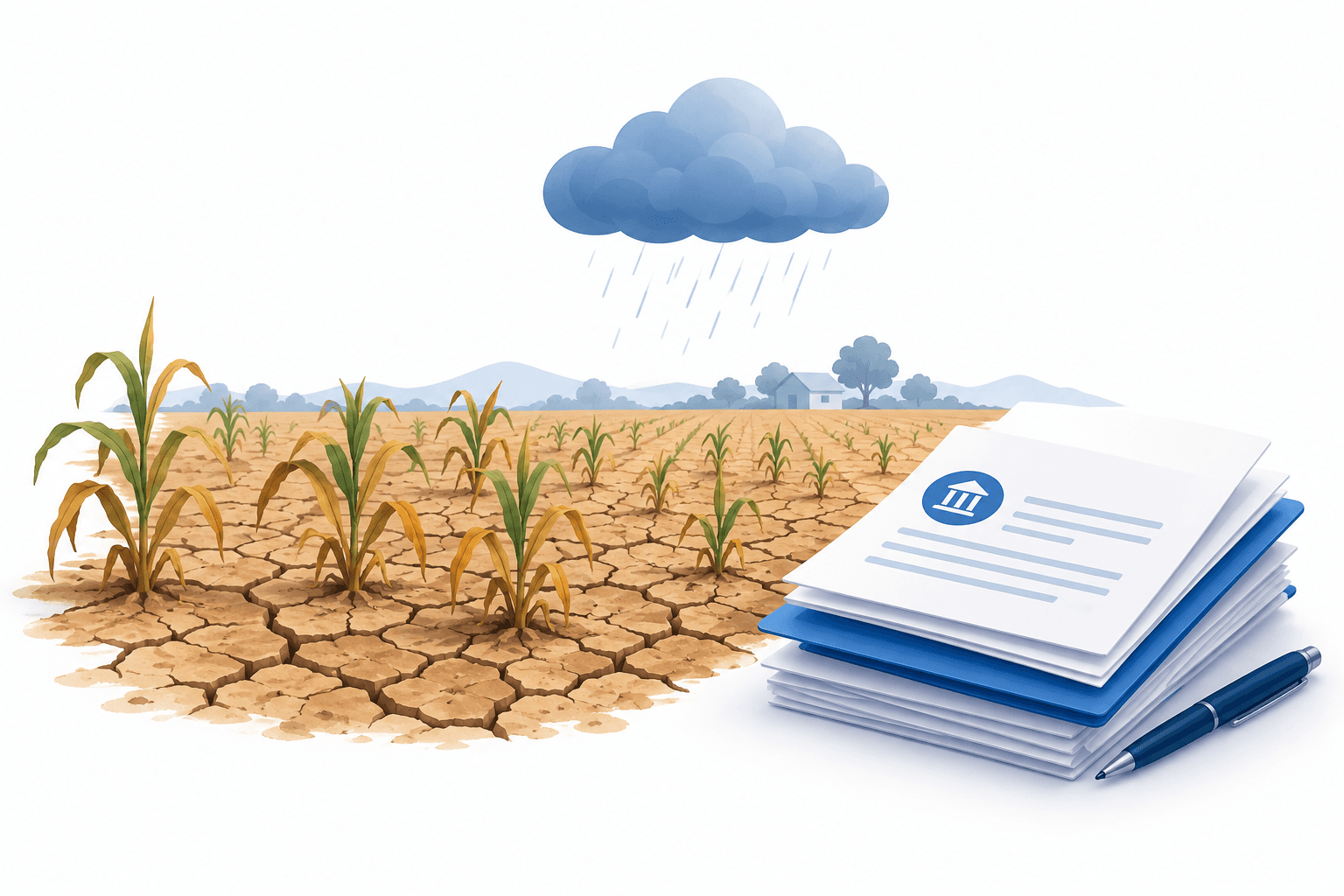
Rural lending is slowing in drought-hit parts of India as major non-bank lenders reduce new loans and strengthen collections after a weak 2026 monsoon raised concerns about borrowers’ ability to repay.
Key Takeaways
- India’s southwest monsoon rainfall was 13% below normal in 2026, the weakest since 2015.
- Shriram Finance lowered its loan-growth guidance to 15–17% from 18%.
- Bajaj Finance and M&M Finance are cutting back in affected locations while monitoring local conditions.
Rural lending faces monsoon pressure
The rainfall shortfall was more severe in the southern peninsula, at 24% below normal, while Karnataka recorded a 32% deficit. Lower farm output can weaken rural incomes and consumption, making it harder for some borrowers to keep up with repayments.
The lenders’ response extends beyond crop finance, with measures ranging from fewer loan originations to closer monitoring and stronger collection operations.
Shriram and M&M Finance adjust their approach
Shriram Finance is moderating lending in parts of Karnataka, central India and eastern Maharashtra following reports of slower local economic activity. Chief Executive Parag Sharma said the lender could tighten loan-to-value limits or intensify collections if conditions worsen; those steps are not yet confirmed.
Executive Vice-Chairman Umesh Revankar said Shriram reduced its loan-growth guidance to 15–17% from 18%, citing macroeconomic and seasonal factors, particularly the weak monsoon.
M&M Finance reduced funding in stressed locations during the second quarter and strengthened collections in vulnerable markets. Chief Executive Raul Rebello said the lender was monitoring three states and 282 districts classified as drought-prone. It has expanded in-house collections and used external support where needed.
Bajaj Finance cuts exposure in affected districts
Bajaj Finance is tracking conditions across 720 districts and reducing business where drought has been declared. Its measures include fewer microfinance originations in some districts and reductions in parts of its business-to-business lending portfolio.
Vice-Chairman and Managing Director Rajeev Jain said Maharashtra appeared to be the most affected state, although conditions varied by region. The lender said it was working with customers in drought-affected districts in line with government directives and regulatory guidance.
Read More News
Disclaimer
This FinanceVelix article provides general information, not personalized financial, investment, legal, or tax advice. Market prices, interest rates and economic conditions can change; investments carry a risk of loss. Facts reflect the material available when published and may change. Check important information independently and consult a qualified professional when needed. Mentioning an asset, company, or service is not an endorsement.



Comments
Be respectful. No spam, impersonation or private credentials. Ordinary posts and comments appear immediately; suspicious links are held for review.
Please wait…