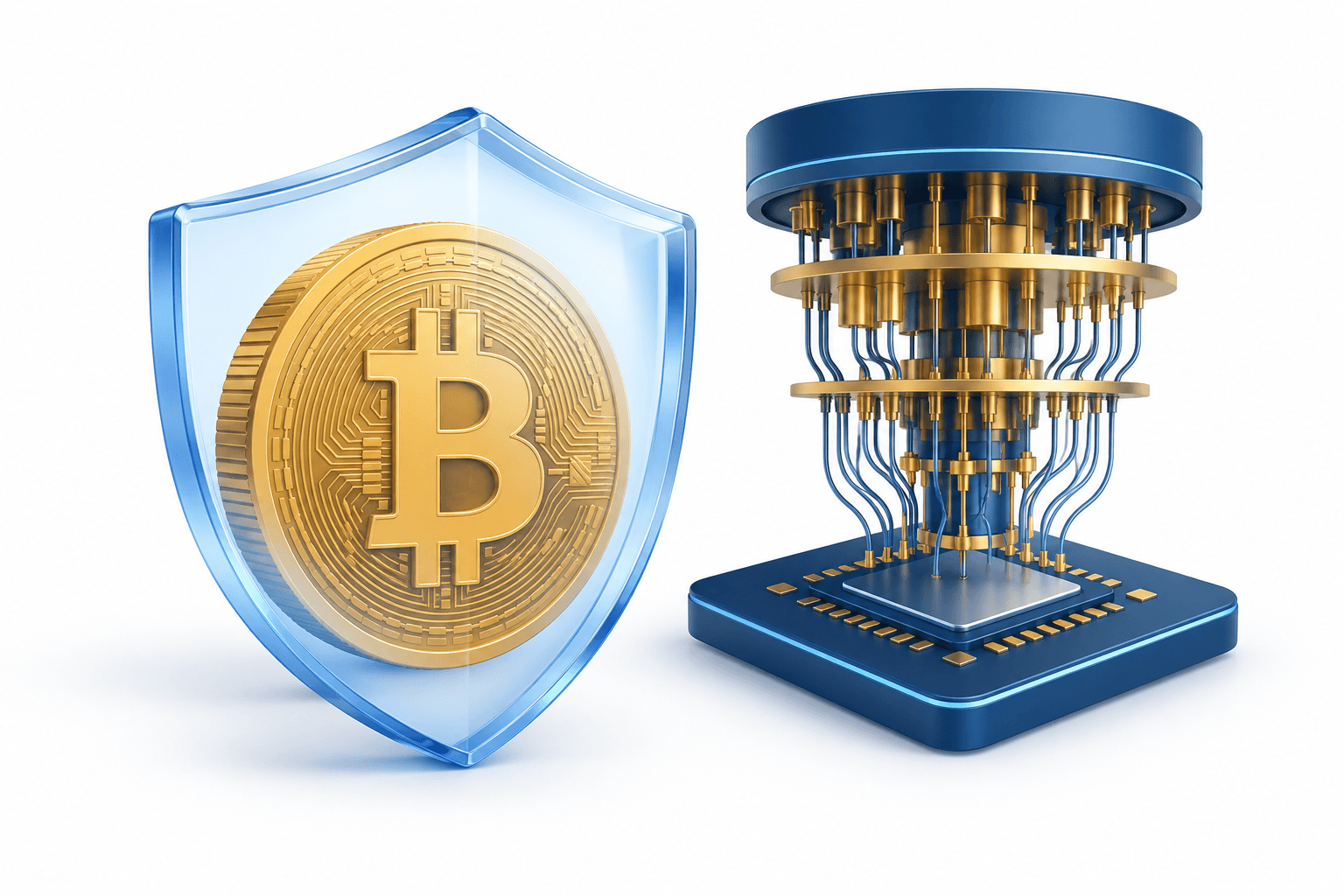
Bitcoin quantum security concerns are already limiting the cryptocurrency’s growth by making some institutional investors hesitant to buy, Stacks co-founder Muneeb Ali said on Oct. 27, 2026. He called for a credible plan to make the network resistant to future quantum-computing threats.
Key Takeaways
- Ali said risk-averse institutions may delay large Bitcoin purchases until an upgrade path becomes clearer.
- He warned that implementing security changes and moving holdings to new addresses could take years.
- StarkWare has tested a protective approach, but its latest cost reductions remain limited to benchmarks.
Why Bitcoin quantum security is an investment concern
Ali argued that uncertainty about how Bitcoin would respond to a powerful quantum computer could discourage institutional buyers. His assessment is a warning about investor behavior, not a measured estimate of purchases that have been delayed.
Stacks is a Bitcoin layer-2 network co-founded by Ali. It is designed to support smart contracts and decentralized applications while using Bitcoin as its settlement layer.
Ali acknowledged that some Bitcoin supporters consider the threat distant or exaggerated. In his view, disagreement over its urgency can itself weaken confidence if there is no credible roadmap for an upgrade.
The proposed timeline for an upgrade
Ali said Bitcoin could enter a riskier period if developers have not made meaningful progress toward quantum-resistant security by 2028. He cited guidance from the US National Institute of Standards and Technology when pointing to 2030 as a target for a transition.
He also suggested that artificial intelligence could accelerate quantum-computing development and bring the relevant timeline forward to 2029. These dates are part of Ali’s assessment, not confirmed deadlines for a Bitcoin upgrade.
The transition would involve more than a software change: Ali said users would also need time to move their holdings to new addresses.
Experimental protection remains in testing
In September, StarkWare reported that researchers had reduced the estimated computing cost of preparing an experimental quantum-resistant Bitcoin transaction by 79% after a weeklong optimization challenge. The approach would not require changes to Bitcoin’s consensus rules, but the latest reductions have only been demonstrated in benchmark tests.
StarkWare has described the approach as a last-resort measure and continues to advocate a protocol-level upgrade as a longer-term solution. Ali said a quantum threat to Bitcoin would also affect the wider cryptocurrency industry.
Read More News
Disclaimer
This FinanceVelix article provides general information, not personalized financial, investment, legal, or tax advice. Market prices, interest rates and economic conditions can change; investments carry a risk of loss. Facts reflect the material available when published and may change. Check important information independently and consult a qualified professional when needed. Mentioning an asset, company, or service is not an endorsement.



Comments
Be respectful. No spam, impersonation or private credentials. Ordinary posts and comments appear immediately; suspicious links are held for review.
Please wait…