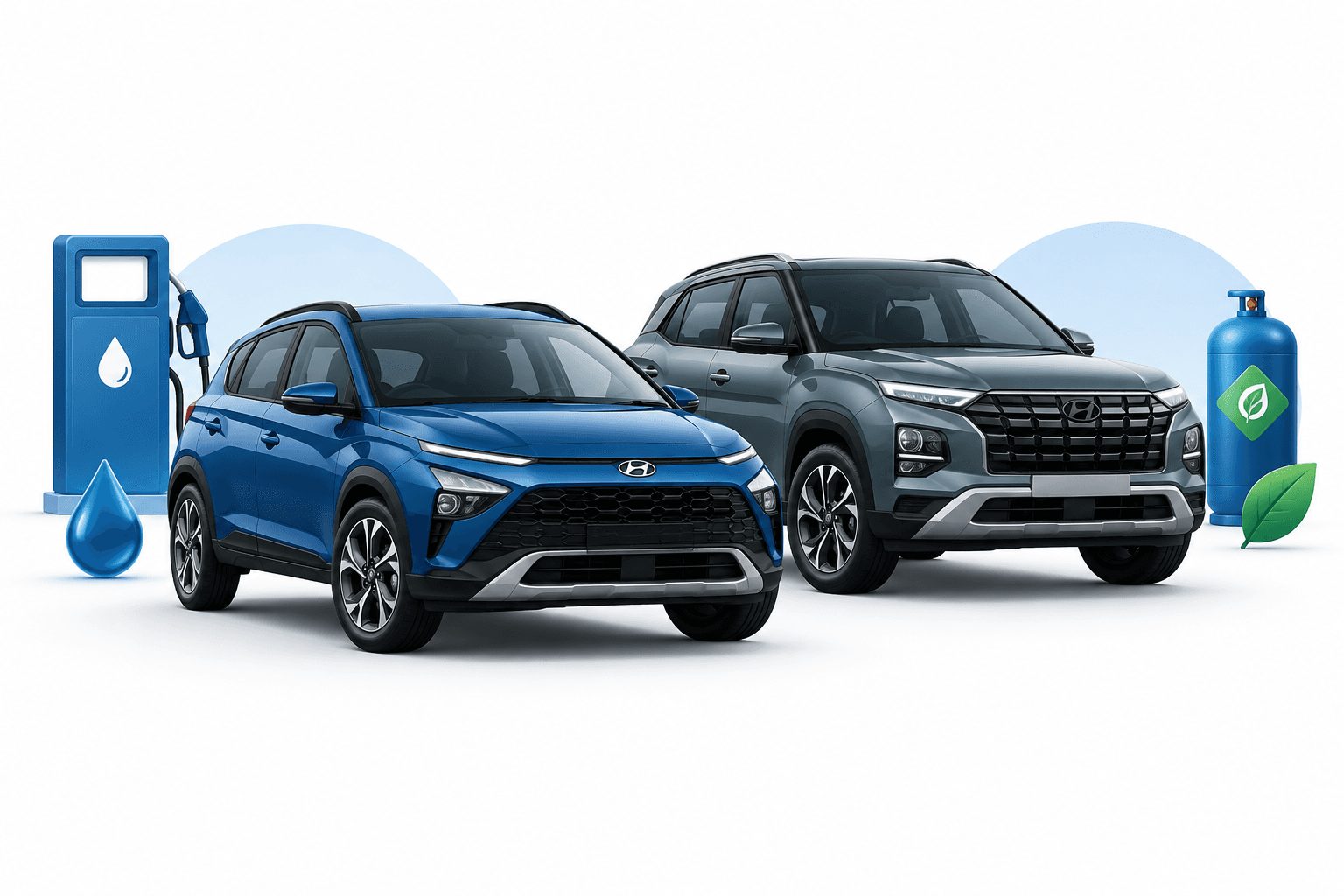
Hyundai Bayon has launched in India as Hyundai Motor India seeks to revive growth alongside its Creta SUV, whose domestic dealer dispatches fell about 10% in April–September 2026. The company is targeting combined sales of 250,000 Bayon and Creta units from early 2027.
Key Takeaways
- Creta dispatches to Indian dealers fell to 89,727 units in April–September 2026, from 99,345 a year earlier.
- The Bayon is available in petrol, with a CNG version planned for January 2027.
- Hyundai expects its overall growth to exceed 8% in the second half of the financial year.
Hyundai Bayon joins the mid-size SUV market
The Bayon is priced from ₹10 lakh to ₹18 lakh, excluding on-road costs. It has a 1.5-litre MPI petrol engine and measures 4,245 millimeters in length.
The model competes with vehicles including Maruti Suzuki’s Grand Vitara and Victoris, Tata Motors’ Curvv, Skoda’s Kushaq and Volkswagen’s Taigun. Hyundai Motor India CEO Tarun Garg said the CNG version would launch in January; the SUV is currently available only in petrol.
Garg said the Bayon gives Hyundai an opportunity to grow as the mid-size SUV segment expands. The company’s 250,000-unit target covers the Bayon and Creta together; the period over which that total would be measured was not specified.
Creta dispatches fell as the segment grew
Creta domestic dispatches declined from 99,345 units in April–September 2025 to 89,727 in the same months of 2026. Dispatches measure vehicles sent to dealers rather than sales to final customers.
Garg said limited diesel engine supply was one reason for the decline and had created a waiting period. Over the same six months, total domestic mid-size SUV dispatches rose 52.3% year on year to 555,467 units.
Hyundai expects growth in the second half
Garg said Hyundai expected growth of more than 8% in the second half of the financial year, while industry growth would probably moderate to 5%–6%. These are management expectations, not completed results.
He also expects SUVs to account for more than 75% of Hyundai Motor India’s overall portfolio starting in the next financial year, up from 68%–70% currently.
Read More News
Disclaimer
This FinanceVelix article provides general information, not personalized financial, investment, legal, or tax advice. Market prices, interest rates and economic conditions can change; investments carry a risk of loss. Facts reflect the material available when published and may change. Check important information independently and consult a qualified professional when needed. Mentioning an asset, company, or service is not an endorsement.




Comments
Be respectful. No spam, impersonation or private credentials. Ordinary posts and comments appear immediately; suspicious links are held for review.
Please wait…