The India rear-impact rule taking effect on April 1, 2029, could add approximately ₹2,700 crore a year to passenger-vehicle manufacturing costs, based on an illustrative industry estimate. The actual burden will depend on how much work manufacturers need to bring their existing vehicle platforms into compliance.
Key Takeaways
- The notification applies AIS-101 Revision 1, as amended, to covered passenger vehicles from April 2029.
- The cost estimate assumes annual sales of five million vehicles and excludes one-time engineering, tooling and certification costs.
- Small cars could face particular margin pressure, while electric and hybrid vehicles have the highest estimated additional cost per vehicle.
What the India rear-impact rule requires
The Ministry of Road Transport and Highways issued notification S.O. 5723(E) on October 19, 2026. Published on October 21, it applies AIS-101 Revision 1, as amended, to covered passenger vehicles from April 1, 2029.
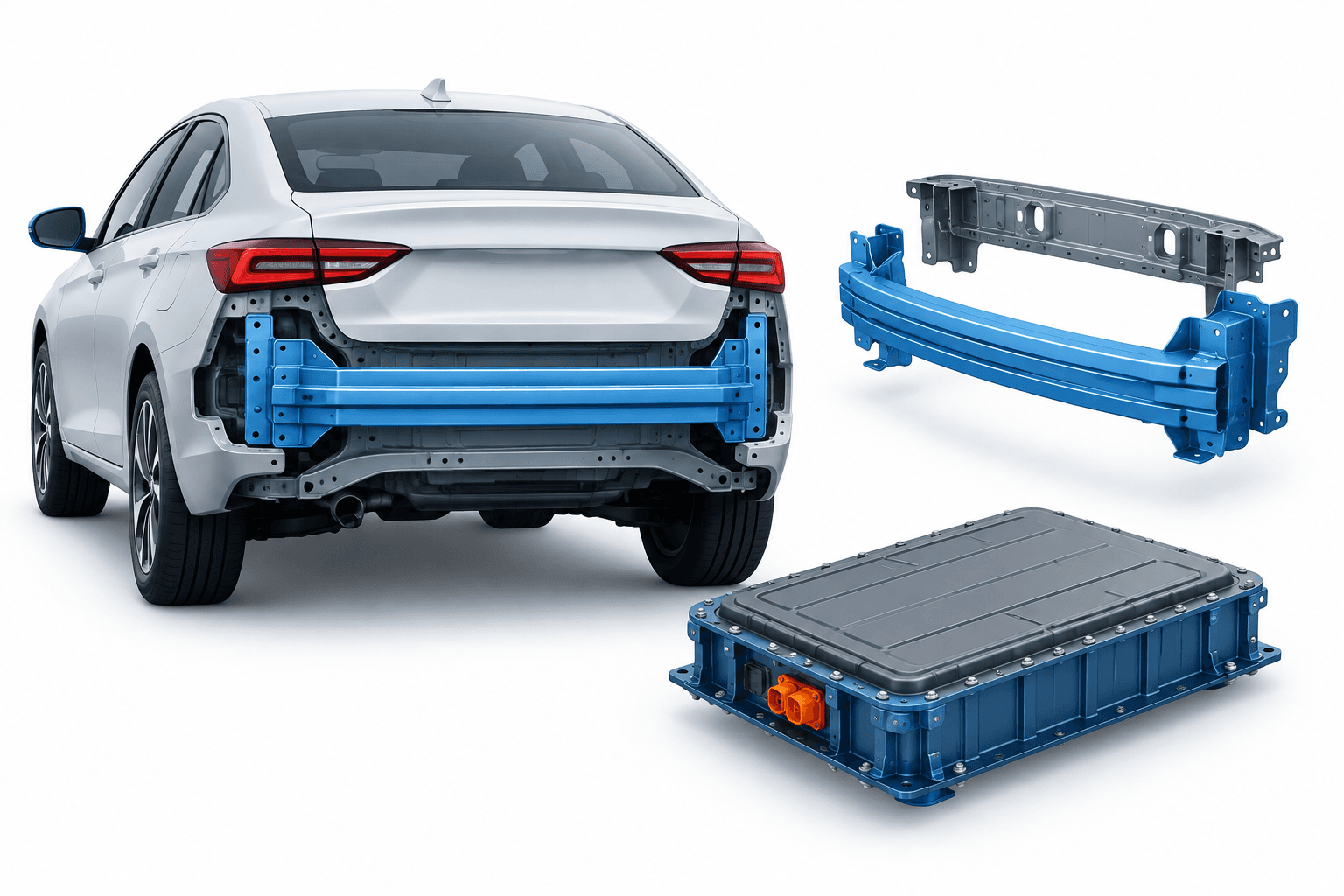
Manufacturers may need to strengthen rear structures and protect fuel systems and electric-vehicle batteries. The available details do not specify the previous requirements, so they do not establish a direct comparison with the earlier rule.
| Item | Details |
|---|---|
| Small cars | ₹5,000 estimated additional cost per vehicle; 35% assumed market share; ₹875 crore annual cost |
| Conventional SUVs and sedans | ₹4,000 per vehicle; 55% assumed share; ₹1,100 crore annual cost |
| Electric and hybrid vehicles | ₹15,000 per vehicle; 10% assumed combined share; ₹750 crore annual cost |
How the estimated costs break down
The illustrative calculation assumes five million annual vehicle sales and puts the additional manufacturing cost at ₹5,000 per small car, ₹4,000 per conventional SUV or sedan, and ₹15,000 per electric or hybrid vehicle.
Using assumed market shares of 35% for small cars, 55% for conventional SUVs and sedans, and 10% for electric and hybrid vehicles, the estimate totals ₹2,725 crore annually, or an average of ₹5,450 per vehicle. It is not a forecast of showroom-price increases.
For a small car priced at ₹5 lakh to ₹6 lakh, the estimated ₹5,000 additional cost represents 0.83% to 1% of the price. Entry-level models could face greater margin pressure, while newer platforms that already meet comparable international standards may need fewer changes.
Potential changes for manufacturers and suppliers
Hatchbacks and compact sedans may need reinforced rear cross-members, stronger fuel-tank brackets and fuel-line shielding. Conventional SUVs and sedans could require changes to rear structural members and fuel-system protection.
Electric vehicles may need reinforced battery enclosures, stronger mounting brackets and high-voltage cable shielding. Hybrids may also require protection for conventional fuel systems. The work could create orders for component suppliers, although actual costs will depend on platform readiness and localisation.
Next milestone
The confirmed milestone is April 1, 2029, when the rule applies to covered passenger vehicles.
Read More News
Disclaimer
This FinanceVelix article provides general information, not personalized financial, investment, legal, or tax advice. Market prices, interest rates and economic conditions can change; investments carry a risk of loss. Facts reflect the material available when published and may change. Check important information independently and consult a qualified professional when needed. Mentioning an asset, company, or service is not an endorsement.




Comments
Be respectful. No spam, impersonation or private credentials. Ordinary posts and comments appear immediately; suspicious links are held for review.
Please wait…