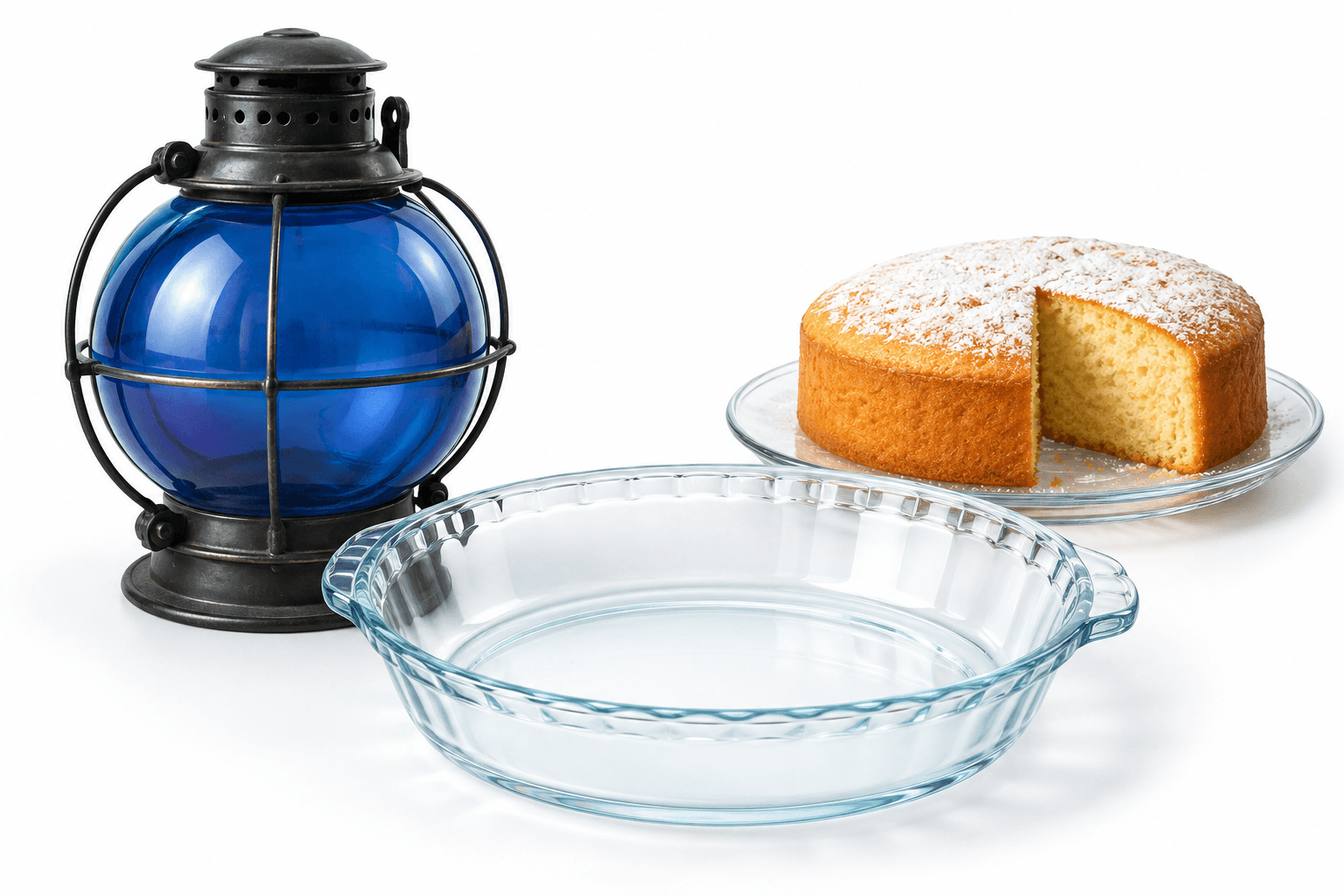
Pyrex cookware began with a railroad problem: glass signal-lantern globes were cracking when temperatures changed suddenly. Corning’s work on a more durable glass eventually led to a home baking experiment in 1913 and the launch of a Pyrex pie plate in 1915.
Key Takeaways
- Corning developed Nonex glass to resist thermal shock in railroad lanterns.
- Bessie Littleton baked a sponge cake in a cut-down Nonex battery jar in 1913.
- Corning removed lead from the glass before introducing Pyrex cookware.
From railroad lanterns to Pyrex cookware
Eugene Sullivan joined Corning Glass Works in 1908 to establish an industrial research laboratory. He and chemist William C. Taylor refined a borosilicate glass formula into Nonex, which expanded relatively little when heated or cooled and resisted the temperature changes that damaged ordinary lantern globes.
The glass reduced lantern breakages, but that also reduced demand for replacements. Corning’s scientists began looking for other uses for the material.
A cake test and a new glass formula
In 1913, after a ceramic baking dish cracked, Corning physicist Jesse T. Littleton brought home the bottom of a Nonex battery jar. His wife, Bessie, baked a sponge cake in it. The cake baked evenly and came out of the glass easily, encouraging further work on cookware.
Nonex contained lead, so Sullivan, Taylor and other Corning scientists reformulated the glass, removing the lead while retaining its resistance to thermal shock. Corning introduced its first Pyrex pie plate in 1915, then expanded into products including casserole dishes, loaf pans and measuring tools.
Corning also worked with home economists, cooking schools and writers to encourage consumers to use glass cookware. The heat-resistant glass later found uses in laboratory equipment, including beakers and flasks.
Read More News
Disclaimer
This FinanceVelix article provides general information, not personalized financial, investment, legal, or tax advice. Market prices, interest rates and economic conditions can change; investments carry a risk of loss. Facts reflect the material available when published and may change. Check important information independently and consult a qualified professional when needed. Mentioning an asset, company, or service is not an endorsement.




Comments
Be respectful. No spam, impersonation or private credentials. Ordinary posts and comments appear immediately; suspicious links are held for review.
Please wait…