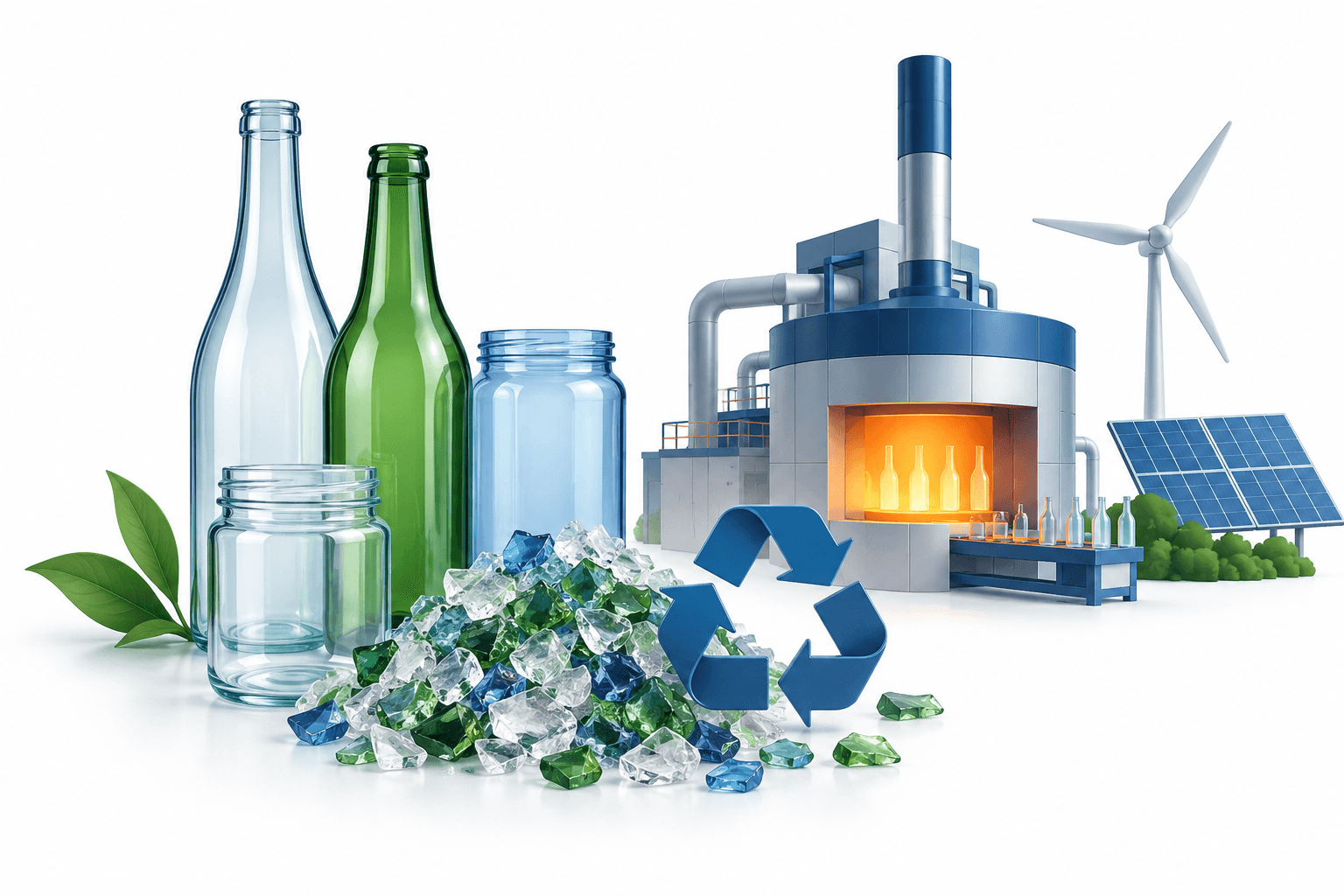
O-I sustainability results released on October 21, 2026, showed that the glass-packaging manufacturer reduced absolute Scope 1 and 2 greenhouse gas emissions by 28% in 2025 from its 2019 baseline. Its 2026 Sustainability Report also detailed energy-saving projects, renewable electricity certificate matching and expanded glass-recycling efforts.
Key Takeaways
- Energy-saving projects delivered an estimated 133,000 metric tons of CO₂ reductions in 2025.
- Renewable energy certificates matched 65% of global electricity consumption, against an 80% renewable electricity goal for 2030.
- Global average recycled content reached 42%, supported by collection and recycling infrastructure.
Table of Contents
- O-I sustainability gains reflect efficiency and operational changes
- Electricity certificate matching advances toward 2030 goal
- Recycling infrastructure supports higher recycled content
- Conclusion
O-I sustainability gains reflect efficiency and operational changes
O-I's 2026 sustainability announcement attributed the decline in absolute emissions partly to strategic changes in its operations and a sharper focus on energy management. The reduction therefore does not represent energy-efficiency improvements alone.
The company assembled a global energy team called Spark in 2025 to share best practices, monitor performance and identify opportunities to reduce energy use. Hundreds of energy-saving projects contributed to the estimated CO₂ reductions.
“At O-I, energy management is not aspirational—it’s operational,” said Randy Burns, chief administrative and sustainability officer. O-I did not provide a financial savings figure for those projects in the announcement.
| Item | Details |
|---|---|
| Reporting period | 2025 performance, published in the 2026 Sustainability Report |
| Emissions comparison | Absolute Scope 1 and 2 emissions measured against a 2019 baseline |
| Manufacturing footprint | 61 plants in 18 countries |
| Workforce | Approximately 19,000 employees |
| 2025 revenue | $6.4 billion |
Electricity certificate matching advances toward 2030 goal
O-I matched 65% of its global electricity consumption with renewable energy certificates, or RECs, in 2025. That leaves a 15-percentage-point gap to its stated 80% renewable electricity goal for 2030.
Across Continental Europe, certificate matching covered 100% of electricity consumption. These figures describe electricity matched with RECs; they should not be read as a claim that every facility receives electricity directly from renewable generators.
Recycling infrastructure supports higher recycled content
O-I increased its global average recycled content to 42% while supporting approximately 40 closed-loop recycling programs worldwide and 47 community glass-collection sites in the United States.
Burns said collection programs, recycling partnerships and processing capabilities help return recovered glass to new bottles and jars. The initiative addresses the collection and processing steps needed to keep glass in circulation, rather than relying on recyclability alone.
Conclusion
The next benchmark is progress toward O-I's 2030 sustainability goals, including its 80% renewable electricity target. Those goals remain forward-looking, and the company cautioned that estimates, methodologies and operating conditions could affect their achievement.
Read More News
Disclaimer
This FinanceVelix article provides general information, not personalized financial, investment, legal, or tax advice. Market prices, interest rates and economic conditions can change; investments carry a risk of loss. Facts reflect the material available when published and may change. Check important information independently and consult a qualified professional when needed. Mentioning an asset, company, or service is not an endorsement.