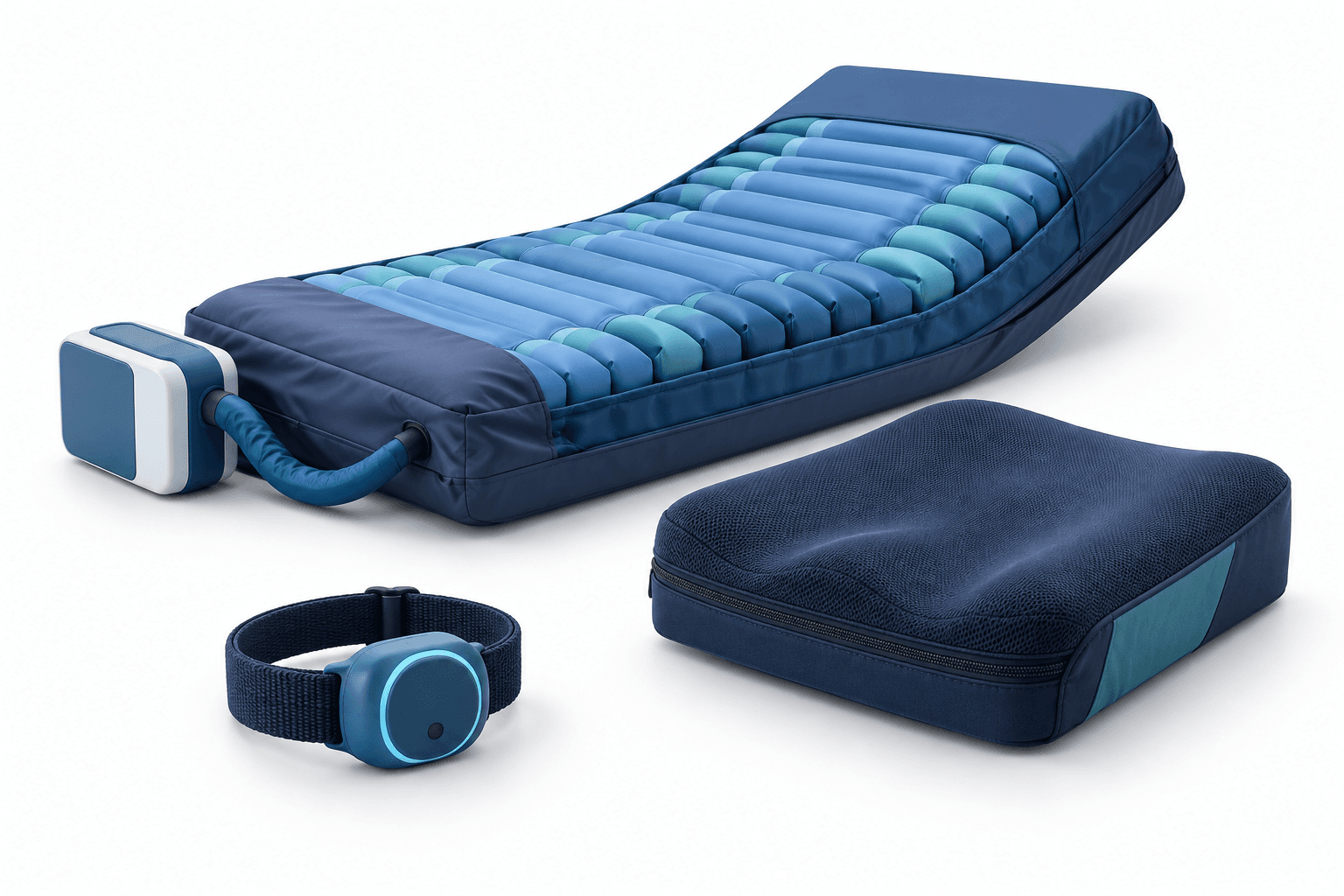
Pressure ulcer devices could become a US$7.93 billion global market by 2035, up from an estimated US$4.11 billion in 2025, DataM Intelligence said in an October 21, 2026 release. The research firm projects 6.8% compound annual growth for 2026–2035, with demand extending beyond mattresses into seated-pressure relief, patient monitoring and wound management.
Key Takeaways
- The market forecast points to substantial expansion, but it is a projection rather than recorded revenue.
- Pressure-relief mattresses remain the largest product segment, while North America leads regional revenue.
- Connected products face a purchasing test centered on clinical evidence, staff training and total cost.
Table of Contents
- Pressure ulcer devices expand beyond bed-based care
- Connected monitoring must demonstrate practical value
- Suppliers compete across prevention and wound treatment
- Conclusion
Pressure ulcer devices expand beyond bed-based care
The market covers pressure-relief mattresses and specialty beds, wheelchair cushions, positioning accessories, advanced dressings, negative-pressure wound therapy systems used in pressure-ulcer care, and sensor-enabled monitoring products. That scope spans both prevention and treatment rather than a single equipment category.
DataM Intelligence’s market forecast and product overview places this expansion within a shift toward coordinated prevention, monitoring and wound management. Devices complement repositioning, skin assessment and professional care; they do not replace those measures.
Pressure-relief mattresses represented 30.81% of the market in 2025. Product selection varies with patient mobility, care needs, cleaning requirements and the setting, from intensive care to nursing homes and homecare.
| Item | Details |
|---|---|
| North America | Largest regional market, with a 42.17% share in 2025. |
| Asia-Pacific | Identified as the fastest-growing region, with a reported 8.7% CAGR. |
| Alternating-pressure wheelchair cushions | Accounted for 15.76% of the market in 2025. |
Connected monitoring must demonstrate practical value
Smith+Nephew launched its next-generation LEAF patient-monitoring system in the United States on June 1, 2026. The wearable sensor tracks mobility and provides turn-status updates, connecting prevention equipment with care-team workflows.
However, monitoring capabilities do not by themselves establish improved outcomes. Updated VA/DoD pressure-injury guidance issued in August 2026 supported repositioning but found insufficient evidence for a general recommendation on continuous bedside pressure mapping. The guidance also highlighted cost, staff training and implementation considerations.
For purchasers, the distinction matters: a system that produces additional information still needs to show that staff can use it effectively. Clinical usefulness, workflow compatibility and patient-data handling remain important considerations alongside the equipment price.
Suppliers compete across prevention and wound treatment
Stryker’s support-surface portfolio serves hospital beds and stretchers, while Baxter’s Hillrom business combines hospital beds with pressure-management surfaces. Smith+Nephew participates through dressings, monitoring and negative-pressure wound therapy.
These portfolios give suppliers exposure to different parts of the care pathway. They also make compatibility, maintenance and service support relevant to purchasing decisions, rather than pressure redistribution alone.
The forecast does not establish how much revenue individual manufacturers will capture. DataM Intelligence also did not publish a separate Japanese market value in the release, despite discussing the country’s aging population and domestic product development.
Conclusion
The forecast sets out a larger market through 2035, not guaranteed sales for device makers. The next substantive test for connected products is evidence that they improve care enough to justify their cost and implementation demands; the release gives no timetable for that evidence.
Read More News
Disclaimer
This FinanceVelix article provides general information, not personalized financial, investment, legal, or tax advice. Market prices, interest rates and economic conditions can change; investments carry a risk of loss. Facts reflect the material available when published and may change. Check important information independently and consult a qualified professional when needed. Mentioning an asset, company, or service is not an endorsement.