The OpenAI acquisition of Orchestra Bio, announced on October 20, 2026, brings a drug-development coordination platform into the company’s life-sciences business. OpenAI said it has acquired the startup and plans to combine its team and technology with Rosalind, its AI models and tools for scientific research.
Key Takeaways
- OpenAI confirmed the acquisition but did not disclose financial terms in its announcement.
- Orchestra Bio adds tools for coordinating studies, tracking dependencies and managing drug-development programs.
- Faster delivery of treatments is OpenAI’s stated goal, not a demonstrated outcome of the acquisition.
Table of Contents
- OpenAI acquisition connects research with drug-program management
- Managing delays across interconnected studies
- Rosalind integration remains the execution task
- Conclusion
OpenAI acquisition connects research with drug-program management
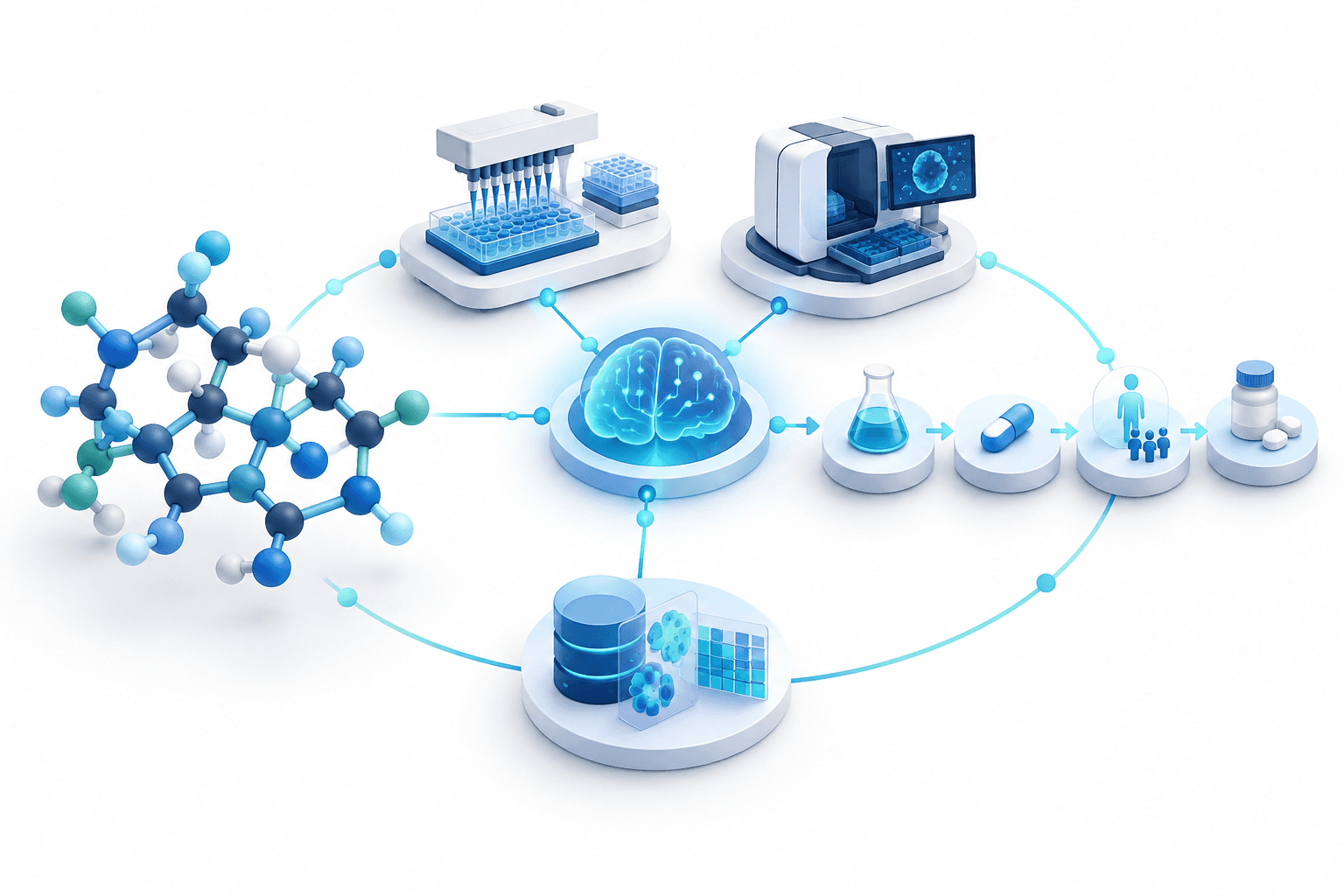
OpenAI’s Orchestra Bio acquisition announcement describes a plan to connect scientific research with the operational work required to advance potential medicines. The combination is intended to help teams turn findings into studies, decisions and subsequent development steps.
The transaction adds coordination technology rather than a specific medicine or clinical program. OpenAI said Orchestra’s team brings experience across biotechnology, software and AI.
| Item | Details |
|---|---|
| GPT-Rosalind | Helps scientists reason through biology and chemistry questions. |
| Rosalind Workbench | Connects AI capabilities with scientific tools and data for analysis and experiment planning. |
| Orchestra Bio | Coordinates drug-development programs involving people and AI agents. |
Managing delays across interconnected studies
Drug development involves internal departments and external partners that often work through disconnected systems. OpenAI said the process takes roughly 10 to 15 years on average from target discovery to regulatory approval in the United States.
Orchestra allows scientists and program leaders to delegate study monitoring and tracking to AI agents. Those agents can identify affected activities and timelines, gather information and compare possible responses when a problem arises.
OpenAI used a failed manufacturing batch as an example: the disruption can delay a clinical trial and affect other parts of a program. The platform is designed to help teams assess those dependencies, while scientists and program leaders decide how to respond.
Rosalind integration remains the execution task
OpenAI aims to build agents that connect research findings with the work needed to advance a potential medicine. The proposed combination extends its life-sciences offering from scientific reasoning and experimental planning into program coordination.
The announcement did not provide a financial purchase price, a timetable for completing the integration or quantified evidence of shorter development cycles. Its claims about helping treatments reach patients sooner describe the intended benefit, rather than results already achieved.
Conclusion
The next step outlined by OpenAI is bringing Orchestra’s team and technology together with Rosalind. Whether that integration reduces development delays remains an outcome to demonstrate, with no delivery timetable specified in the announcement.
Read More News
Disclaimer
This FinanceVelix article provides general information, not personalized financial, investment, legal, or tax advice. Market prices, interest rates and economic conditions can change; investments carry a risk of loss. Facts reflect the material available when published and may change. Check important information independently and consult a qualified professional when needed. Mentioning an asset, company, or service is not an endorsement.