Modal reported on October 19, 2026, that early Nvidia Vera CPU tests delivered twice the throughput for its AI-agent sandbox workloads. The cloud-computing startup has received its first Vera server, but broader adoption would require changes to infrastructure built exclusively around x86 processors.
Key Takeaways
- Modal’s internal benchmarks showed a twofold throughput improvement for concurrent sandbox workloads.
- Individual tasks on an otherwise idle server showed smaller and less consistent advantages.
- Supporting the Arm-compatible processor would require infrastructure and image-building changes.
Table of Contents
- Nvidia Vera CPU results favor busy sandbox servers
- Why concurrent workloads change the comparison
- Arm support remains an integration task
- Conclusion
Nvidia Vera CPU results favor busy sandbox servers
Modal’s Vera sandbox benchmark announcement describes a server already running in its San Francisco office and an early performance case for adding the processor to Modal Sandboxes. It establishes initial testing, rather than a completed migration away from Intel and AMD processors.
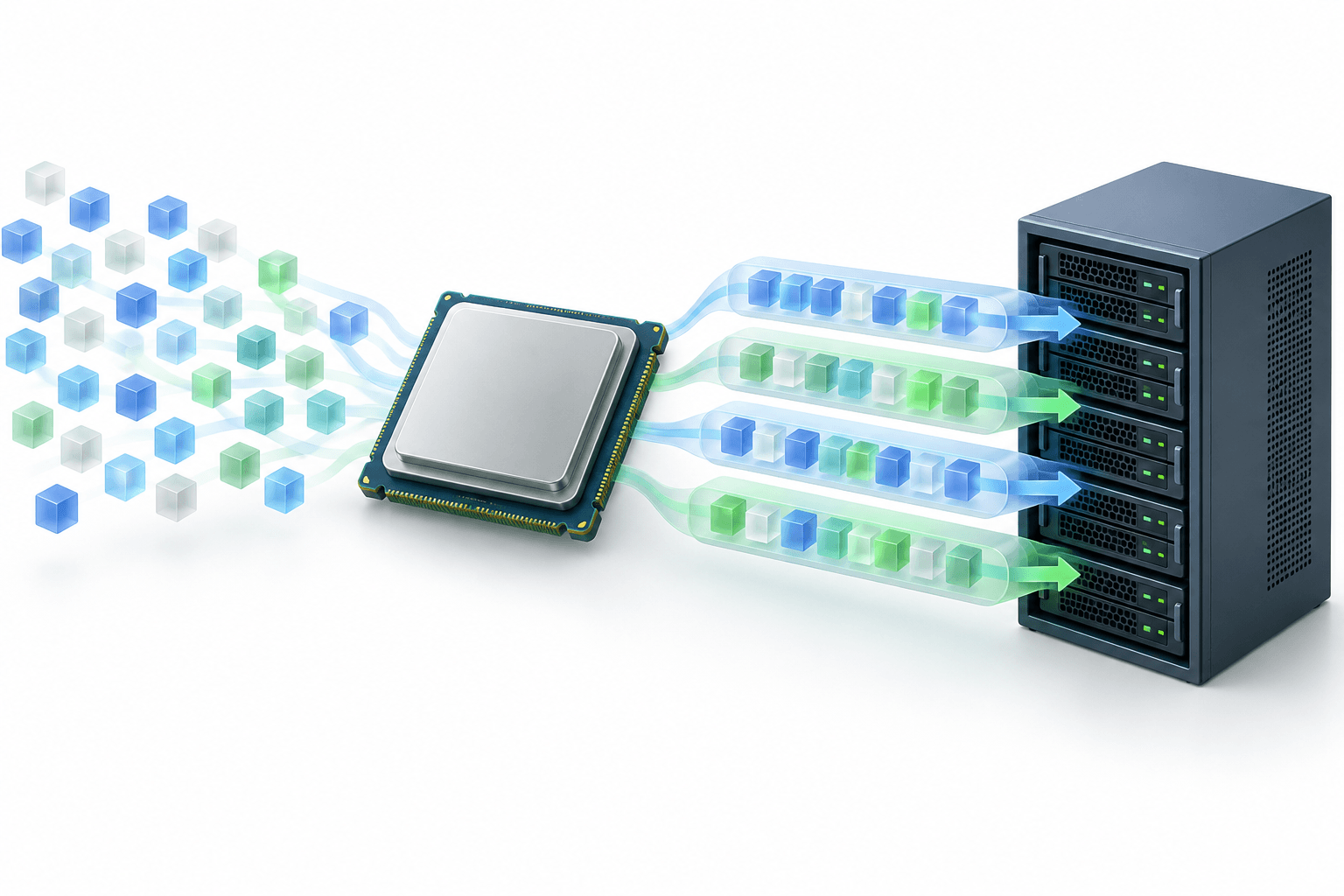
The distinction between throughput and task speed matters. Throughput measures how many tasks a system completes in a given period; latency measures how long an individual task takes. Modal found that Vera often performed better in serial tests across its benchmark suite, but not always and not by a particularly large margin.
The more substantial advantage emerged when many containers competed for computing resources. Modal reported a twofold throughput increase, making the result relevant to densely shared sandbox servers rather than evidence that every application would run twice as fast.
| Item | Details |
|---|---|
| Benchmark suite | 50 Terminal-Bench oracle solutions and verifiers. |
| Container preparation | Workloads were prewarmed in concurrent Docker containers. |
| Throughput procedure | Container concurrency increased while task completions were counted over a fixed interval. |
| Serial-test conditions | Tasks ran one at a time on a machine without load. |
Why concurrent workloads change the comparison
Modal says sandbox hosts can run hundreds of containers and virtual machines simultaneously. Their demands are unpredictable: an AI agent may spend time waiting for a language model, then suddenly need much more CPU capacity to install software or search files.
That variability can create contention, with one customer’s workload affecting another’s performance. Modal allows workloads to burst above reserved capacity, making performance under heavy shared use an important part of its hardware evaluation.
Its Agentless Agent Bench isolates CPU work such as compilation, file searches, Git operations and device emulation. By removing network calls, the test focuses on processor-side execution rather than the full time required for an AI agent to complete a real-world assignment.
Arm support remains an integration task
Vera is an Arm-compatible CPU built for Nvidia’s Vera Rubin GPU platform and also offered as a standalone CPU server. For Modal, using it would introduce a different processor architecture after a history of exclusively operating x86 machines.
Modal says supporting Arm would require changes across its infrastructure and image build system. The benchmark therefore presents a potential operational benefit, not a completed platform transition or a measured financial return.
Conclusion
The next implementation step is adapting Modal’s infrastructure and image-building system for Arm. The early results make a case for that work, while leaving broader deployment and real-world service gains to be demonstrated.
Read More News
Disclaimer
This FinanceVelix article provides general information, not personalized financial, investment, legal, or tax advice. Market prices, interest rates and economic conditions can change; investments carry a risk of loss. Facts reflect the material available when published and may change. Check important information independently and consult a qualified professional when needed. Mentioning an asset, company, or service is not an endorsement.