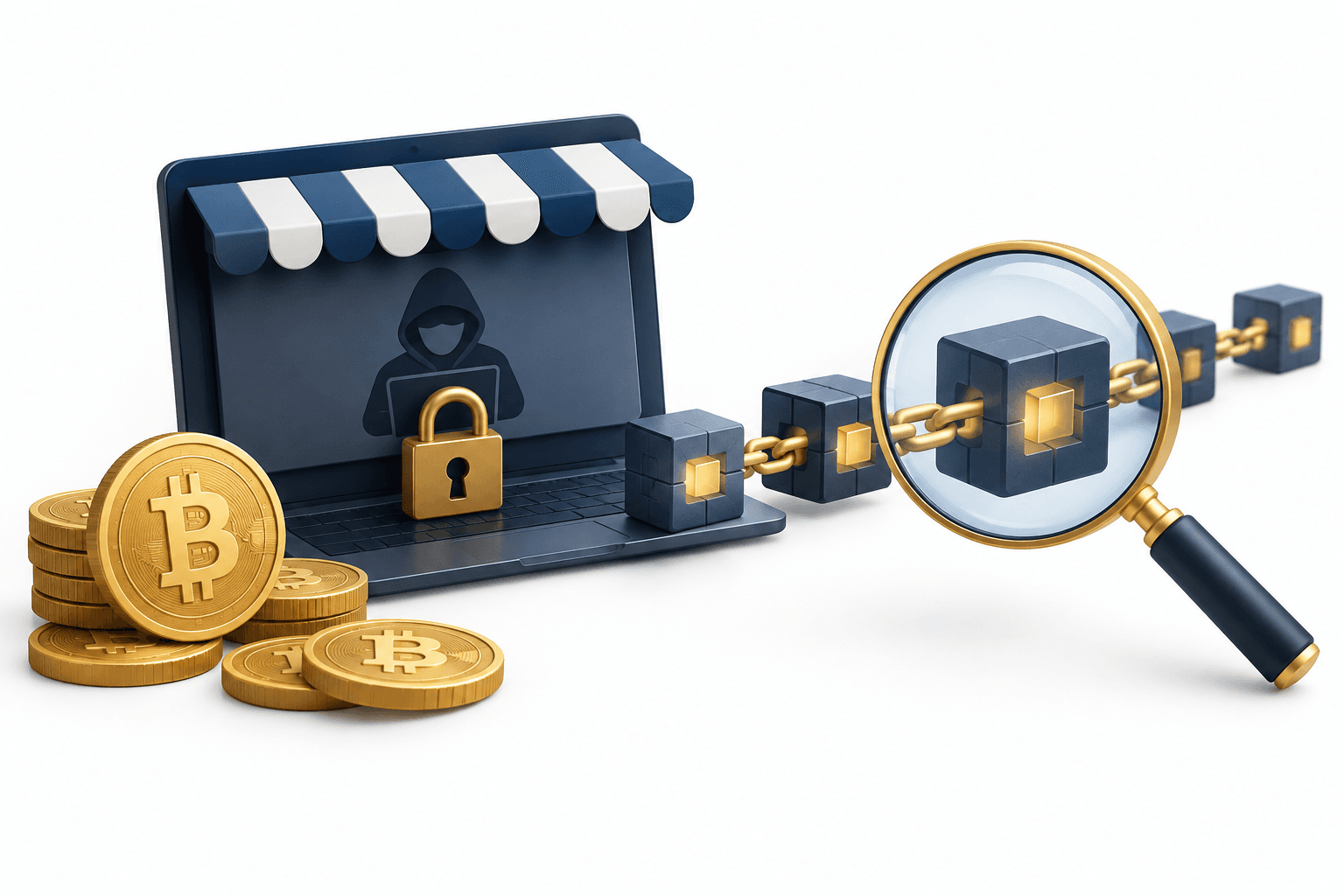
The Silk Road Bitcoin case stretched far beyond the marketplace’s October 2013 shutdown. The FBI estimated that the platform processed roughly $1.2 billion in transactions during its operation, while related cryptocurrency recoveries continued years later. President Donald Trump pardoned founder Ross Ulbricht on January 21, 2025, after he had spent more than eleven years in federal prison.
Key Takeaways
- Silk Road operated from 2011 to 2013, combining anonymous browsing with Bitcoin payments.
- A major recovery announced in 2022 involved Bitcoin actually seized in November 2021.
- Ulbricht’s January 2025 pardon did not restore seized cryptocurrency holdings.
Table of Contents
- How the Silk Road Bitcoin marketplace operated
- Bitcoin recoveries continued after the shutdown
- The 2025 pardon and the limits of the historical record
- Conclusion
How the Silk Road Bitcoin marketplace operated
Ross Ulbricht launched Silk Road in February 2011 under the alias Dread Pirate Roberts. The marketplace used the Tor network and accepted Bitcoin for payments, with controlled substances making up its largest product category.
Its commercial model combined payment handling with mechanisms intended to build trust between pseudonymous buyers and sellers. Ulbricht collected commissions on transactions, while vendor ratings helped buyers assess sellers.
The FBI’s roughly $1.2 billion transaction estimate describes historical activity on the marketplace, not the present value of the Bitcoin involved. Transaction volume also differs from the amount authorities ultimately recovered.
Federal agents arrested Ulbricht at a San Francisco public library on October 1, 2013, with his laptop open and unlocked. The shutdown was publicly announced the following day. In 2015, a federal jury convicted him on seven charges, including narcotics conspiracy and money laundering.
| Item | Details |
|---|---|
| Tor | Provided the network through which users accessed the marketplace anonymously. |
| Bitcoin | Served as the marketplace’s exclusive payment currency. |
| Escrow | Held buyers’ Bitcoin until delivery confirmation before releasing payment to sellers. |
Bitcoin recoveries continued after the shutdown
The Justice Department’s November 2022 seizure announcement documented a recovery that had taken place a year earlier: on November 9, 2021, authorities seized approximately 50,676 Bitcoin from James Zhong’s home in Gainesville, Georgia. The department valued that seizure at more than $3.36 billion at the time.
Zhong pleaded guilty to wire fraud on November 4, 2022. Prosecutors said he exploited Silk Road’s withdrawal-processing system in September 2012 to obtain approximately 50,000 Bitcoin unlawfully. This was a separate case involving theft from the marketplace, rather than the original seizure of its servers.
Authorities also recovered approximately 69,370 Bitcoin in a separate 2020 seizure connected to Silk Road. These later recoveries show why the platform’s closure and the government’s asset-recovery efforts should be treated as distinct events.
In the Zhong case, the Justice Department credited cryptocurrency tracing alongside conventional police work. Bitcoin’s transaction record could provide investigative evidence even where marketplace participants had tried to conceal their identities.
The 2025 pardon and the limits of the historical record
Trump granted Ulbricht a full and unconditional pardon on January 21, 2025. The pardon ended his imprisonment, but did not restore seized cryptocurrency holdings.
The pardon, criminal proceedings and asset forfeitures are separate parts of the case. It would therefore be misleading to treat the pardon as a return of the Bitcoin recovered by authorities, or to assume that an authorization to sell seized assets proves a sale was completed.
Conclusion
Silk Road’s history separates into three stages: the marketplace’s closure, years of cryptocurrency recoveries and Ulbricht’s 2025 pardon. Any subsequent asset-disposal development would require separate confirmation; the historical seizure announcements alone do not establish what remains in government custody.
Read More News
Disclaimer
This FinanceVelix article provides general information, not personalized financial, investment, legal, or tax advice. Market prices, interest rates and economic conditions can change; investments carry a risk of loss. Facts reflect the material available when published and may change. Check important information independently and consult a qualified professional when needed. Mentioning an asset, company, or service is not an endorsement.