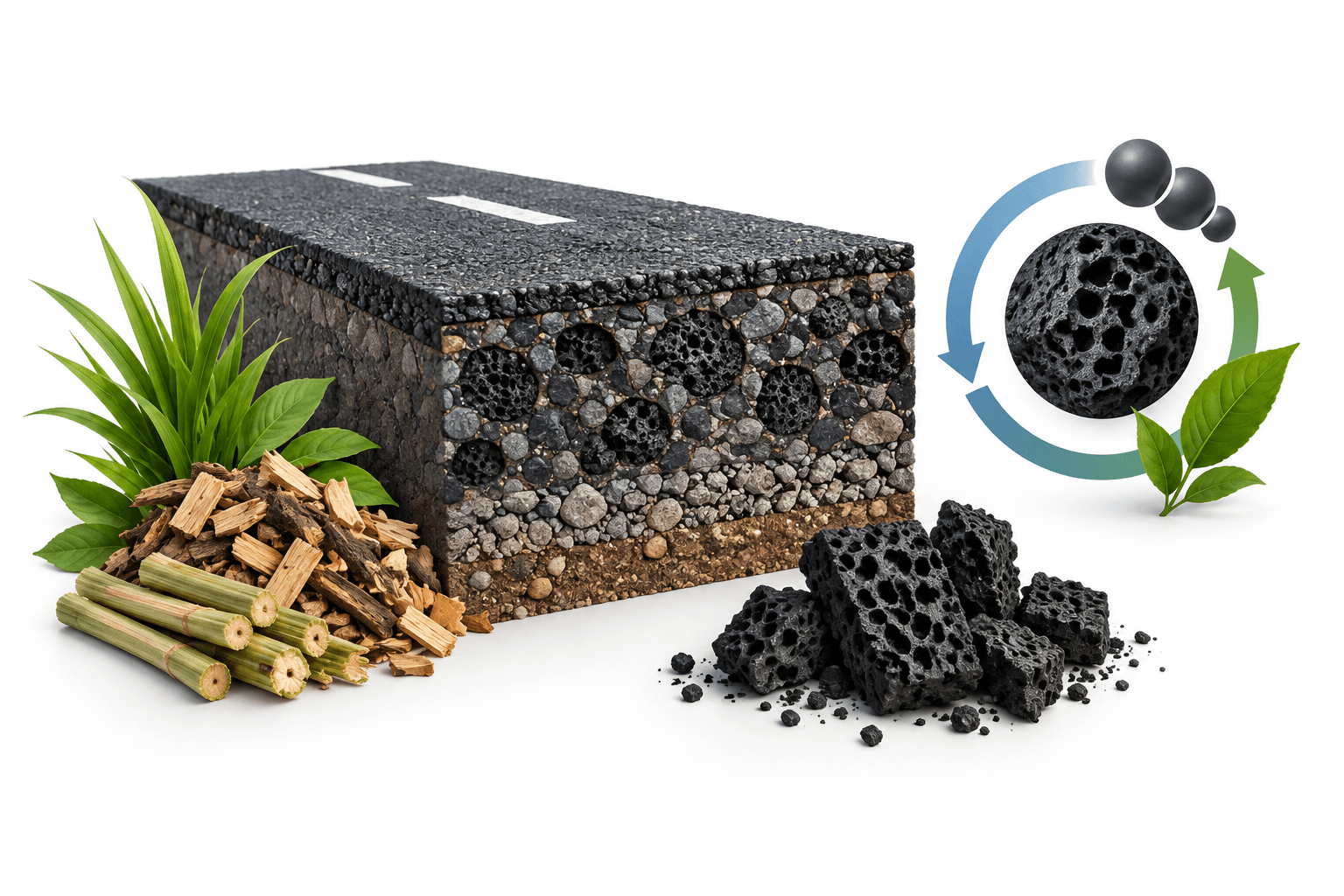
Verde Resources said on October 19, 2026, that it is combining its biochar asphalt technology, commercial partnerships and environmental verification work into a strategy to earn revenue from road materials and eligible carbon removal credits. The company’s update connects a completed Alabama pilot with planned US and international commercialization, but broader deployment and future credit sales remain subject to validation, approvals and market acceptance.
Key Takeaways
- An Alabama asphalt pilot generated eight carbon removal credits issued through Puro.earth in April 2025.
- Agreements with Ergon and Highway International provide frameworks for commercialization, rather than proof of large-scale deployment.
- Environmental product verification supports lifecycle accounting but does not itself certify carbon removal credits.
Table of Contents
- Verde Resources builds from an asphalt pilot
- Partnerships target US and overseas deployment
- Environmental verification is not credit certification
- Commercial opportunity still depends on execution
- Conclusion
Verde Resources builds from an asphalt pilot
Verde’s approach incorporates engineered biochar, a stable carbon-rich material made from biomass, into asphalt and other infrastructure materials. The intended business model combines sales of those materials with potential licensing royalties and revenue from independently verified carbon removals.
The completed starting point was a cold-mix asphalt project at the National Center for Asphalt Technology Test Track in Alabama. Verde’s April 2025 SEC filing records the project’s completion and the issuance and sale of credits representing eight tons of carbon removal through Puro.earth.
That establishes a limited proof of concept, not evidence that every road using biochar will qualify for credits. Eligibility depends on lifecycle accounting, traceability, durability and independent verification. Each qualifying credit generally represents one metric ton of net carbon dioxide equivalent removed.
| Item | Details |
|---|---|
| April 2025 | Alabama proof of concept produced eight carbon removal credits through Puro.earth. |
| April 2026 | Isometric collaboration announced to advance certification and commercialization. |
| July 2026 | Ten-year US commercialization framework announced with Ergon Asphalt & Emulsions. |
| August 2026 | Highway International memorandum targeted validation and international deployment. |
| January 1, 2027 | CORSIA second phase begins; credit eligibility remains subject to applicable rules. |
Partnerships target US and overseas deployment
In July 2026, Verde announced a 10-year Master Commercialization and Collaboration Agreement with Ergon Asphalt & Emulsions. The framework covers commercialization of engineered biochar road products across the United States and contemplates carbon credit generation and monetization.
Under that arrangement, Verde is responsible for related methodologies, registration, verification and commercialization activities. Ergon contributes manufacturing infrastructure and its commercial network, creating a potential route to market rather than a guarantee of sales.
An August 2026 memorandum of understanding with Singapore-based Highway International Private Limited extends the intended scope to roads, airfield pavements and other infrastructure applications. The collaboration aims to validate and deploy the technology internationally; the update does not establish that this expansion has already reached commercial scale.
Environmental verification is not credit certification
Verde also highlighted the independent verification and publication of an Environmental Product Declaration for its engineered biochar through ASTM International. Based on a lifecycle assessment by WAP Sustainability, the declaration provides environmental data, including Global Warming Potential.
The distinction matters commercially: a product declaration can support environmental reporting and procurement decisions, but it does not itself authorize the issuance of carbon removal credits. Credit generation requires separate certification and accounting processes.
Verde announced a collaboration with carbon removal registry and certifier Isometric in April 2026 to advance certification and commercialization of infrastructure-based biochar removals. The company sees that relationship as a potential route into voluntary and compliance-driven carbon markets, not as confirmation that its individual credits already qualify for either.
Commercial opportunity still depends on execution
Verde is targeting construction and maintenance spending that already occurs, with carbon credits intended to add economic value rather than serve as the business’s only revenue source. The practical test is whether its materials can meet performance requirements and gain acceptance at commercial scale.
The company identified risks including failure to secure definitive licensing or revenue-generating agreements, regulatory or transportation-department approvals, and field performance that differs from laboratory or test results.
A further market milestone is January 1, 2027, when the International Civil Aviation Organization’s CORSIA aviation offsetting scheme enters its second phase. Verde noted Isometric’s approval to supply eligible credits for the first phase, but individual credits and later compliance periods remain subject to applicable eligibility requirements. That does not establish future airline demand for Verde’s credits.
Conclusion
Verde has demonstrated a small-scale link between asphalt and verified carbon removals. The next commercial tests are product validation, required approvals and deployment under its partnerships; the scheduled CORSIA expansion in January 2027 does not remove those requirements or guarantee credit eligibility.
Read More News
Disclaimer
This FinanceVelix article provides general information, not personalized financial, investment, legal, or tax advice. Market prices, interest rates and economic conditions can change; investments carry a risk of loss. Facts reflect the material available when published and may change. Check important information independently and consult a qualified professional when needed. Mentioning an asset, company, or service is not an endorsement.