Geely earnings grew faster than revenue in the first half of 2026, providing a counterpoint to the pricing pressure facing China's electric-vehicle industry. As of October 16, competition remained a challenge for automakers, but Geely's latest supplied financial results, announced on August 17, showed higher core profit and an expanded gross margin rather than a deterioration in profitability.
Key Takeaways
- First-half core profit attributable to owners rose 46%, outpacing revenue growth of 15%.
- Geely raised its 2026 export target to 920,000 vehicles after strong first-half overseas sales.
- The October dividend and valuation metrics describe a market snapshot, not a new payout announcement or a guarantee of returns.
Table of Contents
- Geely earnings show stronger first-half profitability
- Export expansion brings a higher annual target
- Dividend coverage is not the same as dividend certainty
- Conclusion
Geely earnings show stronger first-half profitability
Geely's first-half 2026 results announcement reported revenue of RMB173.6 billion and core profit attributable to owners of the parent of RMB9.68 billion for the six months ended June 30. Gross margin rose to 17.9%, while core profit per vehicle increased 45% year on year to RMB6,806.
Those figures distinguish Geely's reported performance from the broader competitive backdrop. Aggressive vehicle pricing can pressure industry margins, but it does not establish that Geely's own profitability fell during this reporting period. Core profit is also a distinct company-reported measure and should not be treated as interchangeable with statutory net profit.
Geely's range spans the Geely, Lynk & Co and Zeekr brands. That breadth gives it exposure to different customer segments, although premium branding and digital services do not by themselves establish protection from price competition.
| Item | Details |
|---|---|
| Total vehicle sales | More than 1.42 million in the first half of 2026. |
| Zeekr sales | More than 178,000 vehicles in the first half, approximately 12.5% of group volume. |
| Research and development | First-half expenditure rose 8% year on year to RMB9.06 billion. |
| Funding reserve | RMB69.56 billion as of June 30, 2026. |
Export expansion brings a higher annual target
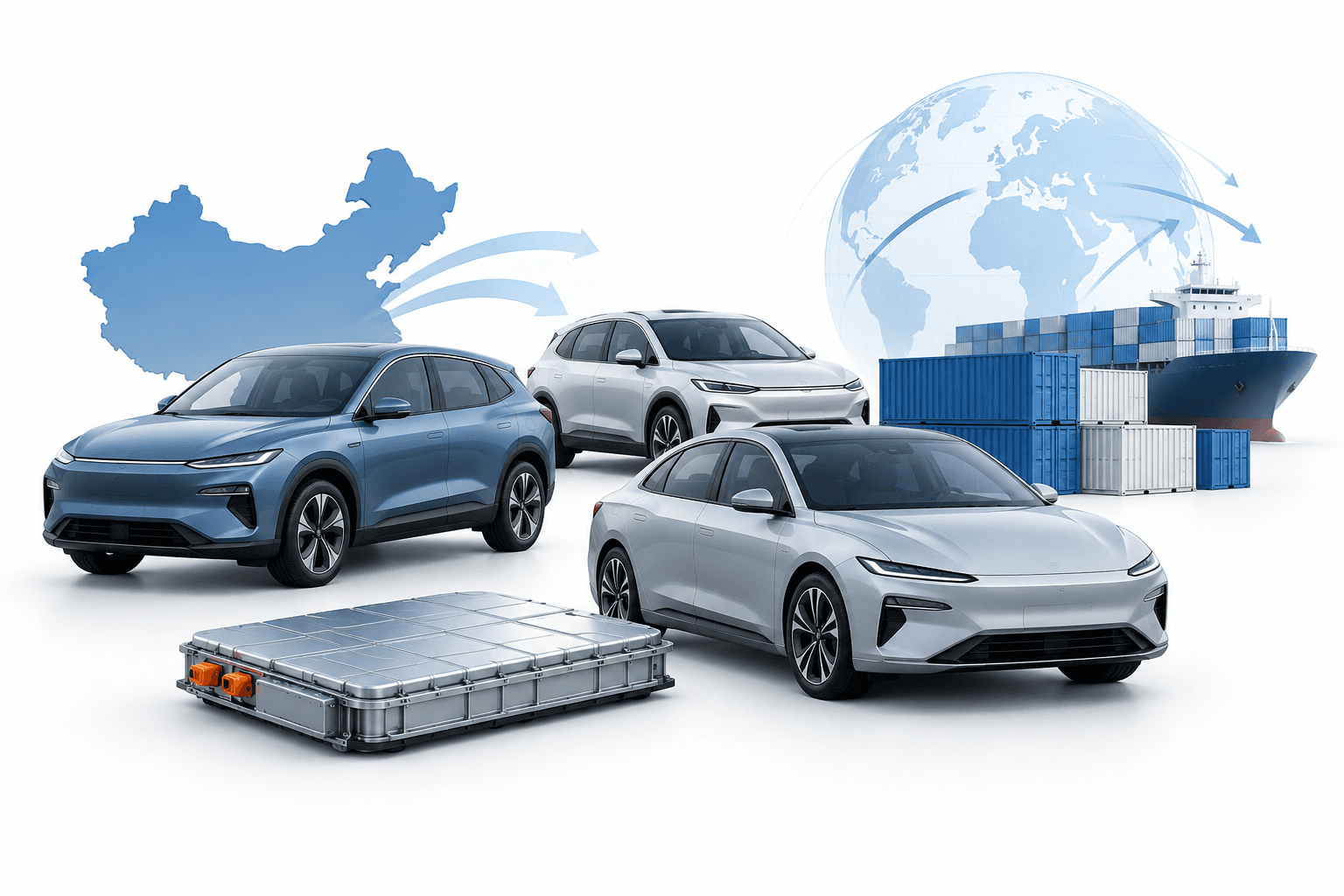
First-half exports reached about 474,000 vehicles, up 158% year on year and already above the 420,000 vehicles exported during all of 2025. Geely subsequently raised its 2026 export target from 640,000 to 920,000 vehicles.
The revised target remains a management objective, not a completed sales result. Overseas expansion broadens Geely's sales base beyond China, while its second-half plans also include the Geely TT electric sports sedan and the Geely Zhanjian 700 off-road vehicle.
Dividend coverage is not the same as dividend certainty
The October 16 market snapshot put Geely's dividend yield at 3.23% and its payout ratio at 29%. The payout ratio indicates that dividends represented less than one-third of the earnings used in that calculation; it does not establish that future payments or increases are assured.
Geely's trailing 12-month price-to-earnings ratio was 8.87, compared with a one-year low of 8.54. Proximity to that low describes its historical trading range, not proof that the shares are undervalued. Neither the valuation multiple nor the dividend yield substitutes for evidence about future earnings and cash generation.
Conclusion
Geely's first-half results showed improving core profitability despite a difficult pricing environment. The next operational milestones to watch are its planned second-half vehicle introductions and progress toward the revised 2026 export target.
Read More News
Disclaimer
This FinanceVelix article provides general information, not personalized financial, investment, legal, or tax advice. Market prices, interest rates and economic conditions can change; investments carry a risk of loss. Facts reflect the material available when published and may change. Check important information independently and consult a qualified professional when needed. Mentioning an asset, company, or service is not an endorsement.