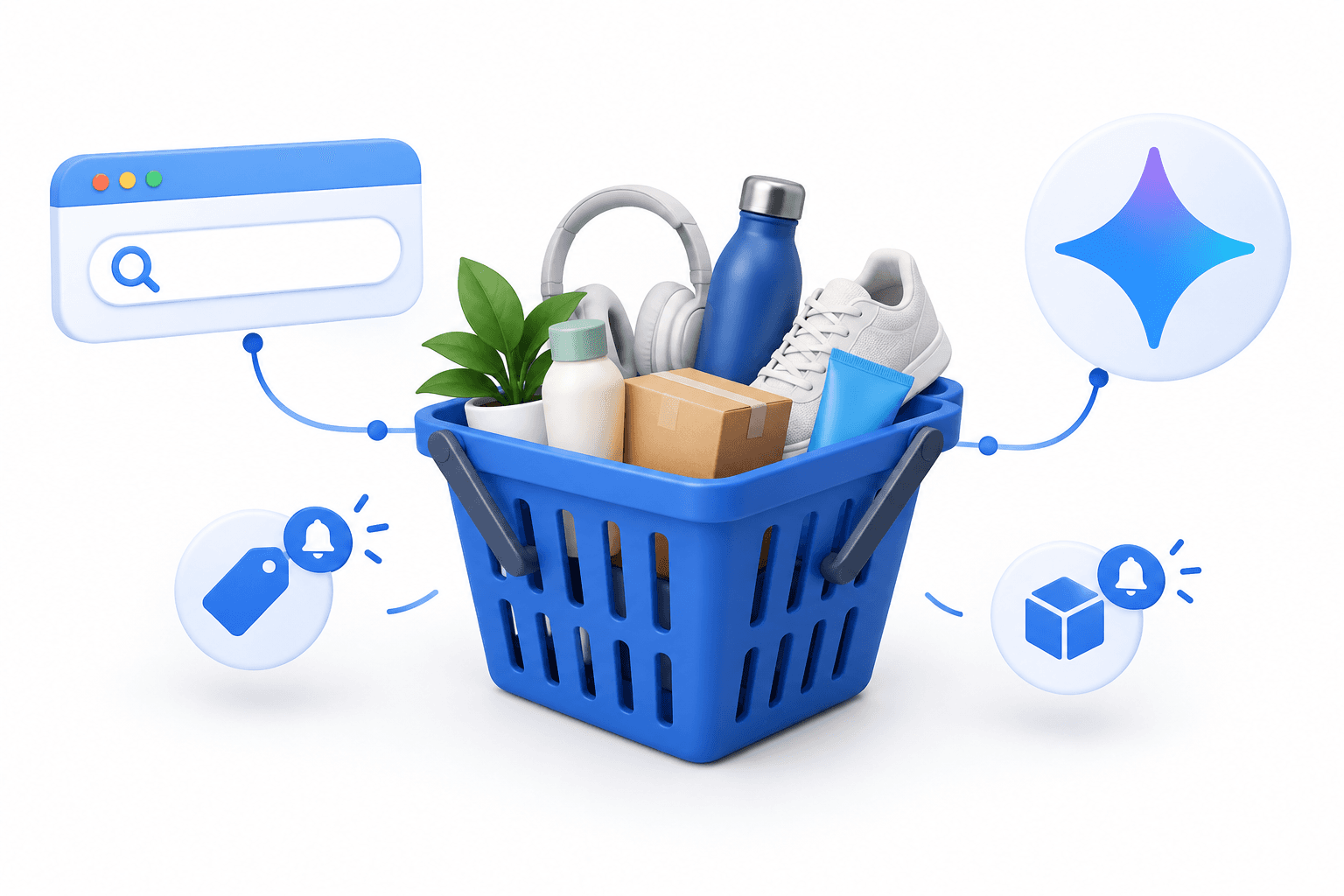
Google began rolling out Universal Cart in the United States on October 15, 2026, bringing products from multiple retailers into a single shopping hub across Google Search and the Gemini app. The tool preserves shoppers’ saved items between visits and adds price-drop alerts, restock notifications and checkout options.
Key Takeaways
- The U.S. rollout covers Google Search and the Gemini app.
- Shoppers can save products across retailers and receive price and inventory alerts.
- Purchases can be completed through Google Pay at participating stores or on merchants’ websites.
Table of Contents
- Universal Cart brings saved shopping into one place
- Price alerts and payment suggestions extend the cart
- Retailers remain responsible for orders
- Conclusion
Universal Cart brings saved shopping into one place
Google’s Universal Cart launch announcement describes a shared cart that retains products across Search and Gemini. A shopper can save an item while browsing in Search, add another through Gemini and return later without rebuilding the list.
The practical change is continuity across Google’s shopping services: products from different stores sit in one place rather than being scattered across browser tabs and screenshots. Google had previewed the tool earlier in 2026; the October announcement marks its U.S. rollout.
| Item | Details |
|---|---|
| Launch date | October 15, 2026. |
| Initial market and services | United States, across Google Search and the Gemini app. |
| Product-data foundation | Google says its Shopping Graph contains more than 60 billion continually refreshed product listings. |
| Checkout technology | The cart’s checkout experience is powered by the Universal Commerce Protocol. |
Price alerts and payment suggestions extend the cart
Google says the cart uses its Shopping Graph to monitor saved products and send notifications when prices fall or unavailable items return to stock. These features let shoppers track a list over time rather than use the cart only at the moment of purchase.
The cart is also built on Google Wallet and can suggest payment methods based on card benefits. Google says it displays relevant promotional codes within the cart. Those functions are intended to help shoppers identify available savings, not guarantee the lowest price on every purchase.
Retailers remain responsible for orders
Shoppers can check out using Google Pay with participating merchants or transfer items to a retailer’s cart to complete the transaction on its website. Google names Nike, Sephora, Target, Ulta Beauty, Walmart, Wayfair and many Shopify merchants among the businesses offering these checkout experiences.
A shared cart does not make Google the seller. Merchants remain the sellers of record and provide order confirmations and customer support, whichever checkout route the shopper chooses. That distinction matters when customers need help with an order.
Conclusion
The launch connects product saving, monitoring and checkout across two Google services while keeping retailers responsible for sales. As the U.S. rollout proceeds, the practical point for shoppers is whether their chosen merchant supports checkout within the cart or requires completion on its own website.
Read More News
Disclaimer
This FinanceVelix article provides general information, not personalized financial, investment, legal, or tax advice. Market prices, interest rates and economic conditions can change; investments carry a risk of loss. Facts reflect the material available when published and may change. Check important information independently and consult a qualified professional when needed. Mentioning an asset, company, or service is not an endorsement.