Hydro earnings strengthened in the third quarter of 2026, with adjusted EBITDA rising 52% from a year earlier to NOK 9.089 billion. Higher aluminium prices and strong smelter performance supported profitability, but increased working capital requirements limited free cash flow to NOK 1.4 billion.
Key Takeaways
- Adjusted EBITDA rose to NOK 9.089 billion from NOK 5.996 billion a year earlier.
- Hydro lowered year-end capital spending guidance while raising its working capital forecast.
- Alunorte restored regular operations, while Slovalco began a phased aluminium production restart.
Table of Contents
- Hydro earnings led by Aluminium Metal
- Working capital absorbs cash despite stronger profit
- Alunorte recovers as Slovalco restarts production
- HalZero produces first metal, with industrial use still years away
- Conclusion
Hydro earnings led by Aluminium Metal
Adjusted earnings per share increased to NOK 2.3 from NOK 1.0 in the third quarter of 2025. Reported net income reached NOK 5.263 billion, while the trailing 12-month adjusted return on average capital employed was 12.5%.
Aluminium Metal was the main earnings driver, benefiting from higher all-in metal prices and record liquid metal production at Hydro’s Norwegian smelters. Higher energy and carbon costs, lower sales volumes and a weaker US dollar against the Norwegian krone partly offset those gains.
The improvement was uneven across the group. Bauxite & Alumina faced lower year-over-year alumina sales prices and higher gas sourcing costs, while Energy suffered losses from differences between regional power prices. Extrusions benefited from stronger recycling margins and increased sales volumes.
Compared with the second quarter of 2026, group adjusted EBITDA increased from NOK 8.923 billion. Higher metal and alumina prices and lower fixed costs outweighed increased energy costs and seasonally weaker Extrusions volumes and margins.
| Item | Details |
|---|---|
| Bauxite & Alumina adjusted EBITDA | Q3 2026: NOK 283 million; Q3 2025: NOK 1,290 million. |
| Energy adjusted EBITDA | Q3 2026: NOK 411 million; Q3 2025: NOK 828 million. |
| Aluminium Metal adjusted EBITDA | Q3 2026: NOK 7,031 million; Q3 2025: NOK 2,732 million. |
| Metal Markets adjusted EBITDA | Q3 2026: NOK 125 million; Q3 2025: NOK 154 million. |
| Extrusions adjusted EBITDA | Q3 2026: NOK 1,189 million; Q3 2025: NOK 1,107 million. |
Working capital absorbs cash despite stronger profit
Hydro’s NOK 1.4 billion of free cash flow reflected the gap between operating earnings and cash generation. Higher metal prices increased the cash tied up in working capital, alongside prepayments. Management said improving cash conversion and working capital efficiency remained priorities.
The company reduced its year-end capital expenditure guidance to around NOK 12.5 billion from NOK 13.5 billion. At the same time, it raised net working capital guidance to around NOK 32 billion from NOK 30 billion. These are updated management forecasts, not completed year-end outcomes.
Net debt nevertheless declined during the quarter, reaching NOK 15.4 billion from NOK 16.3 billion at the end of the second quarter. Adjusted net debt fell to NOK 21.9 billion from NOK 22.8 billion.
Alunorte recovers as Slovalco restarts production
Natural gas supply disruptions temporarily reduced production at the Alunorte alumina refinery. Hydro secured alternative liquefied natural gas supplies and restored regular operations, although the disruption increased energy costs.
Slovalco began restarting primary aluminium production in late August after a July agreement with the Slovak government on long-term framework conditions. The capacity had been curtailed during the European energy crisis in 2022.
The first restart phase targets annual production capacity of 75,000 tonnes by the end of February 2027. That remains a planned capacity milestone rather than an output level already achieved.
HalZero produces first metal, with industrial use still years away
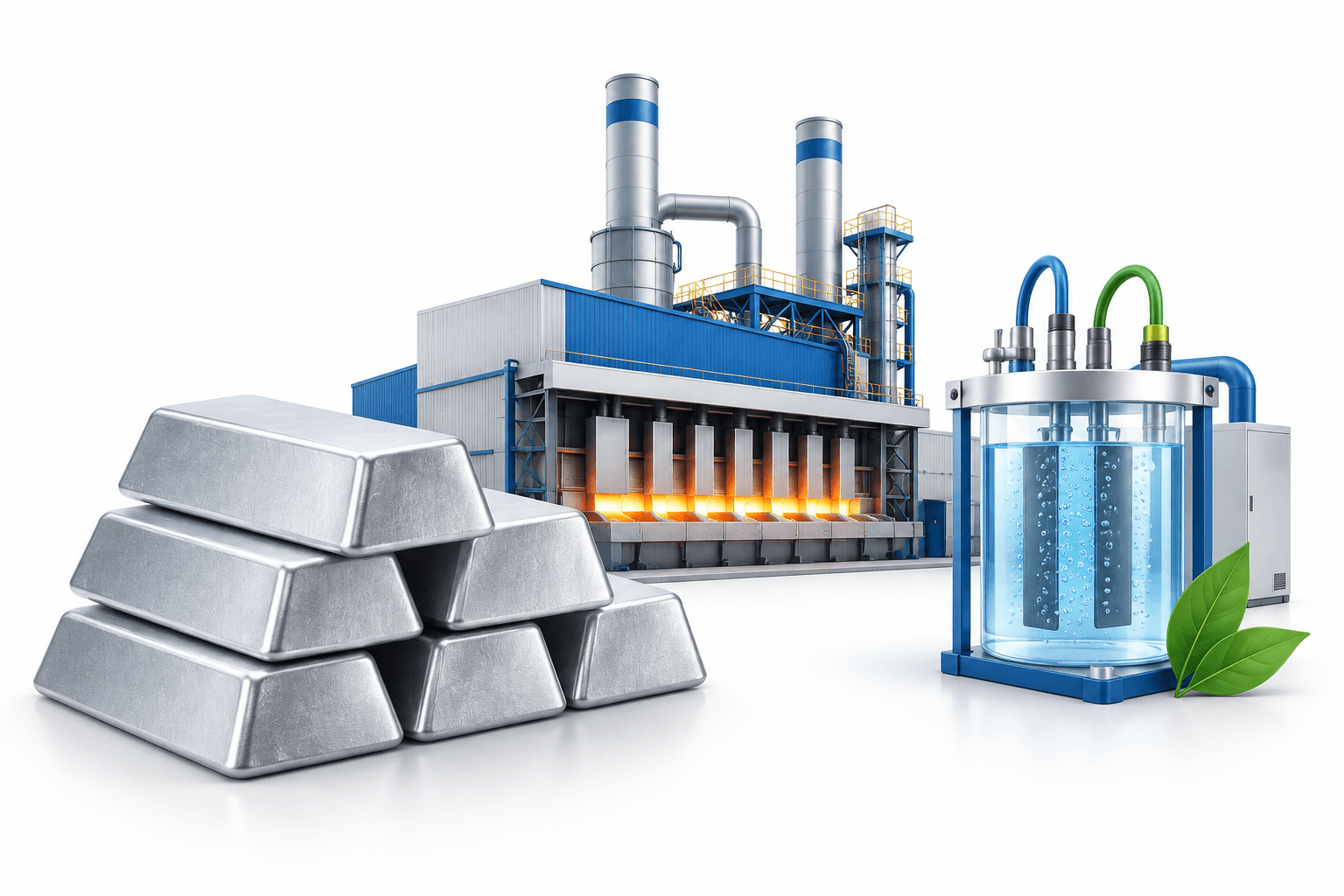
Separately from the quarterly operating results, Hydro’s October 19 HalZero development update announced the first aluminium produced using the new electrolysis technology at its test facility in Porsgrunn, Norway.
The process aims to eliminate carbon dioxide emissions from electrolysis and anode production by keeping carbon and chlorine in closed loops. Hydro cautioned that the current testing stage still generates carbon dioxide and that several years of testing and piloting remain before potential industrial use.
Enova awarded an additional NOK 82 million to support development of the next phase, an industrial concept pilot. The milestone demonstrates progress in the technology, not commercial readiness or a completed emissions-free production system.
Conclusion
Stronger metal earnings lifted Hydro’s profitability, but cash conversion remained a constraint. The next stated checkpoints are its revised year-end spending and working capital targets, followed by Slovalco’s planned first-phase capacity milestone in February 2027.
Read More News
Disclaimer
This FinanceVelix article provides general information, not personalized financial, investment, legal, or tax advice. Market prices, interest rates and economic conditions can change; investments carry a risk of loss. Facts reflect the material available when published and may change. Check important information independently and consult a qualified professional when needed. Mentioning an asset, company, or service is not an endorsement.