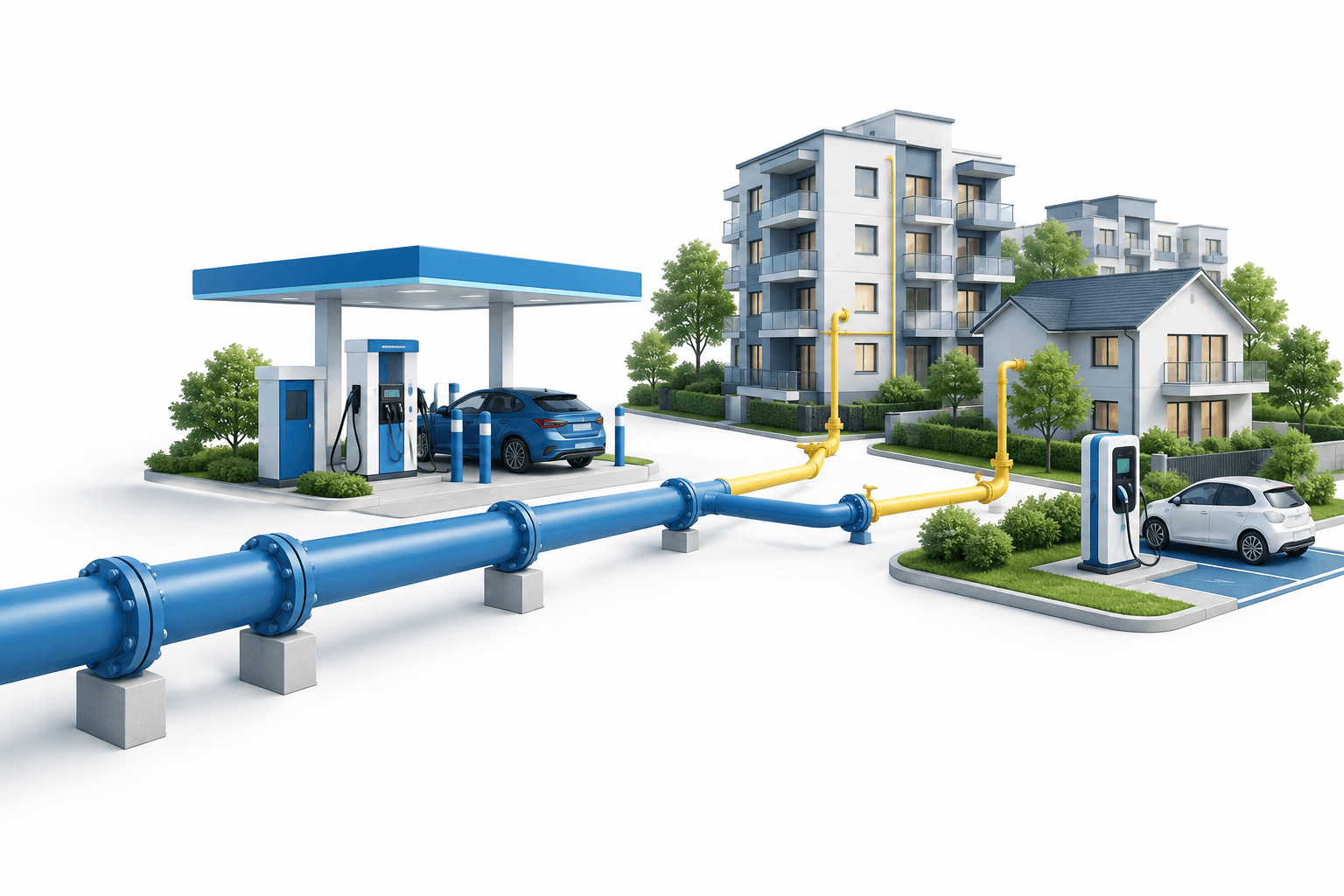
Adani Total Gas reported consolidated net profit of Rs 173.27 crore for the quarter ended September 30, 2026, up 5.9% from a year earlier. Results announced on October 22 showed revenue from operations rising 33.8% to Rs 2,109.65 crore, but faster-growing expenses limited the increase in profit.
Key Takeaways
- Consolidated expenses rose 38.1%, outpacing revenue growth in Q2 FY27.
- Standalone gas volumes increased 12%, supported by stronger CNG demand and network expansion.
- CEO Sanjay Pandita is due to become executive director on November 1, subject to shareholder approval.
Table of Contents
- Adani Total Gas earnings face higher input costs
- CNG demand leads gas-volume expansion
- EV charging and biomass operations broaden
- Leadership transition set for November
- Conclusion
Adani Total Gas earnings face higher input costs
Consolidated net profit increased from Rs 163.49 crore in Q2 FY26, while revenue rose from Rs 1,576.38 crore. Total expenses climbed to Rs 1,890.2 crore from Rs 1,369 crore, explaining why profit growth lagged the increase in sales.
The company’s Q2 and H1 FY27 results announcement separately reported standalone EBITDA of Rs 340 crore, up 12%, and standalone profit after tax of Rs 167 crore, up 3%. These figures cover a different reporting scope from the consolidated profit and revenue totals.
On a standalone basis, the cost of natural gas increased 43%. The company cited higher volumes, elevated Brent-linked prices, the withdrawal of pooled-gas support and the continuing West Asia crisis.
CEO Sanjay Pandita said currency depreciation and reduced administered pricing mechanism allocations also made the operating environment more difficult. He said a mix of long-term contracts, flexible market purchases and calibrated pricing helped manage costs and maintain supplies.
| Item | Details |
|---|---|
| Standalone CNG volumes | Q2 FY27: 223 million standard cubic metres; Q2 FY26: 191 million; up 17%. |
| Standalone PNG volumes | Q2 FY27: 92 million standard cubic metres; Q2 FY26: 89 million; up 3%. |
| Standalone first-half EBITDA | H1 FY27: Rs 621 crore; H1 FY26: Rs 603 crore; up 3%. |
| Standalone first-half profit after tax | H1 FY27: Rs 300 crore; H1 FY26: Rs 324 crore; down 7%. |
CNG demand leads gas-volume expansion
Standalone compressed natural gas and piped natural gas volumes reached 315 million standard cubic metres, up 12% year over year. CNG volumes grew faster than PNG volumes, making vehicle-fuel demand the stronger contributor to the increase.
Adani Total Gas added 16 CNG stations during the quarter, bringing its standalone network to 723. It also added 39,574 household PNG connections, taking the total to about 1.18 million, while industrial and commercial connections reached 10,864.
Including Indian Oil-Adani Gas Private Limited, its joint venture, combined volumes rose 18% to 529 million standard cubic metres. That broader network comprised 1,185 CNG stations and more than 1.43 million household PNG connections. The joint-venture-inclusive totals should not be confused with the standalone operating figures.
EV charging and biomass operations broaden
Adani TotalEnergies E-mobility had 5,513 installed charging points across 26 states and Union Territories and 225 cities. Of those, 4,809 were operational, with installed capacity of approximately 63 MW. Installed charging points therefore remained above the number available for use.
Adani TotalEnergies Biomass sold 460 tonnes of compressed biogas during the first half of FY27, including 195 tonnes through dedicated stations and the remainder to third parties. Organic manure sales exceeded 6,865 tonnes, including more than 1,757 tonnes under the Harit Amrit brand.
Leadership transition set for November
Pandita has been appointed an additional director and whole-time director, designated executive director, for three years from November 1, 2026, subject to shareholder approval. He will retain his CEO role.
The appointment follows Suresh P. Manglani’s retirement as executive director and key managerial personnel at the close of business on October 31, 2026.
Adani Total Gas shares closed at Rs 555.50 on the NSE on October 22, down 0.70% from Rs 559.40. The stock was down 6.50% for the year to that date.
Conclusion
Gas demand and network expansion supported quarterly growth, but higher costs kept profit growth well below revenue growth. The next scheduled corporate change is the October 31 retirement of Manglani, followed by Pandita’s planned move into the combined executive director and CEO role on November 1.
Read More News
Disclaimer
This FinanceVelix article provides general information, not personalized financial, investment, legal, or tax advice. Market prices, interest rates and economic conditions can change; investments carry a risk of loss. Facts reflect the material available when published and may change. Check important information independently and consult a qualified professional when needed. Mentioning an asset, company, or service is not an endorsement.