JK Tyre earnings fell sharply in the quarter ended September 30, 2026, as rising input costs and logistics pressures outweighed revenue growth. The tyre maker reported consolidated net profit of ₹65.11 crore on October 23, down 71.30% from ₹227 crore a year earlier, and said it intended to raise prices again in the third quarter.
Key Takeaways
- Consolidated revenue rose about 21%, but the EBITDA margin narrowed to 7.1%.
- Management plans a further 4–5% price increase as raw-material costs continue rising.
- Domestic sales grew 32% year on year, supported by stronger original-equipment demand.
Table of Contents
- JK Tyre earnings weaken despite higher sales
- Higher material costs prompt another planned price increase
- India demand remains a stronger part of the picture
- Conclusion
JK Tyre earnings weaken despite higher sales
Consolidated revenue from operations reached approximately ₹4,841 crore in the second quarter of FY2026–27, compared with about ₹4,011 crore a year earlier. The stronger sales did not translate into higher profit: the EBITDA margin fell from 13.3% to 7.1%, a contraction of 6.2 percentage points.
The divergence between revenue and earnings highlights the quarter’s main challenge. JK Tyre generated more sales, but retained a substantially smaller share of revenue as operating earnings.
JK Tyre shares closed at ₹309.20 on the BSE on October 23, down 4.30% from the previous close.
| Item | Details |
|---|---|
| Q1 selling prices | Increased by 5%, management said. |
| Q2 selling prices | Increased by a further 7%. |
| Q2 raw-material costs | Rose about 9% compared with Q1. |
| First-half raw-material costs | Cumulative increase of about 30%, management said. |
Higher material costs prompt another planned price increase
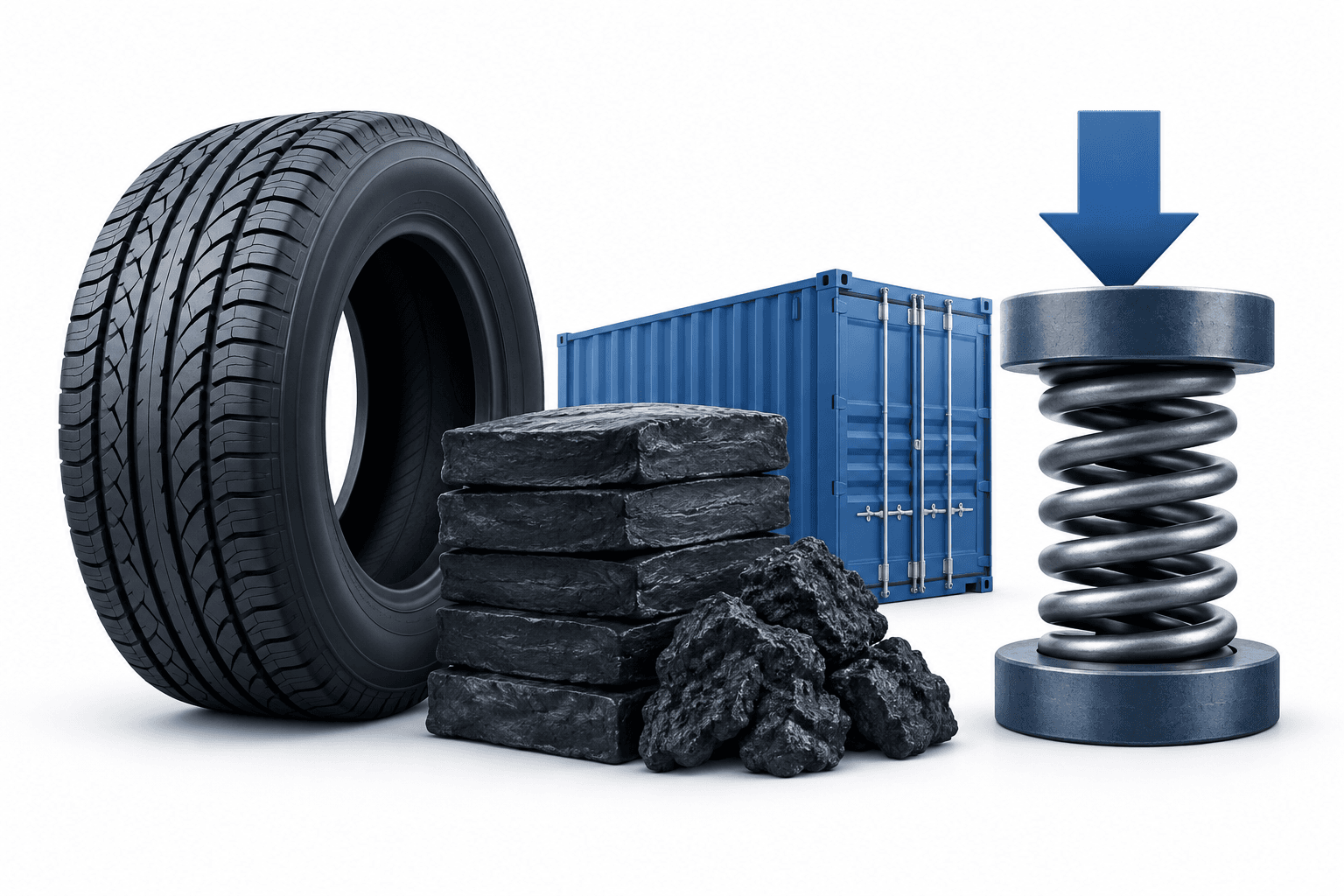
Managing Director Anshuman Singhania described a challenging operating environment marked by geopolitical tensions in West Asia, persistently higher input costs and supply-chain constraints. He said container freight rates remained significantly above historical levels.
Singhania said the company expected another 4–5% increase in its overall raw-material basket in the third quarter and intended to raise selling prices by a similar percentage. That is a planned response, not a completed price increase or a guarantee that margins will recover.
The company’s FY2025–26 chairman’s statement provides context for that cost sensitivity: raw materials account for more than 60% of tyre costs. This annual commentary explains the importance of material inflation to the business; it does not establish the latest quarterly results.
India demand remains a stronger part of the picture
Chairman and Managing Director Raghupati Singhania said India operations gained momentum following GST 2.0. He cited 65% year-on-year growth in the original-equipment market and 32% growth in domestic sales.
Management remained optimistic about demand, pointing to customer traction across segments. The immediate operating question is whether further selling-price increases can offset rising costs while that demand momentum continues.
Conclusion
JK Tyre’s next stated step is a planned third-quarter price increase. Whether that adjustment keeps pace with further raw-material inflation will be central to assessing profitability alongside continued domestic sales growth.
Read More News
Disclaimer
This FinanceVelix article provides general information, not personalized financial, investment, legal, or tax advice. Market prices, interest rates and economic conditions can change; investments carry a risk of loss. Facts reflect the material available when published and may change. Check important information independently and consult a qualified professional when needed. Mentioning an asset, company, or service is not an endorsement.