Canada tariff response measures announced on October 21, 2026, include a C$8.7 billion plan to support Ontario’s steelmakers, automakers and critical mineral development. Prime Minister Mark Carney and Ontario Premier Doug Ford unveiled the package as Carney accused US President Donald Trump’s tariffs of raising costs for American families and disrupting the countries’ longstanding industrial relationship.
Key Takeaways
- The package commits about C$5.2 billion to steel over five years and C$2.5 billion to automotive projects over two years.
- Ottawa will provide up to C$1 billion for Ring of Fire roads, matching Ontario’s existing commitment.
- Carney said Canada remains ready to negotiate with Washington but announced no trade breakthrough.
Table of Contents
- Canada tariff response targets industrial investment
- Auto funding pairs factory upgrades with regulatory relief
- Ring of Fire roads receive a federal funding commitment
- Trade talks remain unresolved amid political accusations
- Conclusion
Canada tariff response targets industrial investment
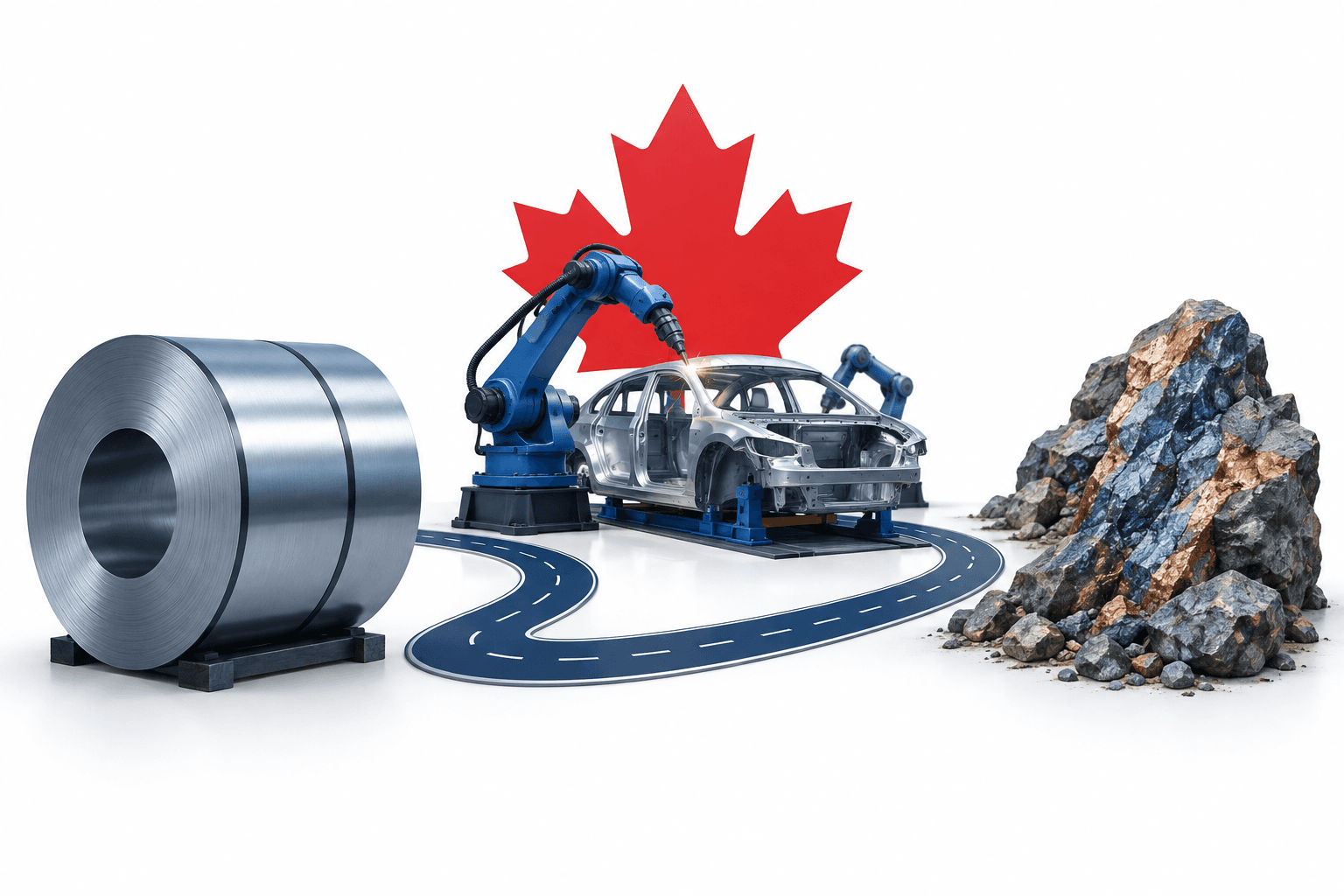
The Canada-Ontario industrial action plan combines funding for factory investment and mineral infrastructure with procurement, trade enforcement and permitting measures. These are announced commitments spread over several years, rather than money already spent.
The largest component is a Joint Steel Action Fund, backed by C$3.55 billion from the federal government and C$1.67 billion from Ontario over five years. It aims to help mills diversify production, supply more Canadian industries and expand into overseas markets.
The governments also plan to prioritize Canadian steel in public procurement and strengthen enforcement against dumping and unfair subsidies. A new steel task force will examine shipping costs and the effectiveness of trade measures.
| Item | Details |
|---|---|
| Steel fund | C$3.55 billion federal contribution and C$1.67 billion from Ontario over five years. |
| Automotive projects | C$1.5 billion federal contribution and C$1 billion from Ontario over two years. |
| Ring of Fire roads | Up to C$1 billion in federal funding over three years, matching Ontario’s initial commitment. |
| Vehicle emissions standards | 2026 levels maintained through model year 2029; annual increases resume in model year 2030. |
Auto funding pairs factory upgrades with regulatory relief
Automotive manufacturers are set to receive C$2.5 billion over two years for capital projects, including modern machinery and upgraded production lines for connected and electric vehicles. Ottawa will contribute C$1.5 billion and Ontario C$1 billion.
Alongside the investment, Canada will hold greenhouse gas emissions standards for new light-duty vehicles at 2026 levels through the 2029 model year. Annual increases are scheduled to resume with the 2030 model year.
The measures combine near-term regulatory flexibility with funding for longer-term manufacturing changes. They do not constitute a settlement of the cross-border tariff dispute.
Ring of Fire roads receive a federal funding commitment
Ottawa committed up to C$1 billion over three years for roads serving northern Ontario’s mineral-rich Ring of Fire, matching the province’s initial investment. The infrastructure is intended to support development of critical minerals used in automotive manufacturing, batteries and defence.
Canada and Ontario also announced coordinated federal and provincial permitting and a working group for engagement with First Nations. The group will consider economic and community development opportunities as well as conservation and Indigenous protected areas.
The road funding is a commitment to advance infrastructure, not an announcement that roads or mines have been completed.
Trade talks remain unresolved amid political accusations
Carney said he spoke with Trump on October 21 about trade and Middle East developments, but gave no indication of a breakthrough. Negotiations had collapsed in August 2026, after which Trump imposed 50% tariffs on about $20 billion in Canadian goods, prompting Canadian retaliation.
Carney said Canadian auto exports to the United States had fallen more than 10%, while US auto exports to Canada had dropped more than 20%. He did not specify the comparison period. He argued that integrated North American production benefits both countries and said Canada remained ready to negotiate.
Separately, the US Embassy accused Canadian politicians of trying to influence American politics ahead of the November midterm elections. It cited Industry Minister Melanie Joly’s discussion of retaliatory tariffs targeting Republican states and Ford’s US advertisement featuring Ronald Reagan criticizing tariffs. The embassy did not establish that either action amounted to improper election interference. Carney and Ford rejected suggestions of wrongdoing.
Conclusion
The next steps for the Canada tariff response are implementation of the steel fund, automotive investment support and Ring of Fire infrastructure commitments. Their rollout will proceed against an unresolved trade dispute, with no new negotiated agreement announced on October 21.
Read More News
Disclaimer
This FinanceVelix article provides general information, not personalized financial, investment, legal, or tax advice. Market prices, interest rates and economic conditions can change; investments carry a risk of loss. Facts reflect the material available when published and may change. Check important information independently and consult a qualified professional when needed. Mentioning an asset, company, or service is not an endorsement.