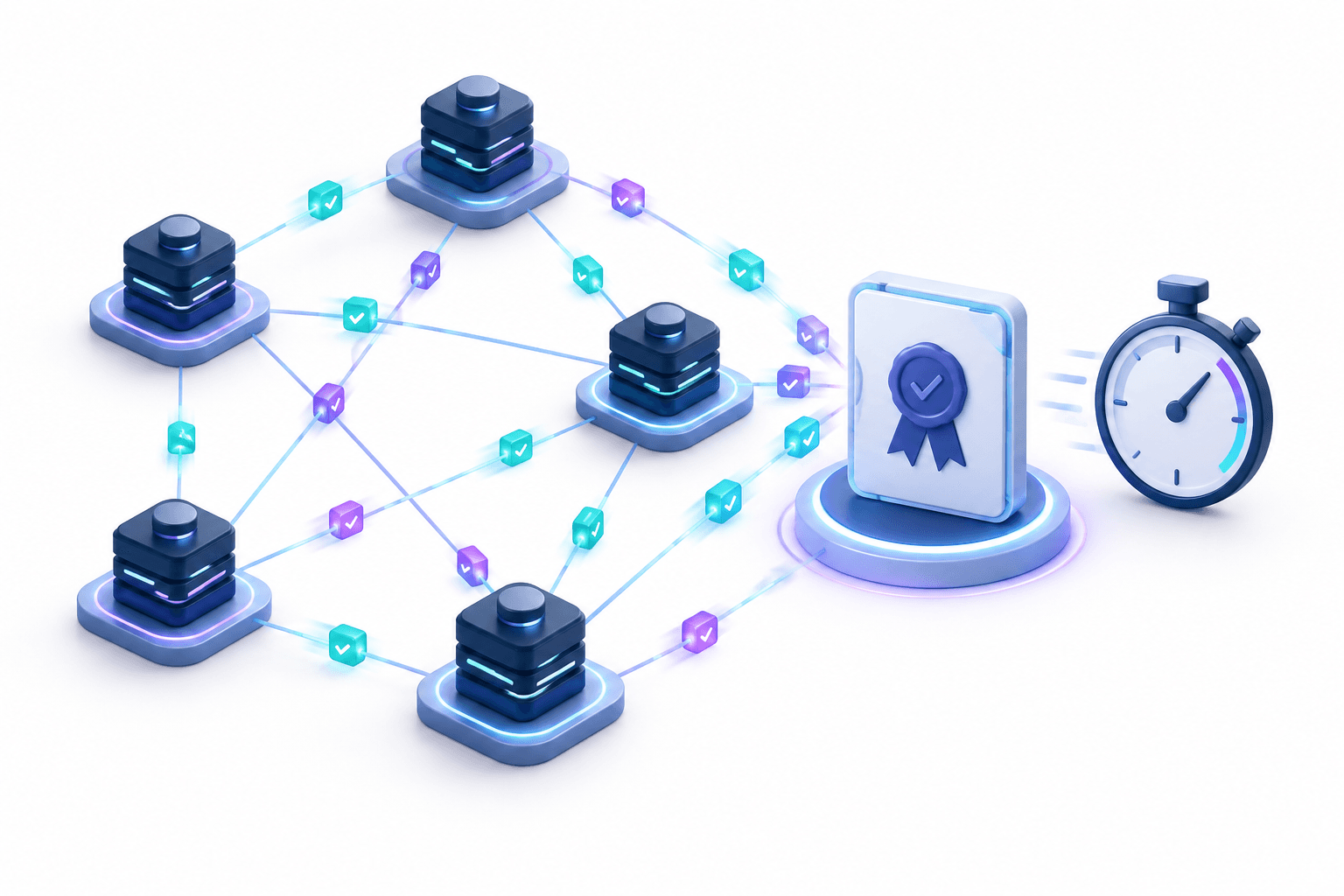
Solana Alpenglow went live on October 21, 2026, replacing the blockchain’s TowerBFT consensus system. An early Solana Foundation dashboard observation showed transaction finality of 202 milliseconds—substantially faster than the historical 12.8-second benchmark, but above the upgrade’s roughly 150ms target.
Key Takeaways
- The 202ms reading is a single observation, not evidence of sustained average finality.
- Votor replaces on-chain validator votes with directly exchanged votes and certificates.
- Removing vote transactions changes throughput reporting; lower transaction counts need not mean less user activity.
Table of Contents
- Solana Alpenglow: target versus early performance
- How the new consensus changes transaction processing
- What changes for applications and what remains unfinished
- Conclusion
Solana Alpenglow: target versus early performance
The early reading, described on October 22, was approximately 35% above the 150ms target. It nevertheless represented about a 98.4% reduction against the historical 12.8-second finality benchmark.
That comparison needs qualification. Solana’s previous finality times had also improved as slot durations declined, so the historical benchmark does not capture every improvement made before Alpenglow.
Most importantly, one measurement cannot establish typical performance across different network conditions. The initial result neither demonstrates a failed upgrade nor confirms that Solana consistently finalizes transactions within 150ms.
| Item | Details |
|---|---|
| Activation epoch | Epoch 1064, which began October 21, 2026, at approximately 13:36 UTC. |
| Genesis block | Slot 459,652,999. |
| Consensus handoff | Alpenglow consensus began at slot 459,653,000. |
| Genesis certificate participation | Votes from 446 of the network’s 654 validators. |
How the new consensus changes transaction processing
The Solana Foundation’s explanation of Votor’s voting protocol describes how validators now exchange signed votes directly and aggregate them into certificates. Blocks can become final after one or two voting rounds, replacing TowerBFT’s accumulation of on-chain votes across multiple slots.
Because validator votes no longer appear as transactions inside blocks, throughput statistics require a new baseline. A decline in reported transactions per second after activation would not, by itself, show a decline in user activity. Figures that previously included validator votes are not directly comparable with the new counts.
Finality is also distinct from block production. Solana separately reduced its target slot duration from approximately 400ms to 200ms in stages completed during October 2026. Alpenglow’s roughly 150ms goal concerns when a transaction becomes final, not how often a block is produced.
What changes for applications and what remains unfinished
Faster finality could shorten the wait before exchanges credit deposits, payment providers confirm settlement or trading applications release funds. End-to-end processing will still depend on each service’s infrastructure, network conditions and operating requirements.
The consensus change does not alter Solana’s transaction execution, transaction formats or fee mechanics. Users can continue signing and sending transactions as before, while infrastructure operators that process block data face changes to streaming and indexing.
Votor is live, but the broader upgrade is not complete. Rotor, intended to replace the Turbine block-distribution system, remains planned for a later release without a scheduled launch.
Conclusion
With Votor activated, the next test for Solana Alpenglow is sustained mainnet performance: finality latency, stability and validator participation across different activity levels. Rotor remains a later phase, with no launch date announced.
Read More News
Disclaimer
This FinanceVelix article provides general information, not personalized financial, investment, legal, or tax advice. Market prices, interest rates and economic conditions can change; investments carry a risk of loss. Facts reflect the material available when published and may change. Check important information independently and consult a qualified professional when needed. Mentioning an asset, company, or service is not an endorsement.