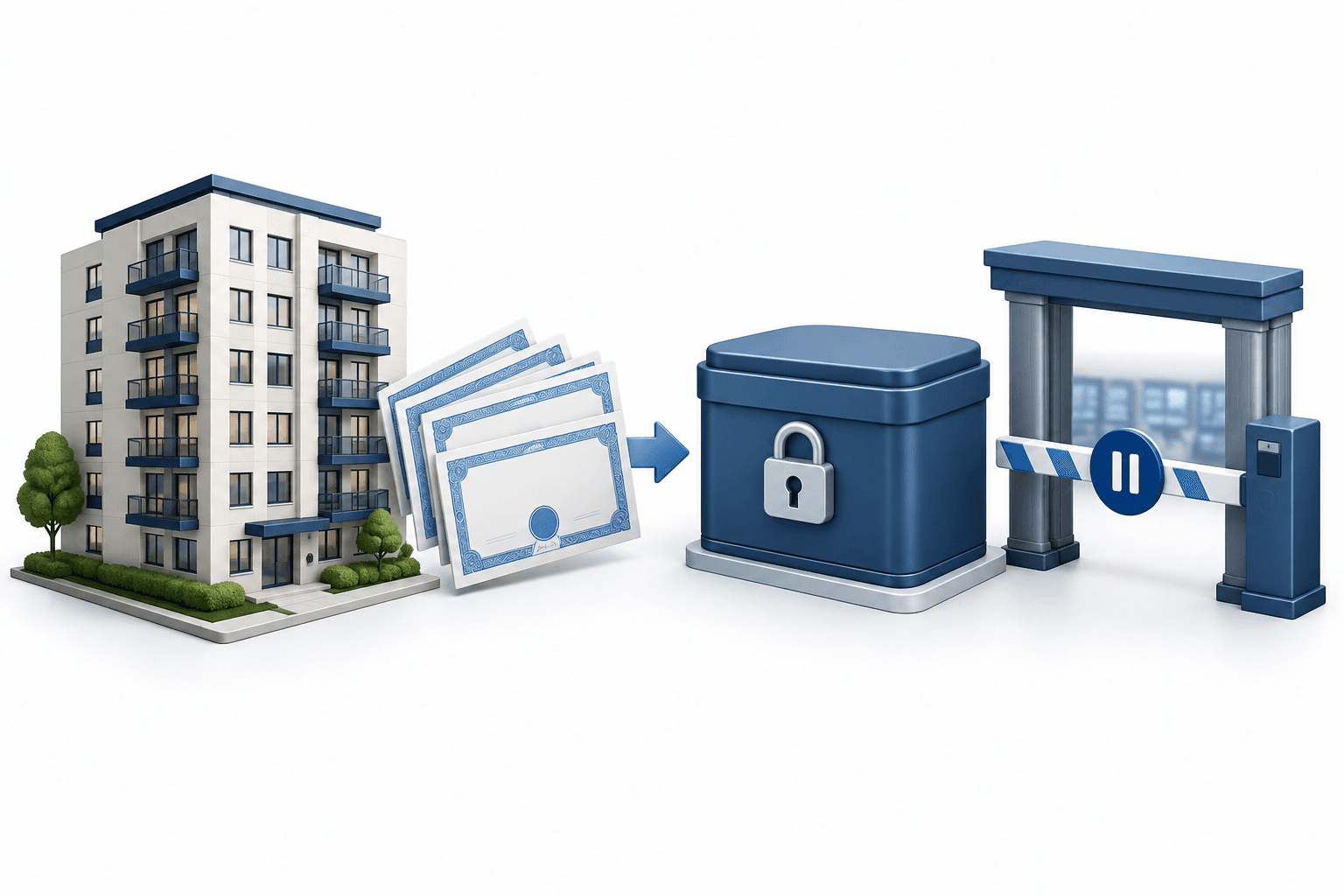
Elme shares were suspended from New York Stock Exchange trading on October 23, 2026, after the exchange began delisting proceedings over an “abnormally low selling price.” Elme Communities said it would not appeal and expects over-the-counter trading to begin on October 26 under the symbol ELMES, ahead of its planned November dissolution.
Key Takeaways
- NYSE trading has stopped, but delisting proceedings are not yet complete.
- Elme expects OTC trading to begin October 26, without assurance of an active or liquid market.
- The planned liquidation trust would replace shares with generally nontransferable interests; further payouts remain uncertain.
Table of Contents
- Elme shares face a limited OTC trading window
- Liquidating trust would replace common shares
- Further distributions depend on remaining liabilities
- Conclusion
Elme shares face a limited OTC trading window
Elme’s trading suspension announcement says the NYSE acted under Section 802.01D of its Listed Company Manual. The Maryland real estate investment trust decided against an appeal because it is already carrying out an approved sale and liquidation plan.
The expected move to OTC trading is not a guarantee that investors will be able to buy or sell shares readily. Elme cautioned that an active market may not develop or continue, and that OTC securities face different restrictions from exchange-listed shares.
The distinction matters for shareholders: a possible OTC market would be an interim step before the planned trust transfer, not a continuing trading venue for the interests that would replace their shares.
| Item | Details |
|---|---|
| Board approval of liquidation plan | July 30, 2025. |
| Shareholder approval of liquidation plan | October 30, 2025. |
| Expected trust financial reporting | Annual Form 10-K reports containing unaudited financial statements, plus current Form 8-K reports. |
Liquidating trust would replace common shares
Elme intends to dissolve voluntarily on November 6, 2026, following delisting. Before dissolution, it plans to transfer all remaining assets and liabilities to a Maryland liquidating trust. Its share transfer books are expected to close at the end of business, Eastern Time, on November 5.
Shareholders would automatically receive beneficial interests in the trust in proportion to their ownership at the close of business on the shares’ final trading day. No shareholder action would be required.
Following the transfer, outstanding common shares would be cancelled. The trust interests would not trade on the NYSE, another exchange or OTC, and generally could not be transferred except in limited circumstances such as inheritance or operation of law.
Further distributions depend on remaining liabilities
The trust’s assets are expected to consist primarily of net cash proceeds from property sales. Any remaining amounts would be distributed only after liabilities and wind-down costs have been satisfied, including additional expenses that may arise.
The trustee would have sole discretion over the amount and timing of any additional liquidating distributions. Elme has not specified a payout amount or payment date in this announcement.
Elme expects FTI Consulting to provide wind-down services, including a liquidating trustee. The proposed structure therefore leaves shareholders with an interest in the remaining liquidation proceeds, rather than a tradable security or a guaranteed payment.
Conclusion
The next scheduled milestone for Elme shares is the anticipated start of OTC trading on October 26. Whether that market opens as planned, followed by the trust transfer and intended November 6 dissolution, remains to be confirmed.
Read More News
Disclaimer
This FinanceVelix article provides general information, not personalized financial, investment, legal, or tax advice. Market prices, interest rates and economic conditions can change; investments carry a risk of loss. Facts reflect the material available when published and may change. Check important information independently and consult a qualified professional when needed. Mentioning an asset, company, or service is not an endorsement.